Tobacco Pipe Shapes Explained: How the Profiles Differ
Use bowl mass, rim-to-heel outline, shank transition, and full silhouette to compare tobacco pipe shape families without treating bend or length as the shape itself.
Written by
The Tobacco Pipe Editorial Team
The store editorial team reviews product facts, care boundaries, and buying guidance against the current catalog and source evidence.
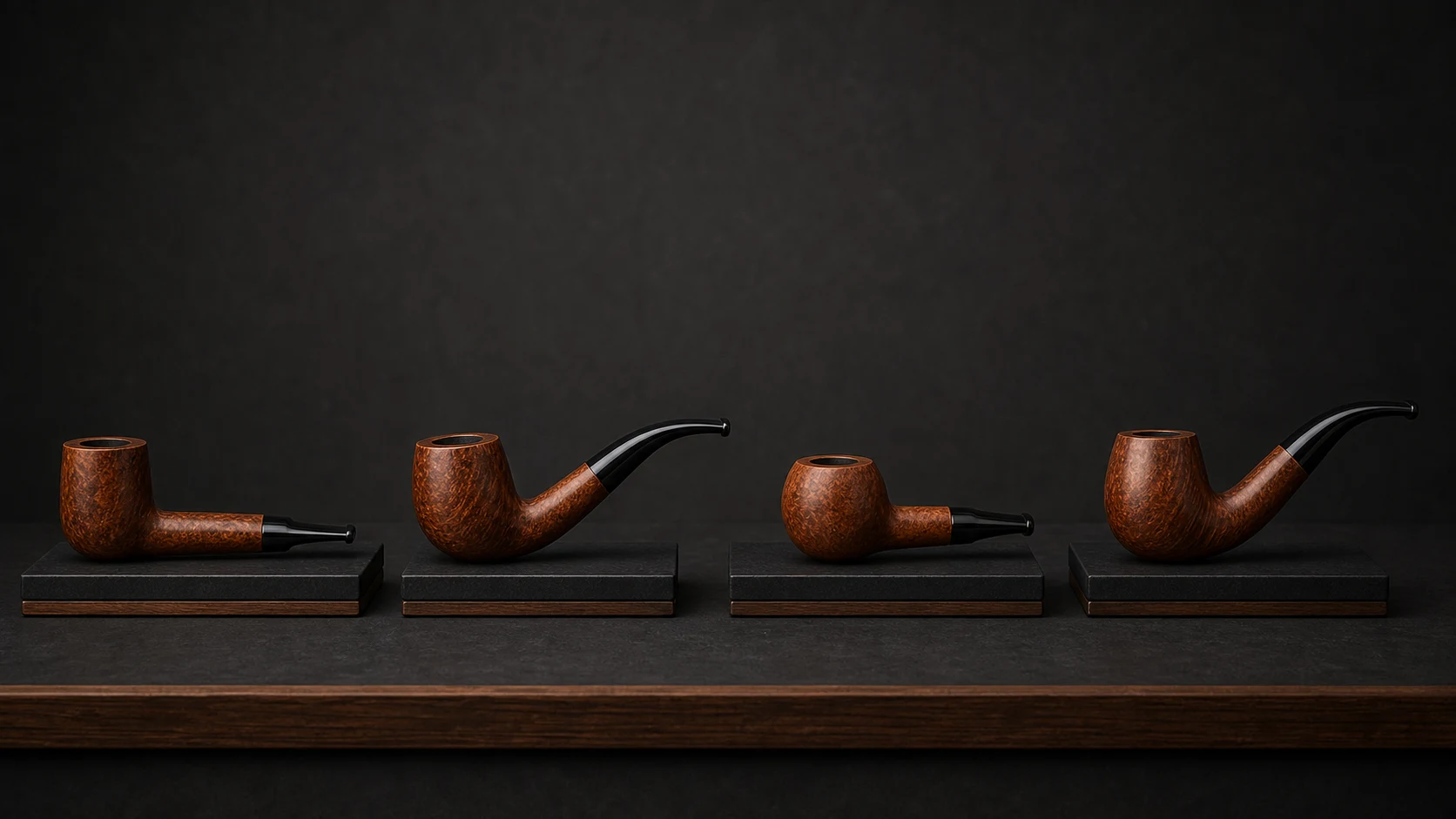
Tobacco pipe shapes are best understood as an encyclopedia of visible bowl-and-shank families. A shape name helps describe bowl mass, rim-to-heel outline, heel or base, shank transition, and the overall silhouette around those parts. Bend, length, finish, material, condition, and filter support are separate fields rather than alternate definitions of the shape.
This approach also explains why two pipes with the same shape label can look different. Makers, sellers, and collectors may apply a familiar family name to profiles with different proportions or details. The photograph is the final visual reference, while written specifications should control hidden facts.
Unlike a broad tobacco-pipe types taxonomy, this guide focuses on reading shape-family names. It does not rank current products or decide which pipe a person should buy.
Use the types, bends, and length profiles overview when the question is taxonomy. Stay here when the question is narrower: which parts of a silhouette justify a shape-family comparison?
Start with the bowl-and-shank family
Instead of trying to memorize every shape name, read the silhouette in this order:
- Bowl form: rounded, cylindrical, angled, paneled, or irregular in the supplied view.
- Shank transition: round, angular, broad, narrow, or sculptural where the bowl meets the stem assembly.
- Heel and base: rounded, narrowing, broad, flat-looking, or asymmetrical where the bowl approaches its lowest point.
- Complete silhouette: the way bowl mass, rim, heel, and shank read together across more than one supplied angle.
This order keeps the article centered on shape rather than recreating the broader types taxonomy. A name can point to a visual family, but the individual pipe's proportions determine what you actually see.
The site's product guide begins after this vocabulary step. It owns the commercial task of using preferences, verified specifications, and order details to choose among current listings.
This site's 150-item snapshot records 16 shape names, four bend profiles, and four length profiles. That separation is not unique to one store: Savinelli's pipe catalog taxonomy, for example, lists straight, bent, half-bent, long, and small as shape filters while also listing model families such as Apple, Billiard, Bulldog, and Churchwarden. It is an industry example, not proof that every seller names a borderline pipe the same way.
Shape labels used in the current catalog experience
The current homepage introduces several shape families as browsing examples. These descriptions are intentionally visual and do not promise performance.
| Shape label | Visible discovery cue used on this site | What the label does not establish |
|---|---|---|
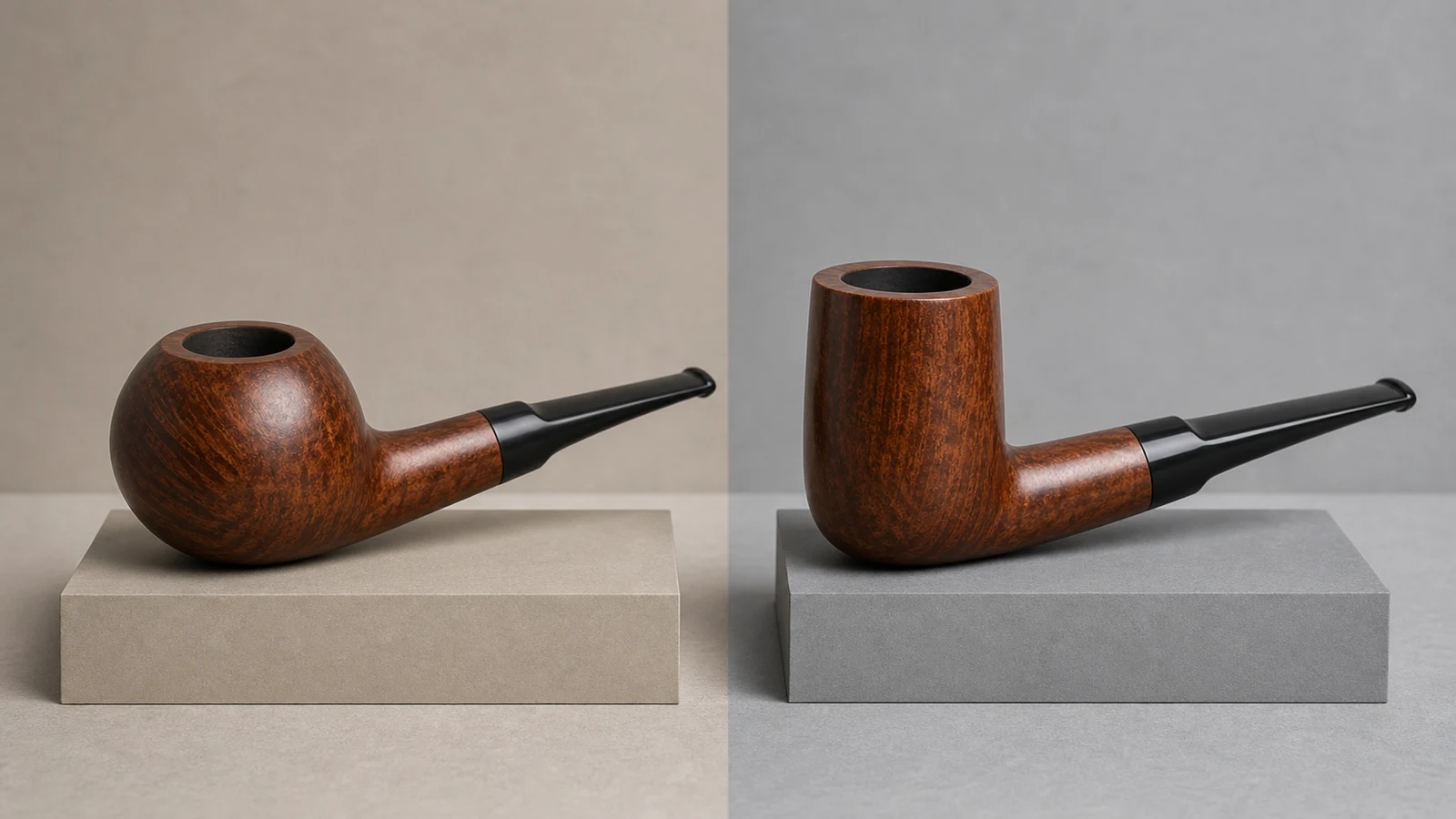
| Apple | Rounded bowl with a softer, compact silhouette | Exact chamber form, dimensions, weight, or material |
| Billiard | Cylindrical-looking bowl and familiar straight profile | That every example is perfectly straight or identically proportioned |
| Bulldog | Broad diamond shank and a bowl with a defined waist | Exact angles, bead treatment, size, or condition |
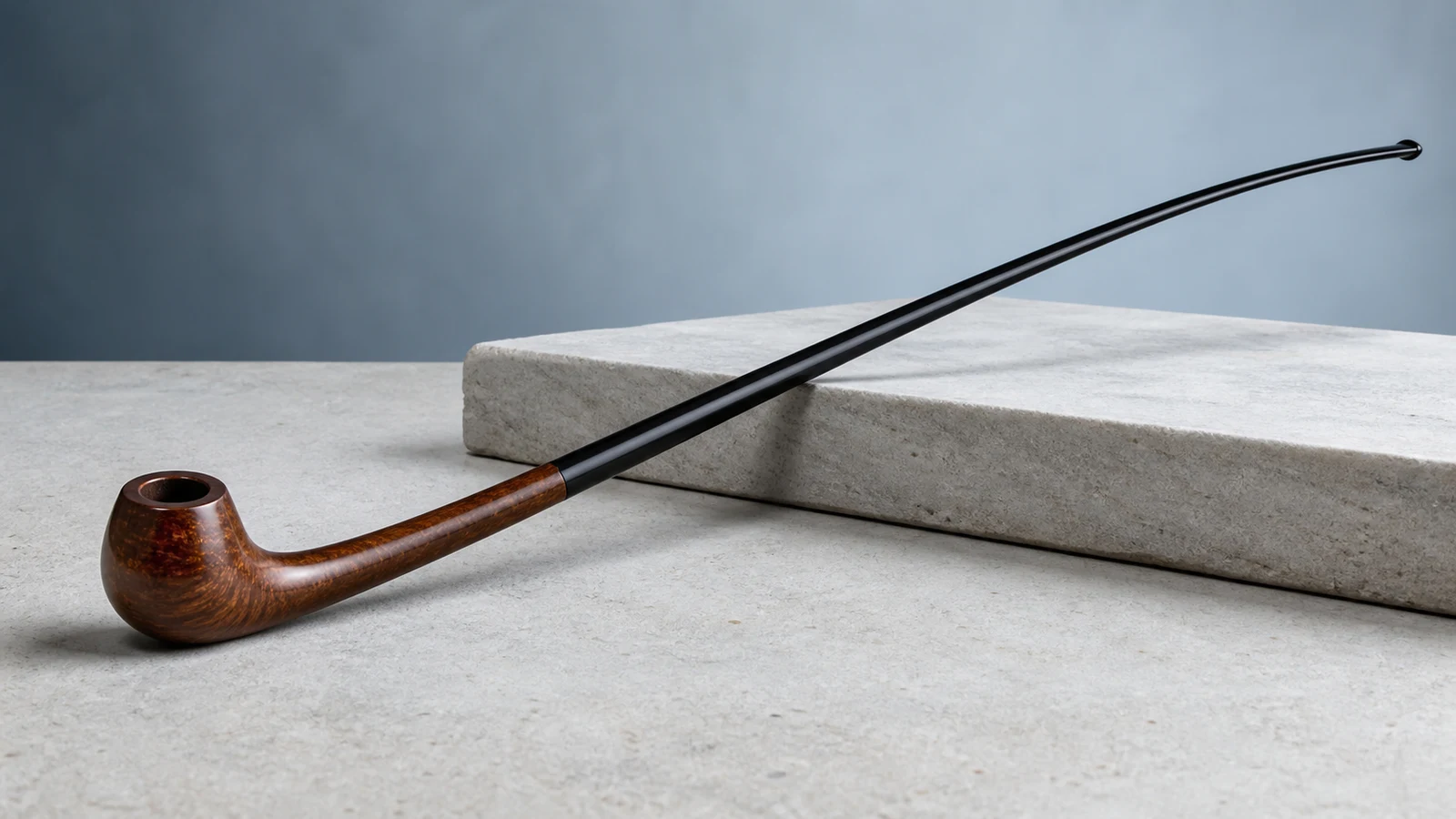
| Churchwarden | Noticeably long-stem profile | Exact length, stem construction, balance, or filter fit |
| Freehand | Expressive form outside a single rigid silhouette | Origin, maker, material, engineering, or uniqueness |
| Sherlock | Curved, character-led profile | A standardized model, dimensions, or licensed association |
These are source-backed catalog descriptions, not universal definitions for every seller. A different catalog may classify a borderline profile differently. When the title and image seem to disagree, use the seller's label for navigation and describe what the exact image shows.
Shape encyclopedia reading paths
The guides below are grouped by the visual question they answer. This is an editorial directory, not a statement that every name is a rigid or universally standardized shape.
| Reading path | Guides |
|---|---|
| Classic bowl families | Apple, Billiard, Apple vs Billiard, Dublin vs Billiard, Bulldog vs Rhodesian |
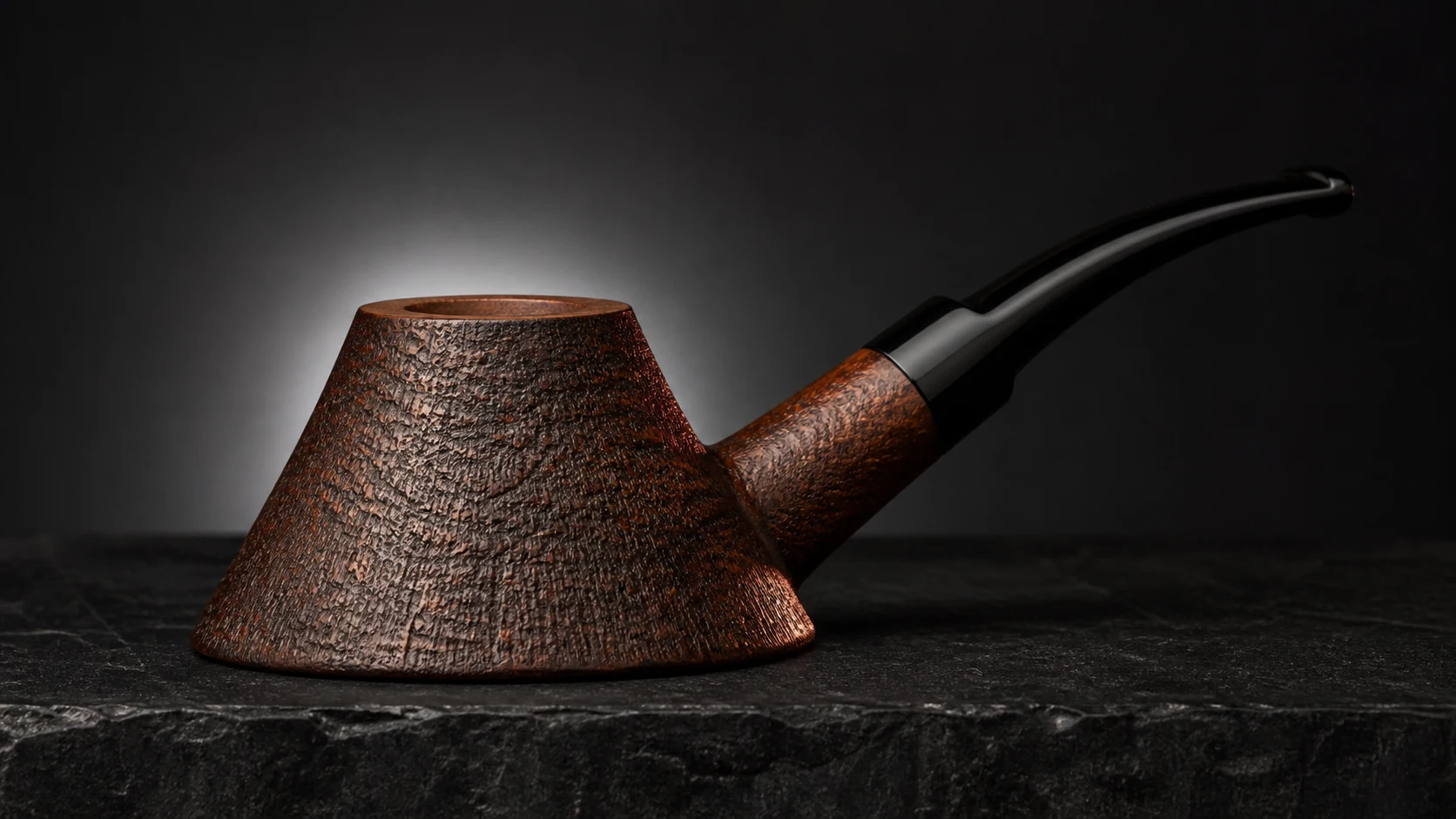
| Bowl-mass and sculptural readings | Acorn, Volcano, Blowfish, Freehand |
| Retail or compound style labels | Sherlock, Churchwarden, Pocket vs Sitter |
| Modifiers kept outside the bowl family | Bent vs straight, Full Bent, straight-stem labels, long stem vs standard |
For the framework that places every row above on a shape, bend, length, or feature axis, return to the four-axis Types Hub.
Bowl form is the first visual clue
The bowl usually carries the strongest shape signal. An Apple profile is organized around roundness; a Billiard around a more cylindrical-looking bowl; a Bulldog around a more angular silhouette with a defined waist. Those cues can be visible from a side view, but a single angle may hide paneling, asymmetry, or the chamber opening.
Use at least a side view and a second angle when available. Look at the transition from bowl to shank rather than isolating the bowl as a floating outline. A rounded bowl attached to a strongly curved or unusually shaped shank may be categorized differently than a similar bowl on a conventional straight line.
For one concrete bowl-family boundary, the Apple-versus-Billiard comparison isolates roundness, cylindrical appearance, and the bowl-to-shank transition without making either name a performance rating.
Do not infer the chamber from the exterior. A round exterior does not prove a rounded chamber bottom, and a tall-looking bowl does not establish capacity. Exact measurements should come from the product page.
The shank can change the family resemblance
The shank links bowl and stem, and its outline often distinguishes shape families that otherwise share a bowl profile. A broad diamond-like shank is part of the site's Bulldog description. A conventional Billiard presentation uses a more familiar straight line. Freehand examples may make the shank part of an irregular or expressive composition.
For shared vocabulary, the labeled anatomy of a tobacco pipe separates the bowl, shank, stem, and their connection. That helps keep “rounded bowl” and “angular shank” as distinct observations.
This is where terminology can become inconsistent. Sellers may emphasize the bowl, shank, or overall character differently. Rather than arguing with a label, record the visible facts: “angular shank,” “rounded bowl,” “rising line,” or “long curved stem.” That description remains useful even when category conventions vary.
Keep bend and length outside the bowl-family definition
Bend describes the shank-and-stem course. Length describes an extended, conventional, or compact overall profile. Either modifier can change the first impression without replacing the underlying bowl-and-shank family: an Apple or Billiard may appear with more than one bend, while a long profile can use more than one bowl form.
Record those modifiers, but do not let them decide the shape-family answer. Use the four-axis taxonomy when a label mixes shape, bend, length, and features in one product title.
Move from encyclopedia reading to commercial selection
This page ends once the visible shape vocabulary is understood. It does not compare price, stock, shipping, returns, condition, or which current product is best for a buyer. Continue to the product guide for that selection workflow, then open the individual listing for current facts.
Avoid common shape-label mistakes
Mistake: assuming the name proves exact proportions. Two pipes in one family may have visibly different bowl height, shank length, or bend.
Mistake: using exterior form to infer the chamber. Interior geometry needs separate evidence.
Mistake: letting bend or length replace the bowl family. Keep those labels on their own taxonomy axes.
Mistake: assuming the label proves material or origin. Shape names organize form; they do not establish those product facts.
Mistake: expecting every catalog to classify borderline shapes identically. Use terminology as a discovery aid and compare the supplied image.
A compact shape-comparison checklist
- What is the visible bowl form from more than one angle?
- How does the bowl transition into the shank?
- Is the shank round-looking, angular, broad, slender, or irregular in the supplied views?
- Where does the bowl carry most of its visible mass?
- What happens between the rim, widest point, heel, and base?
- Does the individual photo support the catalog label?
- Which bend, length, finish, or feature words need to be recorded separately?
Frequently asked questions
Which visible parts define a tobacco pipe shape family?
Begin with the bowl's rim-to-heel outline, the location of its visible mass, the heel or base, and the transition into the shank. Read those parts together rather than naming a shape from one isolated curve.
Which shape details can product photos confirm?
Photos can support observations about bowl outline, shank profile, stem line, visible bend, finish appearance, and relative proportions. They cannot establish exact measurements, internal chamber form, origin, filter compatibility, or performance.
Are pipe shape names standardized?
They are established browsing conventions, but usage can vary at the edges. Two sellers may classify a borderline or expressive profile differently. The exact photograph is more useful than debating the label.
Can the same bowl shape be straight or bent?
Yes. Bend is a separate axis. A straight and a bent example can still share the same bowl-and-shank family when the source terminology and visible form support that classification.
Are Churchwarden, Freehand, and Sitter pure bowl-shape names?
Not always. Churchwarden carries a strong length cue, Freehand can describe a broad design approach, and Sitter describes a base behavior or source label. Preserve the seller's wording, then classify the bowl family and other axes separately when evidence allows.
Where does product selection begin?
It begins in the product guide, after the vocabulary question has been answered. That page handles comparison criteria and current commercial facts; this encyclopedia remains focused on visual shape identification.
Shape names work best as an encyclopedia map. They identify the visual family to investigate next while leaving taxonomy modifiers and product selection to their own pages.
Related posts
Product notes, store updates, and purchase guidance for the storefront.