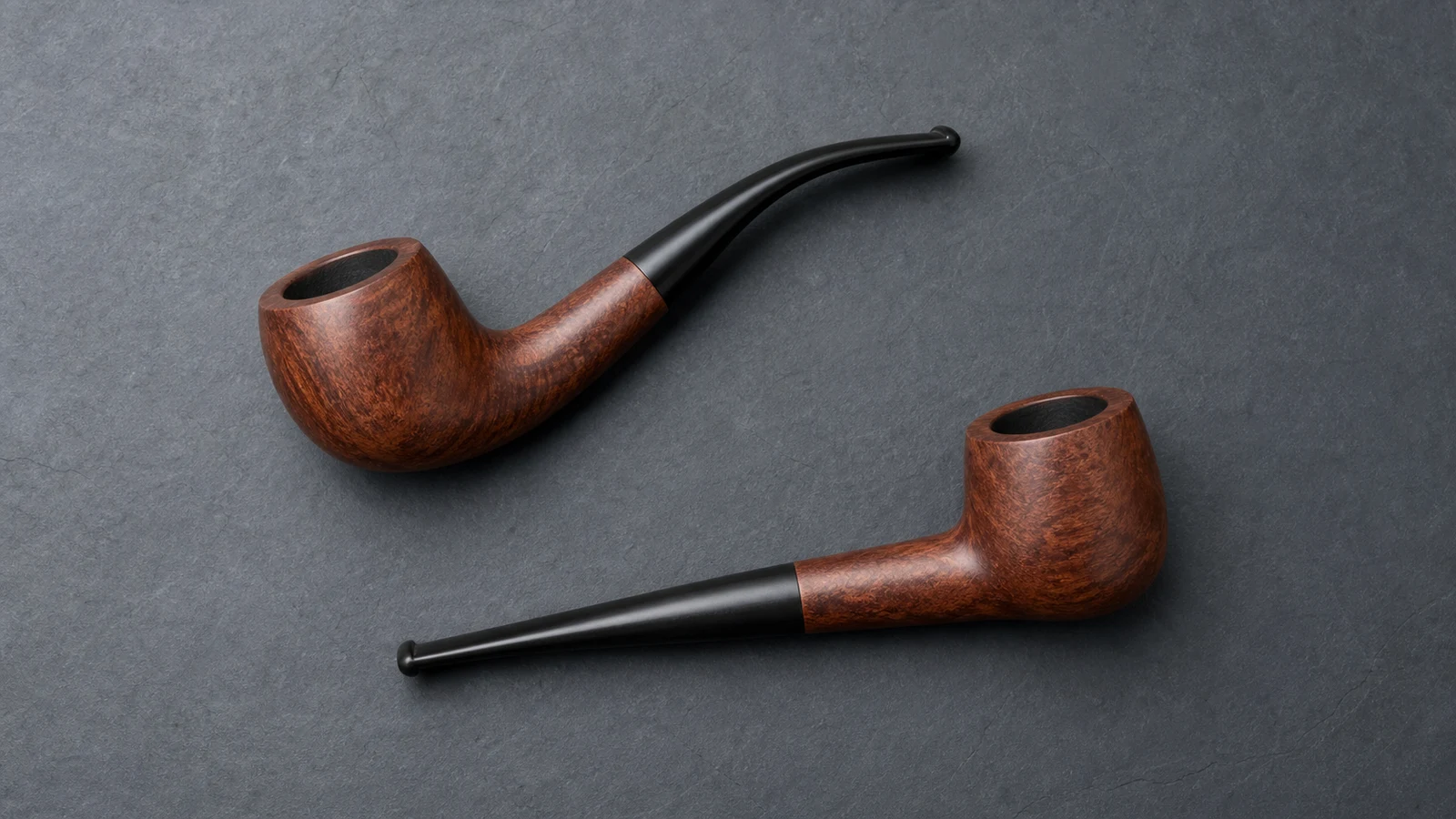
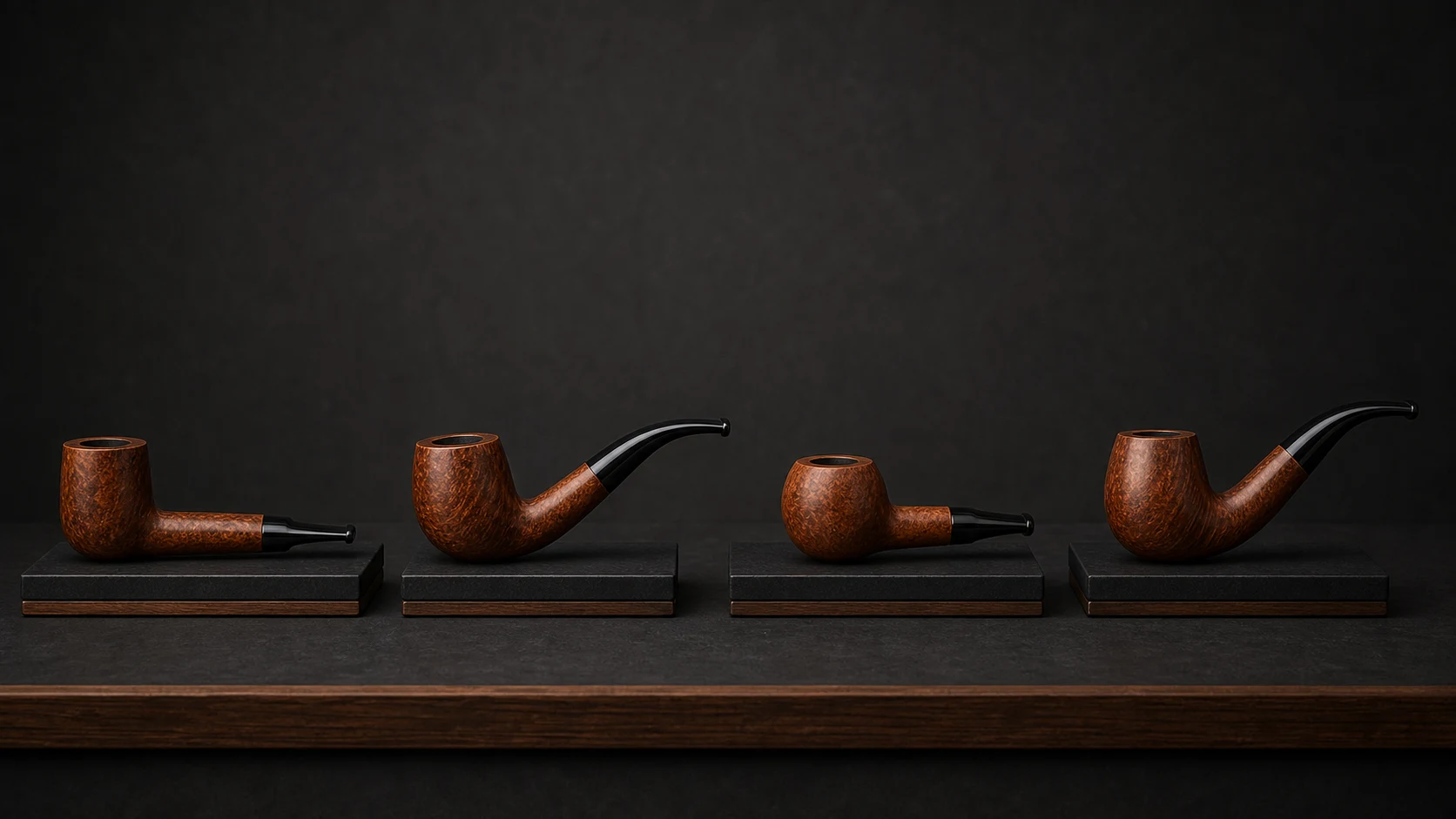
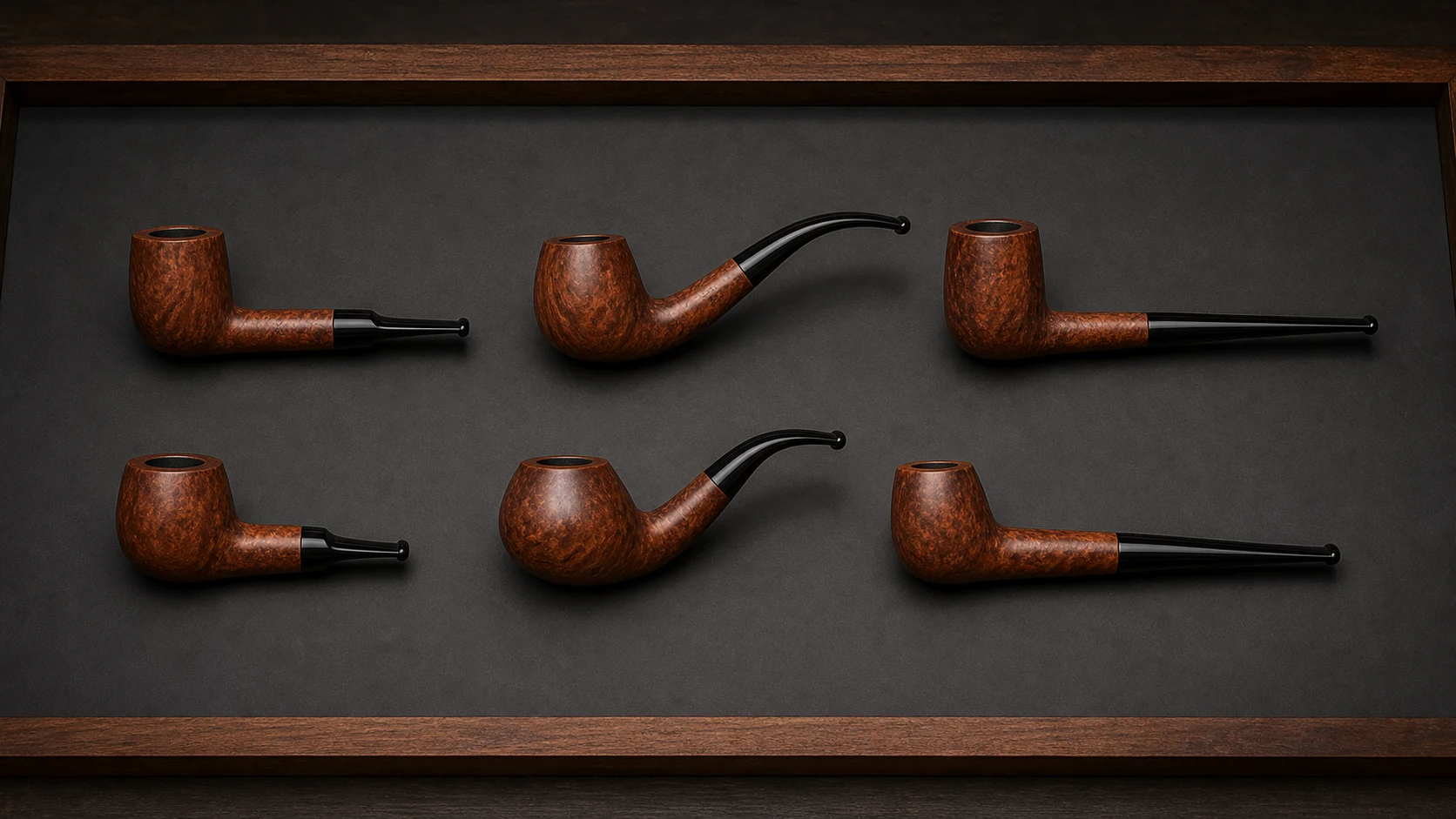
Straight-Stem Tobacco Pipes: What the Listing Label Shows
Understand what a straight-stem tobacco pipe label describes, how to inspect the visible line, and what the listing must verify separately.
Written by
The Tobacco Pipe Editorial Team
The store editorial team reviews product facts, care boundaries, and buying guidance against the current catalog and source evidence.
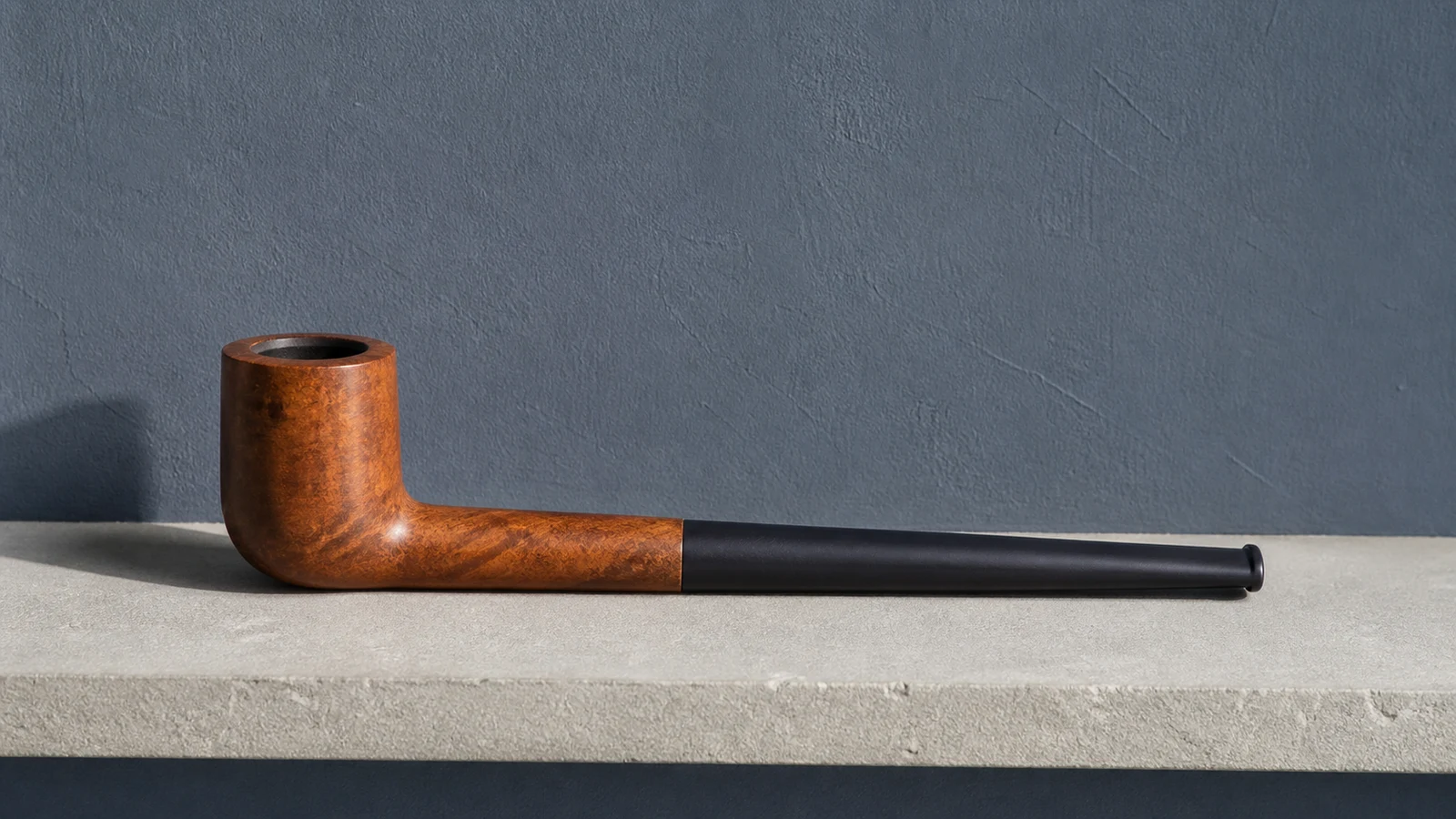
A “straight-stem tobacco pipe” listing normally describes a pipe whose shank and stem follow a broadly direct line rather than turning noticeably downward. The label helps identify the profile in product photos. It does not determine the bowl shape, total length, exact construction, filter compatibility, or any smoking characteristic.
Read the label as one field in the product record. Confirm it against a full side view, then evaluate the separate facts supplied for the exact item. The straight pipe collection shows why this matters: one direct stem line can appear across multiple bowl forms, finishes, and proportions.
For the two-way choice, the
bent-versus-straight guide
compares both profiles. The broader
pipe-types guide
places stem alignment beside bowl family and length instead of treating
Straight as a complete type.
What the straight-stem label actually describes
The useful observation is alignment. From the bowl, the shank extends toward the stem, and the stem continues toward the mouthpiece without a pronounced downward curve. Small shaping changes may still be visible. “Straight” should not be read as a claim that every edge is geometrically flat or that every component shares a mathematically perfect axis.
Catalog naming also varies. One seller may use “straight pipe,” another may write “straight stem,” and a third may place Straight in a bend-profile attribute. Those phrases can point to the same broad visual category without creating a universal technical specification.
Smokingpipes' public shape reference similarly treats straight and bent as configurations that can cross traditional bowl families. Savinelli's separate straight catalog group shows how one merchant applies the shopping label; neither source supplies a universal geometric tolerance.
| Listing element | What you may confirm | What you should not infer |
|---|---|---|
| Side-profile photo | A broadly direct shank-and-stem line | Exact angle or internal drilling |
| Shape label | The seller's named bowl family | That all examples share identical proportions |
| Length field | A stated measurement and unit | Size from photo crop alone |
| Filter field | The seller's explicit compatibility statement | Filter status from the straight profile |
| Finish and condition text | Facts the seller chose to state | Hidden condition or material composition |
Straight stems appear on different bowl shapes
Do not let the stem label overwrite the bowl. A Billiard may pair its generally cylindrical bowl with a direct stem line. An Apple may combine a more rounded bowl with a straight configuration. Other catalog shapes can also use a straight profile.
For example, the current Large Billiard Straight listing states both fields in its title. It is catalog evidence for a combined label, not a template for the size, material, or construction of other straight pipes. The pipe-shape hub helps identify the bowl before returning to the exact product record.
For visual comparison, mentally cover the stem and inspect the bowl by itself. Look at the sides, shoulder, rim, and base. Then cover the bowl and follow the shank-and-stem line. This two-pass method separates shape family from bend profile and makes inconsistent product titles easier to spot.
The distinction is important in search results. Two listings may both include “straight-stem tobacco pipe,” yet their overall silhouettes may have little in common beyond alignment. The exact shape label and photographs supply the missing context.
Use a full side view to inspect the line
A side-profile image is the best evidence because it reduces the perspective compression common in three-quarter views. Check that the bowl is upright in the frame and that the whole mouthpiece is visible. If the pipe has been tilted for styling, compare structural lines rather than the image's horizontal edge.
Work through this identification checklist:
- Trace the center of the shank as it leaves the bowl.
- Find the shank-to-stem transition, if it is visible.
- Continue the line through the stem to the mouthpiece.
- Check a second photograph for an angle hidden by rotation.
- Compare the result with the title and attribute fields.
A very gentle change does not need to be forced into a precise classification. If the listing says Straight and the visible line is broadly direct, report that evidence. If the image appears clearly curved, note the mismatch and ask for clarification.
Length and proportion need separate checks
A straight profile often looks long because the bowl-to-mouthpiece distance is presented on an extended line. That visual impression is not an actual measurement. Cropping, camera distance, focal length, and image layout can all change apparent size.
Use stated total length when it is available, including the unit. Bowl height, bowl width, and stem length can add context if the seller provides them. Do not estimate those values from a display stand, box, ruler-like background, or another object unless the listing explicitly establishes a reliable scale.
Proportion is still useful as a visual description. You can say that one bowl appears taller relative to its stem or that one stem occupies more of the total silhouette. Keep the comparison within the image and avoid translating it into unsupported dimensions.
The label does not prove construction or compatibility
Straightness does not identify stem material, tenon type, airway construction, or filter system. Those features may be hidden or too small to interpret in a normal listing photograph. A visible seam between shank and stem merely shows a junction; it does not supply the internal measurements required for a compatibility claim.
The tobacco pipe stem guide separates visible stem labels from material, fit, and compatibility claims. Use those checks for the exact product rather than inferring them from its straight profile.
Look for explicit filter information on the exact product page. If the listing names a filter size or states that no filter is used, record that statement. If it says nothing, mark the field unverified and ask the seller if compatibility matters to the purchase.
Apply the same evidence rule to material. Surface color and sheen can support a description of appearance, but they do not independently prove the exact wood, stem compound, finish process, or origin. Use named listing facts rather than visual guesses.
Avoid performance claims based on a direct line
A straight-stem label does not guarantee airflow, ease of cleaning, cooling, moisture behavior, durability, or comfort. Those conclusions require more information than a silhouette provides, and some cannot be established from a retail listing at all.
Even “simple” or “traditional” should be used carefully. They may describe the visual impression of a clean direct profile, but they should not imply superior construction or universal suitability. A conservative guide stays with the visible form and the facts a seller has confirmed.
A compact listing audit
Before choosing among straight-stem examples, record these fields for each candidate:
- exact product title and shape label;
- straight/bend attribute as written;
- full side-view availability;
- stated total length and other supplied dimensions;
- finish, material, and condition statements;
- filter information;
- exact-item photography and package contents; and
- current price, stock, shipping, and return details.
This audit can be used while browsing the live shop. It keeps the profile label useful without treating it as a substitute for the product record. If two listings lack comparable measurements, the honest conclusion is that their relative size is not yet verified.
Frequently asked questions
Does straight stem mean the pipe has a specific bowl shape?
No. The phrase describes the shank-and-stem line. Straight configurations may appear with Billiard, Apple, and other bowl profiles, so confirm the shape field and photographs separately.
Can a side-view photo prove that a stem is straight?
A clear side view can support the visible alignment, bowl outline, relative proportions, color, and surface appearance. It cannot reliably establish exact dimensions, hidden construction, filter compatibility, or performance.
What should I verify when the title, attributes, and photos disagree?
Ask about missing dimensions, named materials, condition, filter details, package contents, and whether the photographs show the exact item. Also ask about any conflict between the title, attributes, and images.
Where can I compare current straight-stem examples?
Browse the straight pipe collection to narrow the catalog, then open the exact product pages. Use the collection for discovery and the live listings for current facts, price, stock, and photographs.
Related posts
Product notes, store updates, and purchase guidance for the storefront.