Billiard Pipe Shape Explained
Identify the Billiard pipe shape by its generally cylindrical bowl, then compare stem line, bend, proportions, and verified listing facts.
Written by
The Tobacco Pipe Editorial Team
The store editorial team reviews product facts, care boundaries, and buying guidance against the current catalog and source evidence.
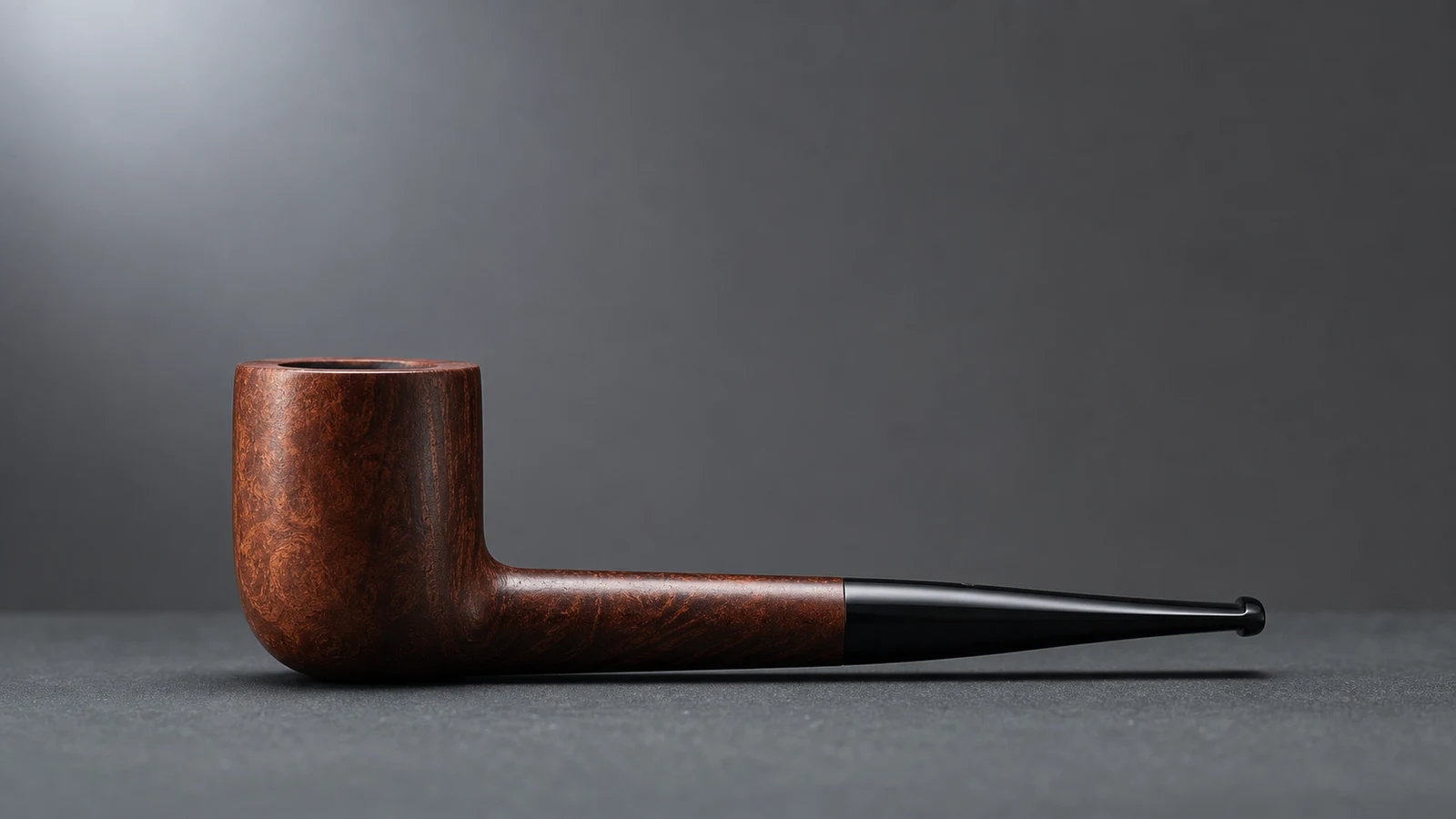
The Billiard pipe is identified primarily by a generally cylindrical bowl with comparatively direct sides and a clean transition into the shank. It is one of the easiest pipe families to recognize in a clear side view, but the label does not impose one exact height, width, stem style, bend, finish, or construction.
Use “Billiard” as a description of the visible bowl family, then verify every other detail on the individual listing. A straight Billiard and a bent Billiard can share the same basic bowl identity while differing substantially in overall profile. Current examples can be compared in the Billiard pipe collection, with the product page remaining the controlling source for each item.
Use the Apple-versus-Billiard guide for that specific identification problem. The pipe-shape hub owns the broader taxonomy rather than this single-shape page.
The bowl profile is the starting point
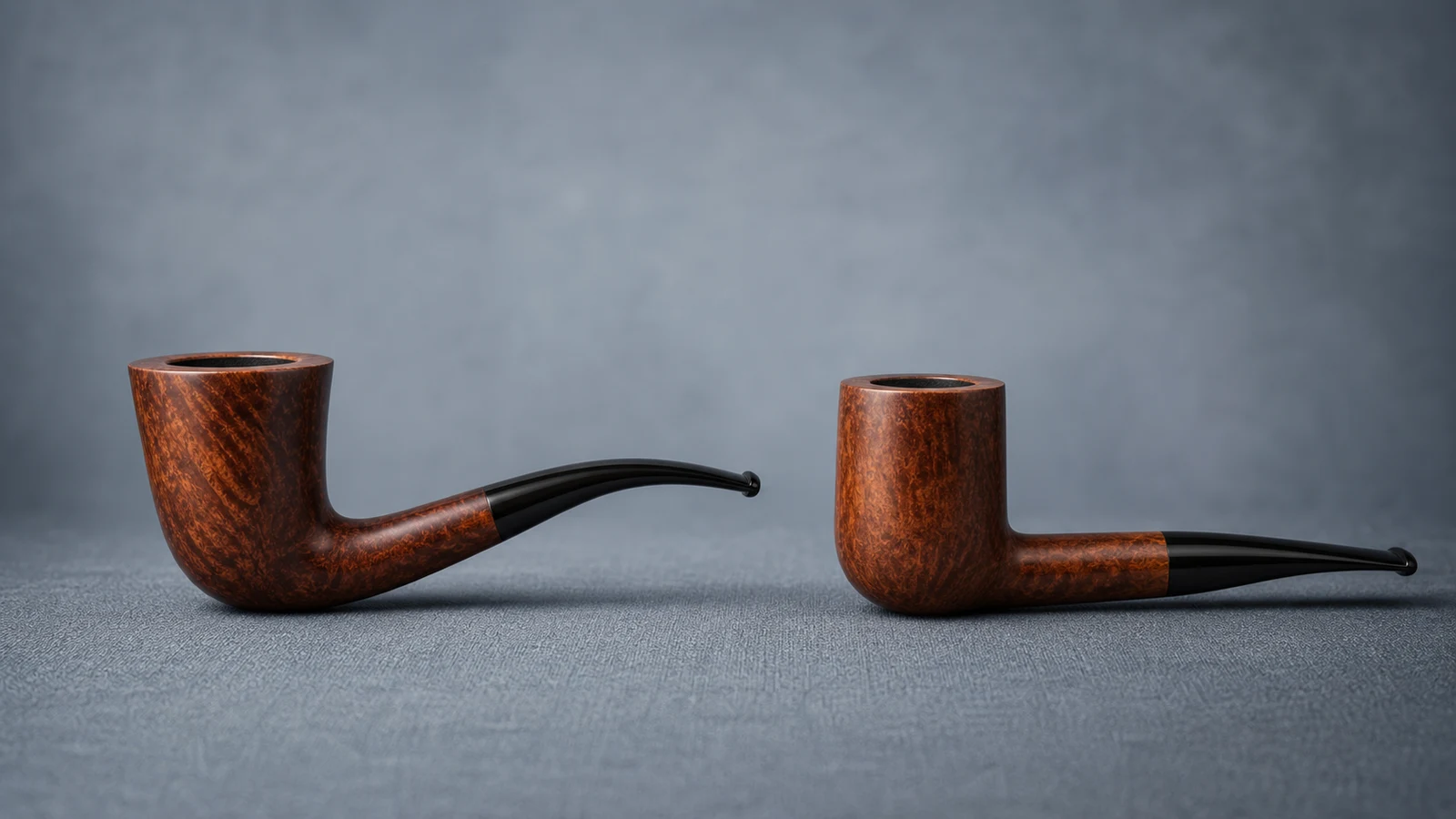
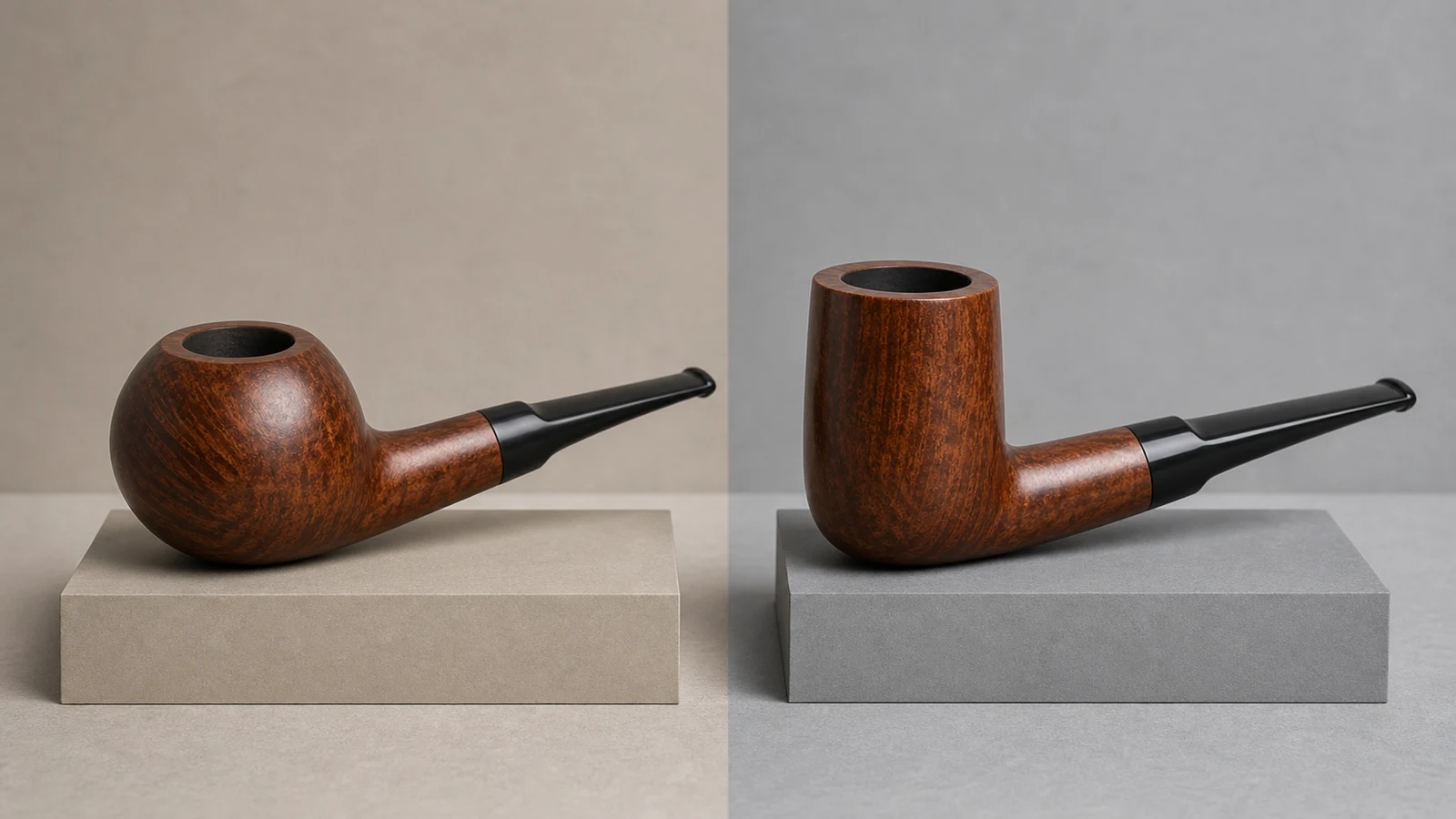
In a side-profile photograph, a Billiard bowl usually reads as upright and straight-sided rather than fully rounded through the middle. The walls may taper subtly, and the transition near the base may be softened, but the overall impression is closer to a cylinder than to the fuller curve of an Apple or the more obvious flare of some other families.
That description is deliberately flexible. Shape names are catalog language, not engineering tolerances. Two sellers may apply the Billiard label to bowls with different proportions, rim treatments, or lower-bowl curves. A close crop or three-quarter camera angle can also make a bowl look more tapered or rounded than it does from the side.
Smokingpipes' public
shape reference
describes the everyday Billiard family through a cylindrical bowl, slightly
convex sides, and flexible stem treatment. Its more detailed
Billiard analysis
documents a stricter classic definition while acknowledging that ordinary
catalog usage is broader. This article uses the broader family unless it says
classic Billiard explicitly.
| Area to compare | Typical Billiard cue | What the cue does not confirm |
|---|---|---|
| Bowl wall | Generally direct, cylindrical-looking sides | Exact diameter or wall thickness |
| Bowl stance | Often appears upright in profile | Weight, balance, or comfort |
| Rim and base | Usually support a restrained outline | Chamber measurements or internal condition |
| Shank transition | Clean visual line out from the bowl | Airway construction or fit |
| Stem line | May be straight or bent | Filter compatibility or material |
The table is an identification aid, not a promise that every item carrying the name will match one fixed template.
Straight Billiard and bent Billiard are both valid labels
“Billiard” describes the bowl family; “straight” or “bent” describes the line through the shank and stem. Keeping those labels separate prevents a common mistake: assuming a Billiard must always have a completely straight profile.
A straight version normally presents the bowl, shank, and stem along a broadly direct axis. A bent version introduces a downward angle or curve, while the bowl can remain recognizably Billiard. Slightly bent and more pronounced bent examples may both appear in catalogs, with no universal degree attached to each phrase.
The current Large Billiard Straight is a first-party example of the two labels appearing together. It supports the shape-versus-bend distinction, but its own dimensions and source claims should not be applied to another Billiard.
Photographs can show the visible curve, but they cannot establish how an item will handle. If bend matters to your comparison, look for a true side view and a seller-supplied measurement rather than estimating from the image. The shape-first product guide explains how to keep silhouette observations separate from hidden specifications.
How to identify a Billiard in product photos
Begin with the photograph that shows the complete pipe from the side. Ignore finish and color for the first pass, because grain, rustication, carving, and lighting can distract from the underlying outline. Trace the outer bowl wall from the rim toward the base and ask whether it remains broadly direct.
Then use this checklist:
- Confirm that the middle of the bowl does not swell into a strongly rounded Apple-like profile.
- Look for an upright, cylinder-led outline rather than a dramatic outward flare.
- Check a second angle so perspective does not create a false taper.
- Identify the bend separately by following the shank and stem line.
- Read the listing title and attributes to see whether the seller explicitly uses “Billiard.”
If the pictures suggest the shape but the listing uses a different name, keep the discrepancy visible in your notes. The photo supports an observation; it does not authorize rewriting the seller's product facts.
What can vary within the Billiard family
Billiard examples can differ in bowl proportions, stem treatment, degree of bend, surface finish, rim detail, and the visual weight of the shank. These variations do not necessarily make one example more authentic than another. They show why the family name is useful for navigation but insufficient for a buying decision.
Finish is a separate attribute. A smooth surface may make the bowl outline easy to trace, while a textured or carved surface may interrupt the edge. The underlying shape can still be Billiard in either case. Similarly, a saddle-like mouthpiece profile or a more gradual stem taper changes the visible stem, not the core bowl category.
Do not infer material, maker, origin, condition, dimensions, included items, or availability from the shape. Even when a collection groups current catalog examples, those facts can differ item by item and may change over time.
Billiard compared with nearby shape language
The most useful comparison is often with the Apple because both can look restrained in a catalog grid. An Apple usually has a fuller, convex bowl body; a Billiard usually keeps a more cylindrical side profile. That distinction can become less obvious when a photo is angled or when a particular example sits near the boundary between familiar catalog labels.
Other terms may describe taper, flare, or more sculptural treatment. Do not force every pipe into a shape based on one feature. Instead, compare the whole bowl silhouette and treat the seller's label as another piece of evidence. The shop is useful for seeing multiple profiles together, while each listing supplies the facts specific to that item.
For another close boundary, the Dublin-versus-Billiard comparison focuses on flare versus cylinder-led sides instead of repeating this article's general definition.
A careful way to compare catalog examples
Create a short comparison note for every candidate with separate fields for shape, bend, stated dimensions, finish, condition, filter information, and package contents. Enter only what the listing actually confirms. “Looks medium-sized” is not a substitute for a measurement, and a visible stem cannot prove its internal fit or compatibility.
When the catalog shows several Billiards, compare the side profiles first and then open each product page. Check whether photos cover the same angles, whether measurements are stated, and whether any important field is missing. Unknowns should remain unknown until the seller confirms them.
If the Billiard profile is the look you want to explore, use the collection to shortlist by visible form. Before ordering, return to the exact listing and verify the facts that matter to you rather than treating the collection label as a guarantee.
Frequently Asked Questions
What defines a Billiard pipe shape?
The primary visual cue is a generally cylindrical, upright-looking bowl with comparatively direct sides. Exact proportions, rim treatment, bend, stem style, and finish can vary, so the name describes a family rather than one uniform specification.
Can a Billiard pipe be bent?
Yes. Billiard identifies the bowl profile, while straight, slightly bent, or bent describes the shank-and-stem line. Verify the exact degree visually and through any stated listing details.
What can exterior views establish about a Billiard profile?
Clear images can support observations about bowl silhouette, visible bend, finish, and the supplied exterior views. They do not reliably confirm exact dimensions, internal construction, filter compatibility, condition beyond what is visible, or package contents.
What should I ask the seller to confirm?
Ask about any missing measurements, material or condition claims, filter information, included items, and other specifications important to the purchase. Use the individual product page rather than applying facts from one Billiard listing to another.
Where can I compare current Billiard examples?
The Billiard pipe collection groups supported catalog examples. Availability and listing facts may change, so confirm the current product page before making a decision.
Related posts
Product notes, store updates, and purchase guidance for the storefront.