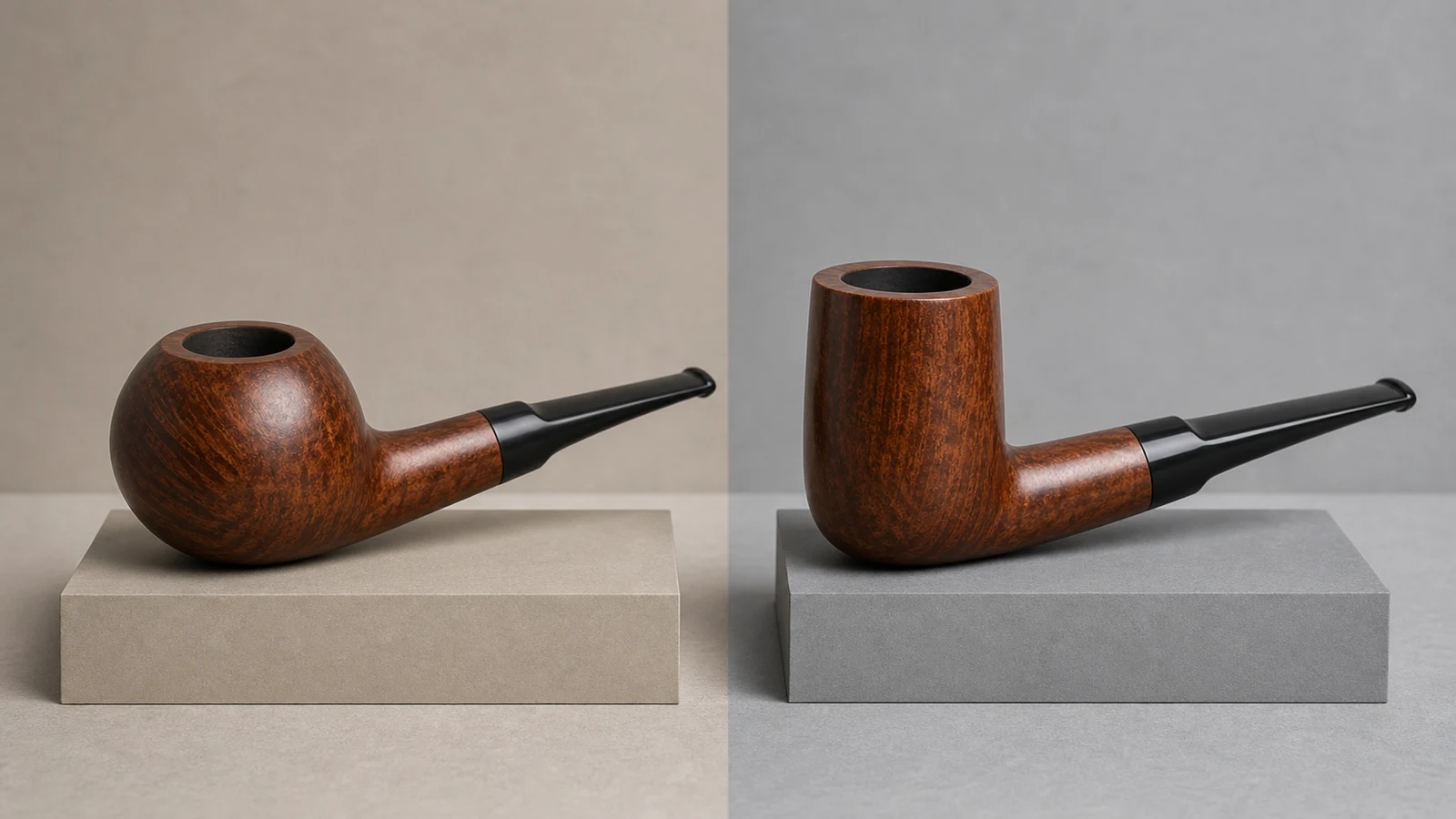
Apple Pipe Shape Explained
Identify the Apple tobacco-pipe shape by its rounded bowl profile, then verify bend, proportions, finish, and listing facts separately.
Written by
The Tobacco Pipe Editorial Team
The store editorial team reviews product facts, care boundaries, and buying guidance against the current catalog and source evidence.
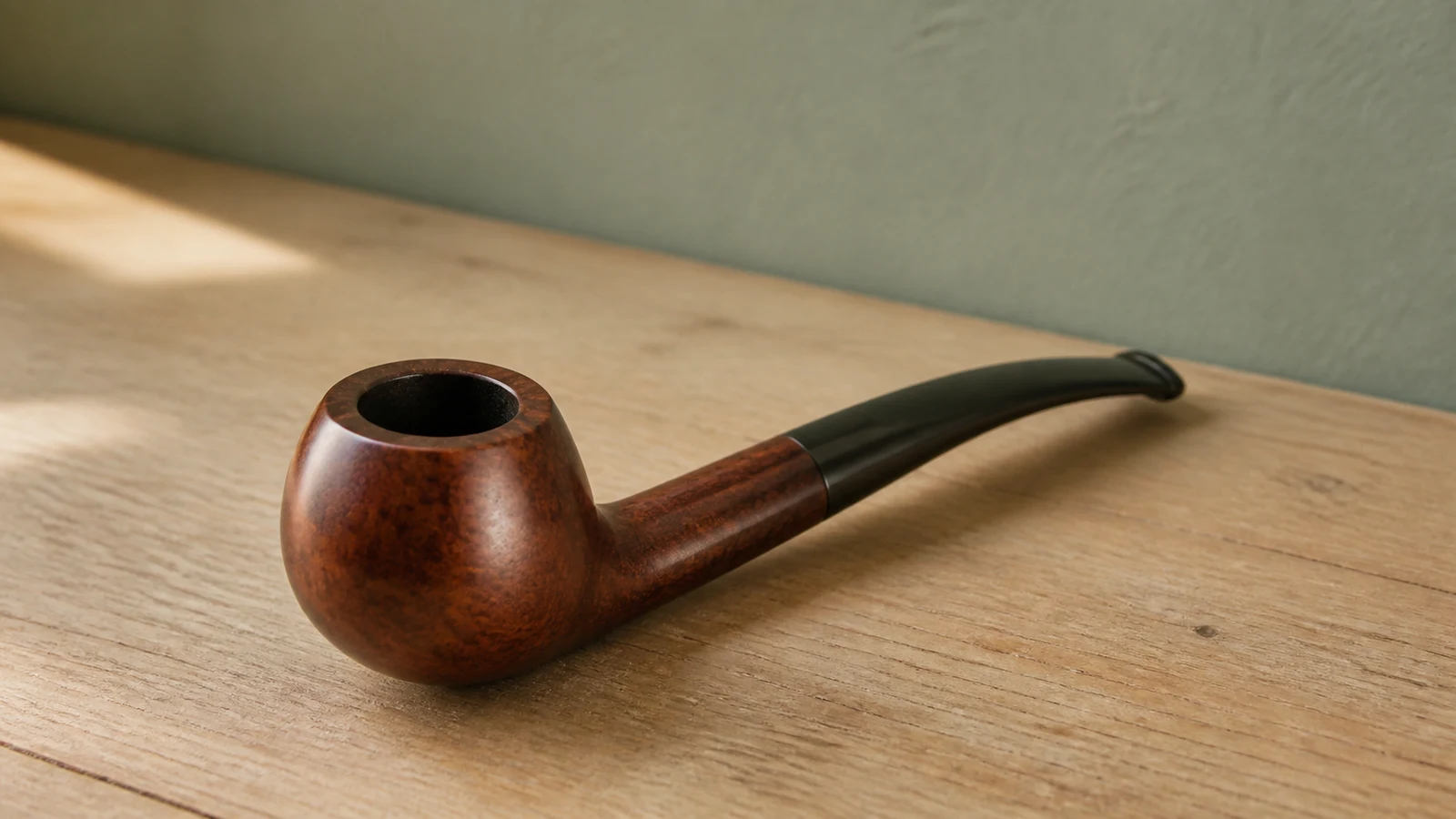
The Apple pipe shape is best recognized by its rounded bowl. In side profile, the bowl usually looks full through the middle, with curved sides that narrow toward the rim and base rather than staying cylindrical. That broad visual cue is more reliable than expecting every Apple to share one height, width, stem angle, or degree of bend.
“Apple” identifies a shape family, not a complete or standardized product specification. Use the name to find suitable silhouettes, then verify the exact listing's bend profile, dimensions, finish, material claims, condition, filter information, and photographs. Current catalog examples are grouped in the Apple pipe collection.
The Apple-versus-Billiard comparison is the next page when two similar catalog cards are difficult to separate. For the wider context, the pipe-shape hub shows where Apple sits among other bowl families.
The defining visual cue: a full rounded bowl
Look at the outer bowl wall in a side-profile photograph. An Apple typically expands into a rounded middle before curving back toward the top and bottom. The resulting outline may suggest a compact sphere or a softened, full-bodied form, though individual examples can be taller, flatter, narrower, or wider.
The shape does not require a perfect circle. Camera angle, carving, rim treatment, and maker variation all affect the visible outline. The useful question is whether the overall bowl reads as continuously rounded rather than primarily straight-sided or sharply tapered.
That description follows Smokingpipes' public shape reference, which describes Apple as rounded and organic, swelling toward the upper bowl and tapering toward the heel. The reference defines a family, not exact measurements for a product sold here.
| Area to inspect | Common Apple cue | Evidence limit |
|---|---|---|
| Bowl middle | Full, convex sides | No universal width-to-height ratio |
| Shoulder | Soft transition into the rounded body | Exact shaping varies by listing |
| Rim area | Bowl often narrows toward the top | Chamber dimensions need stated measurements |
| Lower bowl | Curve continues toward the base | Base treatment is not identical across Apples |
| Shank and stem | Can be straight or bent | Stem line does not define the Apple name |
Use the table as an identification checklist rather than a dimensional standard.
Apple is the bowl family; bend is another label
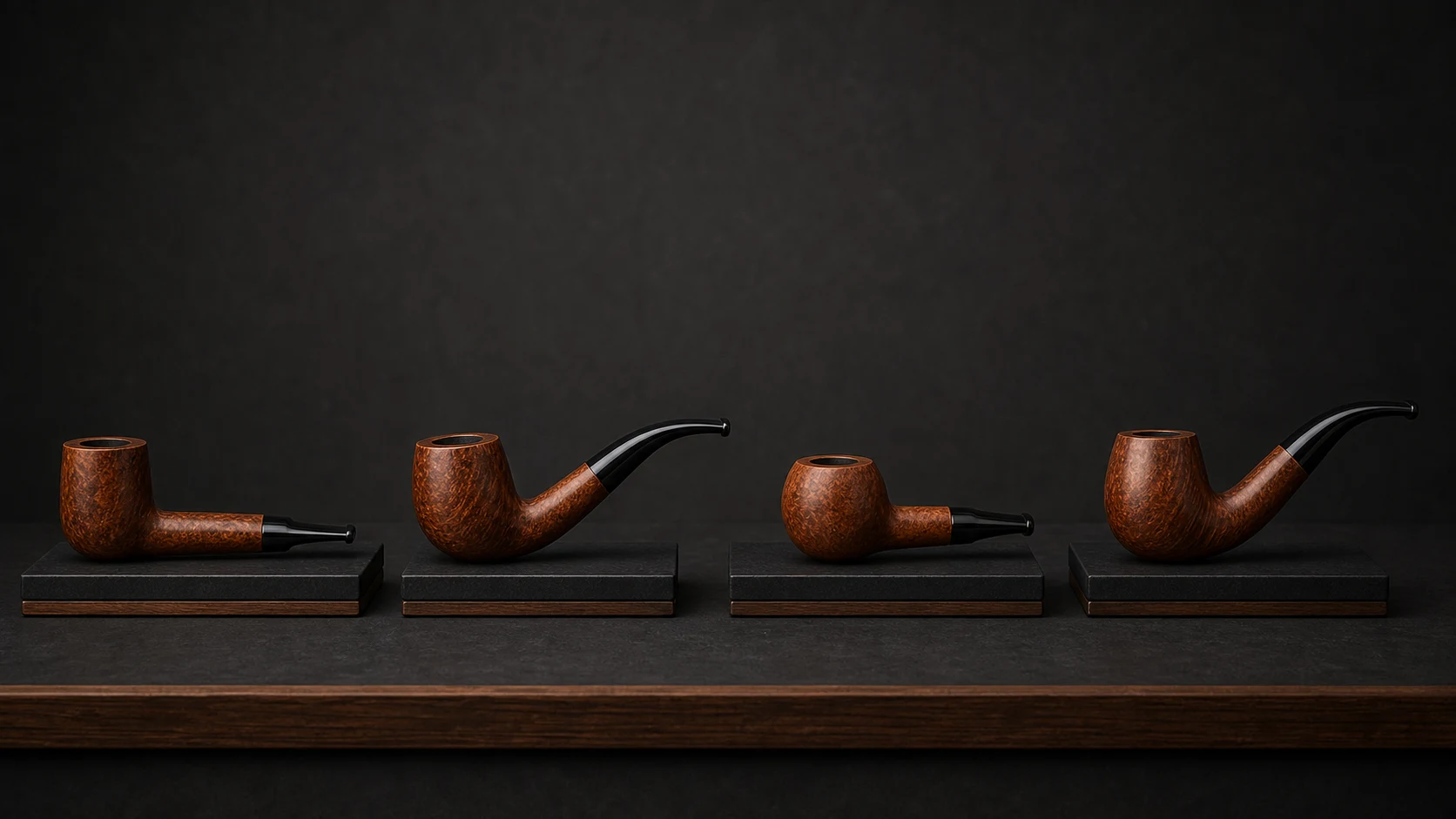
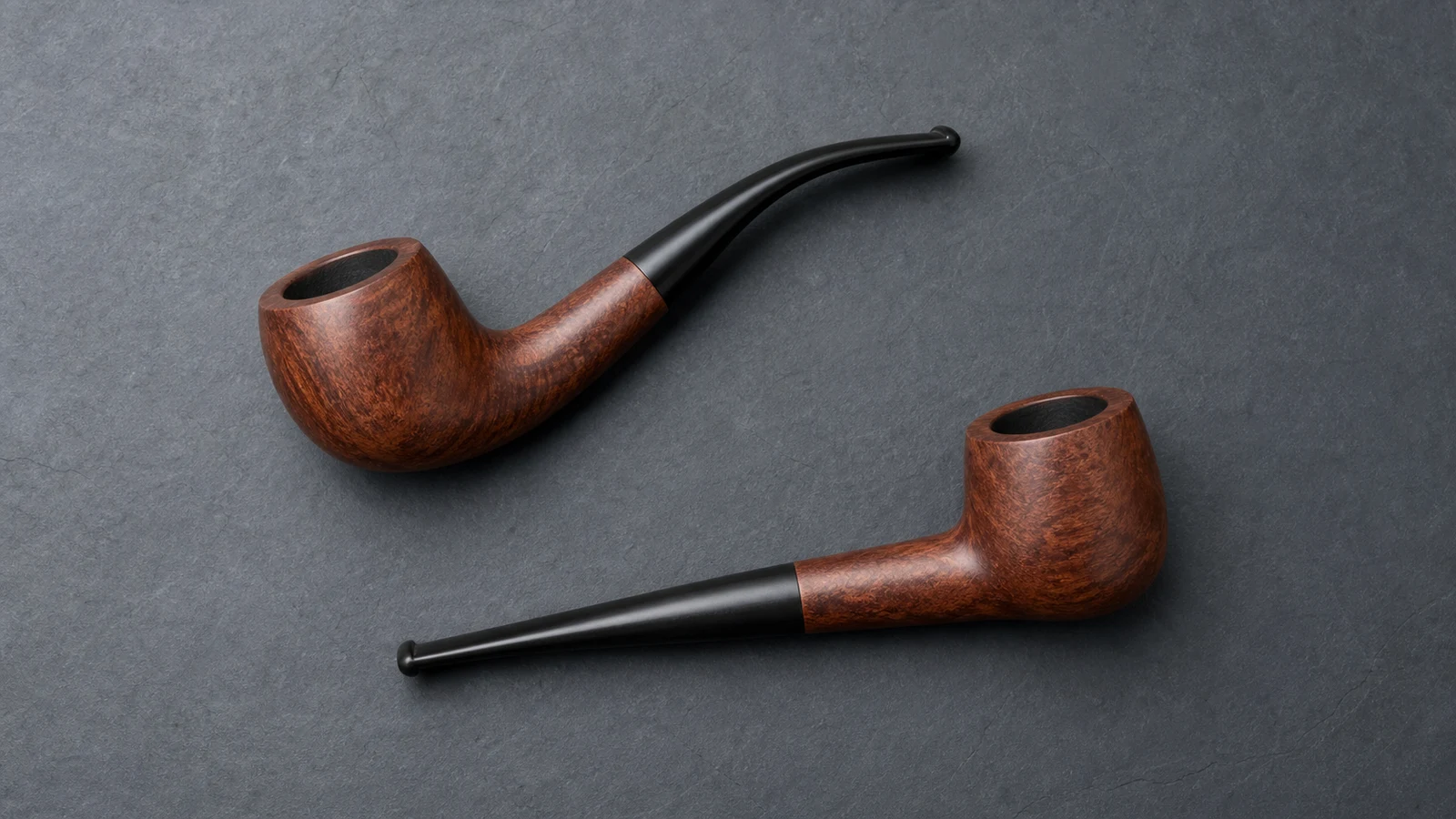
The current catalog snapshot includes Apple pipes in straight, slightly bent, and bent configurations. A rounded bowl attached to a direct stem line remains an Apple, just as a rounded bowl attached to a pronounced curve can remain an Apple.
The current Prince Apple Slightly Bent shows both fields in one title. Smokingpipes' more detailed Bent Apple guide also treats bend as a qualifier applied to the rounded Apple family. Neither example means that all Apples share the same degree of bend.
This distinction matters when reading titles. “Bent Apple” combines two useful facts: the bowl has the rounded Apple profile, and the shank or stem follows a curved line. “Straight Apple” describes the same bowl family with a broadly direct line to the mouthpiece. Neither phrase alone confirms total length, filter system, material, or condition.
When the title supplies only “Apple,” inspect the images and attribute fields for the bend. When it supplies only a bend label, do not assume the bowl is an Apple because it looks full in one angled photograph.
How to identify an Apple from product photographs
Start with the least distorted side view. Make sure the entire bowl is visible and that the camera is not so high or low that the rim or base dominates. Trace the silhouette from the rim down one side, around the lower bowl, and back up the other side.
Then apply this sequence:
- Look for convex curvature through the middle of the bowl.
- Check whether both the upper and lower transitions continue the rounded impression.
- Compare a second angle to see whether the fullness survives rotation.
- Separate surface decoration from structural outline.
- Confirm the Apple label in the title, category, or attributes.
Rustication, carving, or strong grain can make the edge look irregular without changing the underlying shape family. Conversely, a smooth finish can make a weakly curved bowl look rounder under studio lighting. Follow the overall boundary rather than highlights or surface patterns.
Distinguish the Apple from a straighter-sided profile
A Billiard is a useful comparison because its bowl is generally more cylindrical and upright. Where the Apple carries a rounded fullness through the middle, the Billiard tends to preserve straighter sides for more of its height. The difference is a continuum in real catalogs, not a sharp geometric test.
Do not rely on the stem to distinguish them. Both shape families may appear with direct or curved stem lines. Instead, mentally remove the shank and stem from the picture and judge the bowl boundary. If the catalog label and visual profile disagree, record the seller's wording and seek clarification rather than silently relabeling the item.
For a dedicated side-by-side method, the site's bent-versus-straight guide keeps stem alignment separate from bowl family. The product guide then organizes bowl form, bend, length, visible condition, and listing facts.
Proportions vary within the Apple family
Some Apple bowls look compact and broad; others appear taller or more restrained. Some connect to a slender-looking shank, while others use a heavier transition. Those differences do not automatically disqualify the Apple label. They show why shape families should be treated as recognizable ranges rather than identical templates.
Compare proportions in two ways. First, use the image to describe relationships within the same pipe—for example, whether the bowl appears broad relative to its height. Second, use supplied measurements to compare separate listings. Do not convert a photo impression into numeric dimensions.
If a seller provides total length, bowl height, or bowl width, record the unit and confirm which part was measured. If measurements are missing, ask for them. Different crops and camera distances make cross-listing size estimates unreliable.
Finish and color do not define the shape
An Apple may have a smooth, rusticated, sandblasted, carved, or otherwise described surface when the listing supports that terminology. Color and finish can change how the curvature appears: highlights emphasize a smooth contour, while texture may break up the outline.
Keep finish as a separate listing field. A photograph can show visible color, texture, and surface variation, but it does not by itself establish the exact finish process, wood species, origin, or condition. Use explicit seller or maker statements for those facts.
The same restraint applies to package contents. A pouch, box, or stand in the image is not necessarily included unless the product description says so.
What an Apple label cannot promise
The rounded bowl does not guarantee comfort, balance, heat behavior, airflow, smoking quality, durability, or any health result. It is a visible design classification, not a performance claim.
It also does not determine filter compatibility. Check the exact listing for a named filter system or size. If that field is absent, ask the seller rather than relying on another Apple product as a proxy. Pipes within the same shape family can differ in hidden construction.
Condition and availability are item-specific as well. Recheck the live product page before ordering, especially when an educational article or older search result led you to the catalog.
A cautious way to browse Apple listings
Use the collection page to find the rounded silhouette, then open each exact product record. Record the Apple shape label, bend profile, supplied measurements, finish, stated material, condition, filter information, exact photos, price, stock, and package contents. Leave unsupported fields as “not stated.”
If the Apple family is only one of several shapes you are considering, browse the wider shop with the same checklist. The goal is not to declare one shape universally best; it is to match a visible preference with a listing whose important facts are clear.
Frequently asked questions
What makes a tobacco pipe an Apple shape?
The primary cue is a rounded, full bowl profile with curved sides through the middle. Exact proportions vary, so use the whole silhouette together with the seller's shape label.
Are all Apple pipes bent?
No. Apple describes the bowl family. The current catalog snapshot includes straight, slightly bent, and bent Apple profiles; the exact listing controls the label applied to an individual pipe.
Which visible cues help identify an Apple profile?
Clear images can support observations about bowl outline, stem line, relative proportions, color, texture, and visible features. They cannot reliably confirm exact dimensions, hidden construction, filter compatibility, or performance.
What should I verify before relying on an Apple label?
Ask for missing dimensions, named materials and finish, condition, filter details, package contents, and confirmation that the photos show the exact item. Resolve any conflict between the title, category, attributes, and images before relying on the label.
Related posts
Product notes, store updates, and purchase guidance for the storefront.