Blowfish Pipe Shape Explained
Read a Blowfish pipe listing by its asymmetrical bowl mass and flowing profile while keeping material, dimensions, and construction unverified.
Written by
The Tobacco Pipe Editorial Team
The store editorial team reviews product facts, care boundaries, and buying guidance against the current catalog and source evidence.
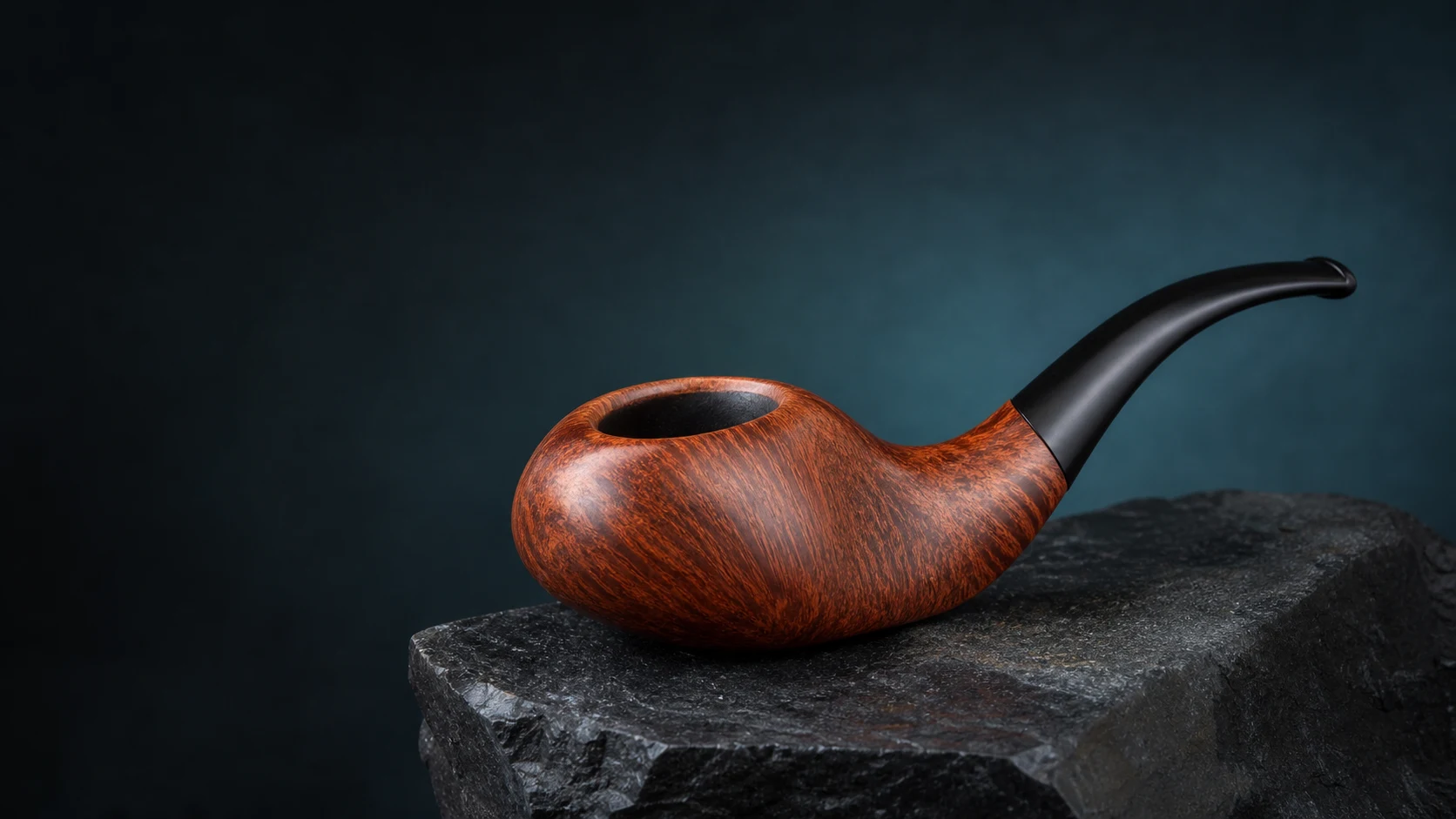
A Blowfish pipe is best understood as a sculptural catalog shape with a broad, full bowl profile and a flowing transition into the shank. Many examples look asymmetrical or wide-backed from some angles, but the name is not a universal geometric standard. Identify the whole silhouette, then read how the exact seller uses the Blowfish label.
The bowl shape does not dictate one stem line or bend. Current catalog records include Blowfish-labeled items with bent, long-stem, wide-back, rusticated, and other modifiers. Those modifiers describe the individual listings; they are not required features of every Blowfish. Use the shop to inspect live examples and treat each product page as the source for its stated details.
This article owns the Blowfish bowl-and-panel relationship. Use the visual shape index for cross-family navigation and the Freehand guide for the broader design category that can overlap with, but does not replace, the Blowfish name.
The Blowfish profile at a glance
| Area to inspect | Common catalog cue | Important limit |
|---|---|---|
| Bowl body | Full, broad, or laterally emphasized form | No fixed width-to-height ratio |
| Front and back | May show an uneven or sculpted balance | Symmetry varies by example |
| Bowl-to-shank transition | Often visually continuous and flowing | Junction treatment is not standardized |
| Stem line | Straight, curved, or elongated versions may appear | Bend does not define the bowl name |
| Surface | Smooth, rusticated, carved, or mixed appearance may appear | Finish does not establish the shape |
| Catalog wording | Blowfish may be combined with other descriptors | Exact title controls the product claim |
Use these cues as an identification checklist, not as a template that every maker or seller must follow.
Read the whole bowl, not one dramatic feature
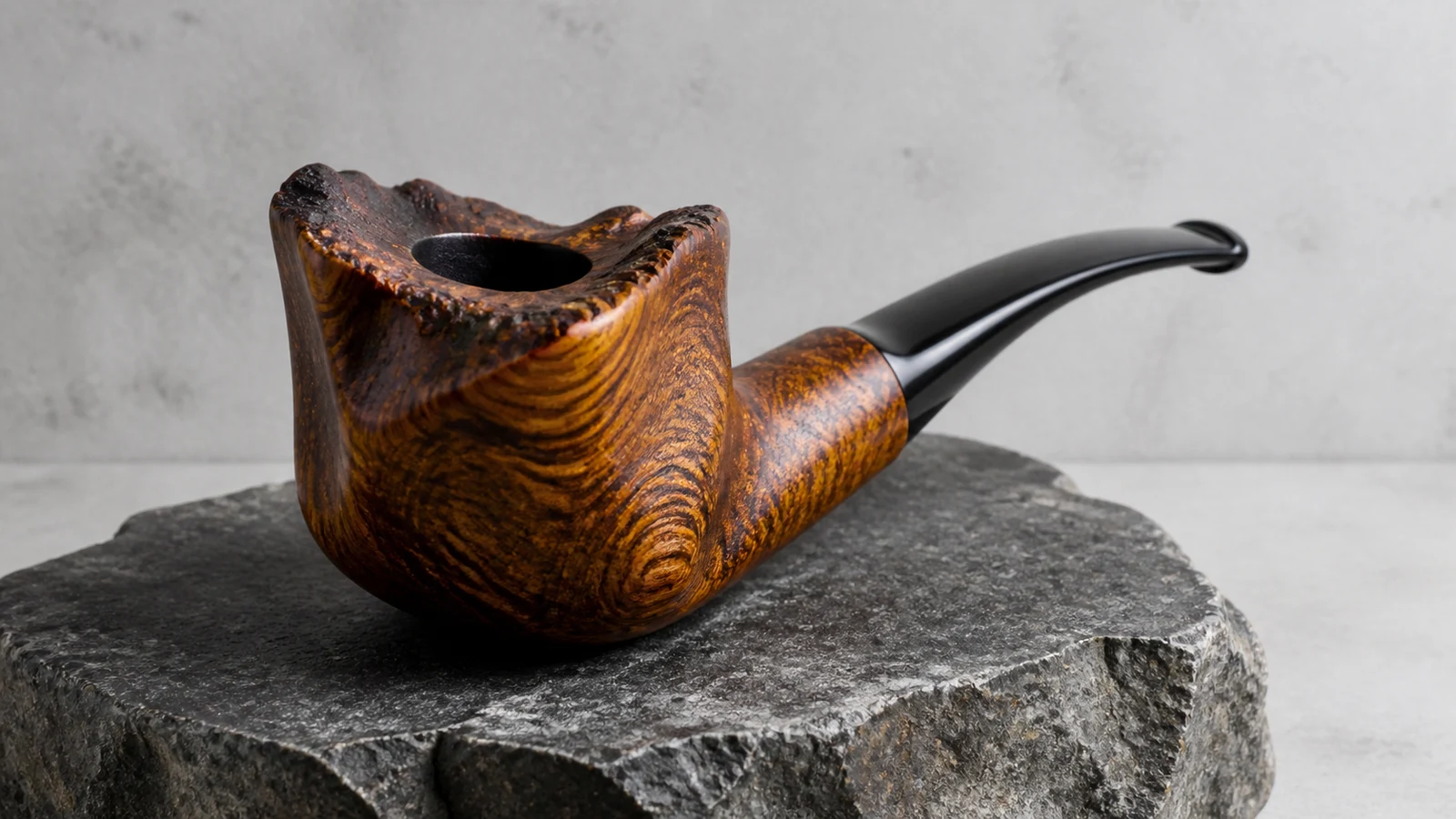
The Smokingpipes glossary describes the basic Blowfish as a rounded, Apple-like bowl flanked by panels that may differ in size, while noting that interpretations vary widely. In a side view, the body may carry a low, full mass with curved surfaces leading toward the shank; a front or rear view can reveal the panels and asymmetry that a single profile hides.
No single bulge proves the label. Camera perspective, a close crop, and strong lighting can exaggerate width. A carved or rusticated surface can also make the outline look irregular. Trace the outer boundary of the bowl in two or more views and check whether the overall form, not just the texture, supports the seller's Blowfish description.
The chamber opening is another weak shortcut. A photograph taken above the rim can make a round opening look oval, while a rotated bowl can hide its widest area. Unless dimensions or direct views are supplied, describe only the visible outer profile and avoid conclusions about chamber geometry.
The stem line is a separate decision
A Blowfish may be paired with a bent stem, a more direct stem line, or an elongated shank-and-stem treatment. The catalog name remains focused on the sculptural bowl family. For accurate comparison, record two fields: “Blowfish” for the supported shape label and the separately stated bend or length profile.
This matters because two Blowfish products can create very different overall silhouettes. A bent example may arc upward from the bowl, while a long-stem example extends the horizontal line. Neither visual arrangement can guarantee balance, comfort, airflow, cooling, or any other performance result.
If the bend is not stated, use neutral wording such as “the photographed stem appears curved” rather than assigning a formal category. The product guide explains the same visible-versus-stated distinction for other listing attributes.
A multi-angle identification method
Apply this sequence when product photos are clear:
- Choose a side profile that shows the complete bowl, shank, and stem.
- Mark where the bowl appears widest and how that fullness flows toward the shank.
- Inspect a front, rear, or three-quarter view for lateral breadth and visible asymmetry.
- Separate the structural outline from grain, carving, rustication, and highlights.
- Check whether the title or shape attribute explicitly says “Blowfish.”
- Record bend, length profile, finish, and special features as separate descriptors.
- Use stated measurements for cross-product size comparisons.
- Leave hidden or unstated specifications unresolved.
If the photographs and title disagree, do not force a relabeling. Ask the seller how the shape name was assigned and whether the images show the exact item.
Blowfish compared with nearby visual families
A Blowfish can overlap visually with freehand or other sculptural catalog labels because all may prioritize flowing lines over a simple cylinder. The terms are not interchangeable. “Freehand” may describe an approach or catalog family, while “Blowfish” points to a particular broad, fish-like visual idea in common naming practice. A listing can use both labels.
It can also look low and rounded in a way that recalls an Author or Apple from one angle. The useful difference is the complete three-dimensional treatment: a Blowfish label often emphasizes lateral form, asymmetry, or a more continuous sculpted transition. Because catalog usage varies, the product's own label is still essential evidence.
Avoid building a rigid decision tree from generic descriptions. If an example sits between families, preserve the seller's wording and describe what is visibly distinctive rather than declaring the catalog wrong.
What current catalog examples support
The 2026-07-16 catalog snapshot contains 13 Blowfish-classified products. The live Blowfish Bent Wide-Back Handmade page shows how shape, bend, back treatment, and production wording can coexist as separate fields. No one modifier defines the full group.
It does not mean every modifier is available now, that all examples have the same material, or that title claims have been independently established. Material, origin, construction method, finish process, condition, dimensions, filter details, package contents, price, and stock remain item-specific. Read the live page and its qualification language before relying on any of them.
What the shape name cannot establish
The Blowfish label cannot prove exact size, weight, wall thickness, chamber dimensions, or filter compatibility. It also cannot promise comfort, balance, heat behavior, airflow, durability, quality, or health outcomes. Those claims do not follow from a broad bowl or sculpted outline.
Photographs can show visible color, surface texture, grain-like patterns, carving, and the relationship of bowl to stem. They cannot independently prove wood species, geographic origin, hidden drilling, internal cavities, or the exact process used to create a finish. Treat the description and structured attributes as claims to review, not details to infer from appearance.
A careful way to browse Blowfish listings
Start with visual preference: broad versus restrained, more symmetrical versus more sculpted, and direct versus curved stem line. Then compare only stated fields across the selected product pages. Use the same units for dimensions and note what each measurement describes.
If a field is absent, leave it blank or ask the seller. Do not borrow a measurement or filter specification from another Blowfish merely because the shape name matches. When you are ready to compare catalog examples, browse the current shop and recheck the exact listing before ordering.
Frequently asked questions
What should I check when researching a Blowfish pipe shape?
Check that the listing explicitly uses the Blowfish label and that multiple photos support the broad or sculpted bowl profile. Then record bend, dimensions, material claims, finish, condition, filter details, package contents, and availability separately.
What can multiple photos establish about a Blowfish profile?
Photos can support observations about bowl outline, visible asymmetry, stem line, relative proportions, color, texture, and carving. They cannot reliably confirm exact dimensions, hidden construction, material origin, filter fit, or performance.
Which Blowfish listing facts need separate confirmation?
Ask for any missing measurements, weight if important, named material and finish, condition, filter information, package contents, and evidence that the photographs show the exact item. Ask about any mismatch between the title and visible profile.
How should I compare Blowfish listings without generalizing one example?
Use the shop and search the live listings for the Blowfish label. Compare the exact product pages rather than assuming that one example's bend, dimensions, or features apply to the entire shape family.
If the Apple-like bowl reference is the confusing part, compare it with the Apple shape guide, which focuses on a more regular rounded bowl rather than Blowfish panels.
Related posts
Product notes, store updates, and purchase guidance for the storefront.