Bent vs Straight Tobacco Pipes: Visible Differences to Compare
Compare bent and straight tobacco pipes by silhouette, stem angle, stated length, and listing evidence without assuming performance.
Written by
The Tobacco Pipe Editorial Team
The store editorial team reviews product facts, care boundaries, and buying guidance against the current catalog and source evidence.
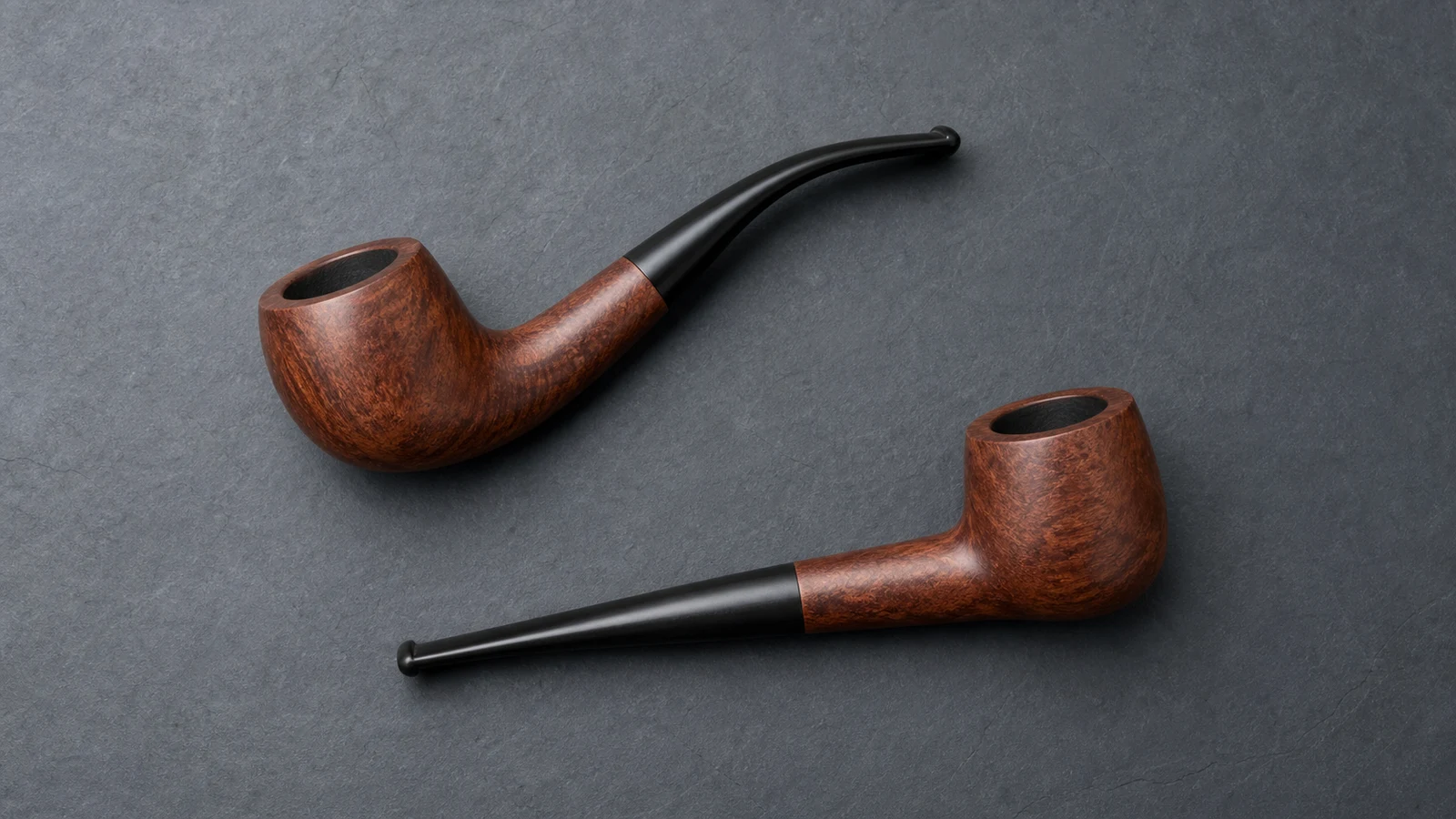
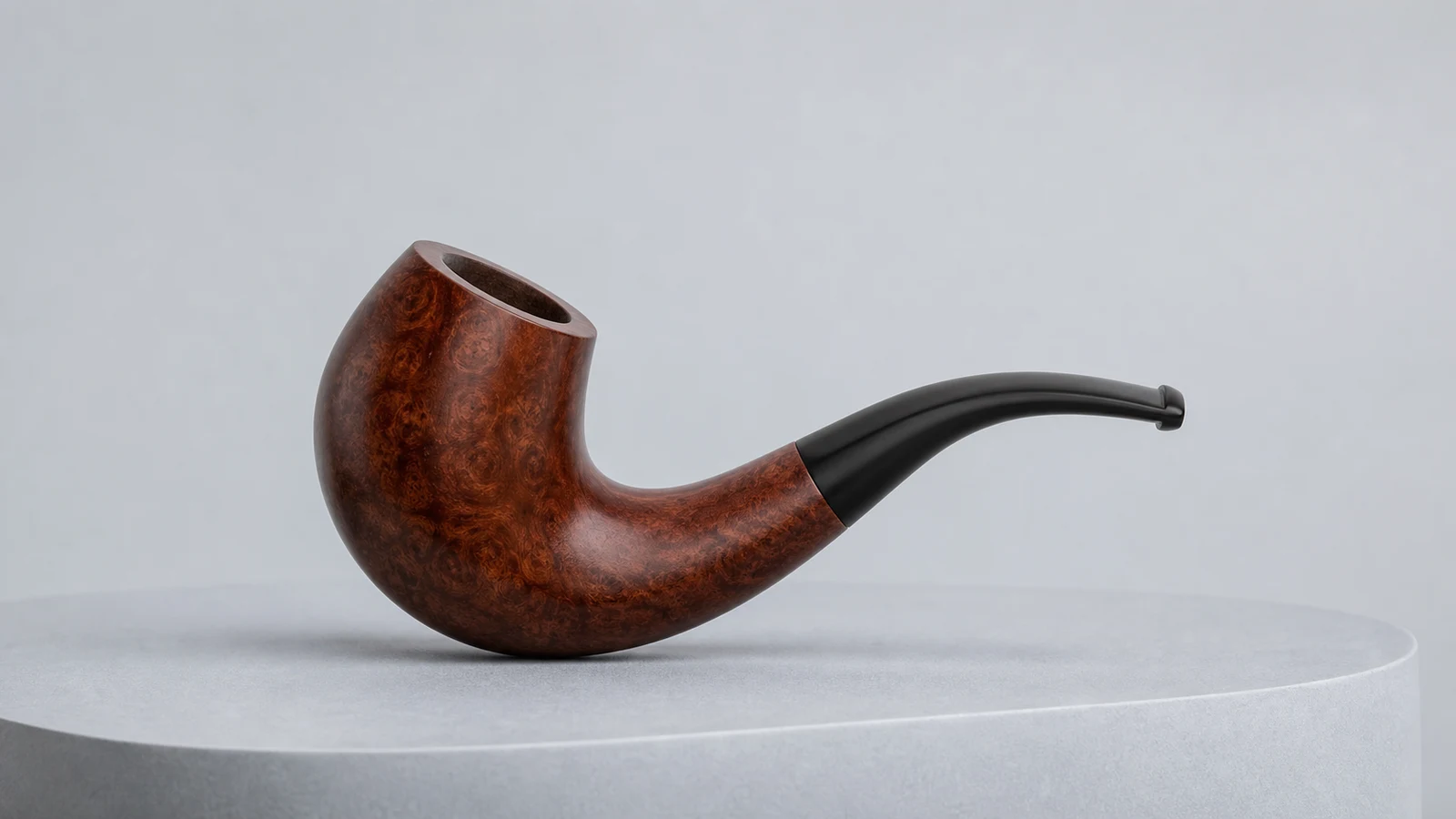
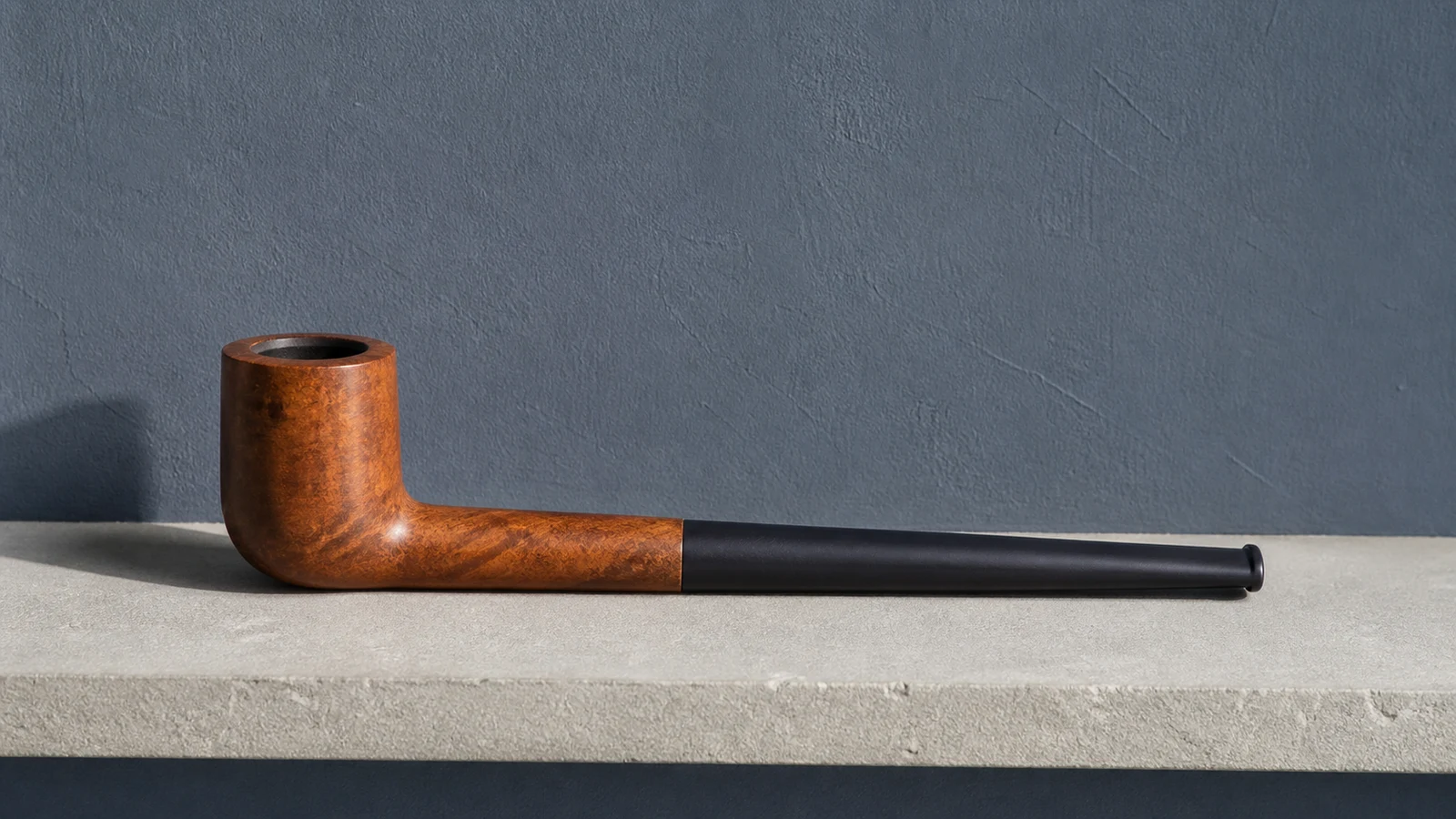
The clearest difference between a bent and a straight tobacco pipe is the line from bowl to mouthpiece. A straight pipe keeps the shank and stem on a broadly direct axis, while a bent pipe turns that line downward to some degree. That visible distinction is useful for browsing, but it does not by itself prove how a pipe will feel, perform, or fit a particular buyer.
Treat “bent” and “straight” as catalog starting points. Compare the silhouette first, then check the exact listing's bowl shape, stem angle, stated length, dimensions, filter information, condition, and photographs. The site's product guide follows the same evidence-first approach, while the pipe-shape overview places bend alongside the other visible shape cues.
The quickest visual comparison
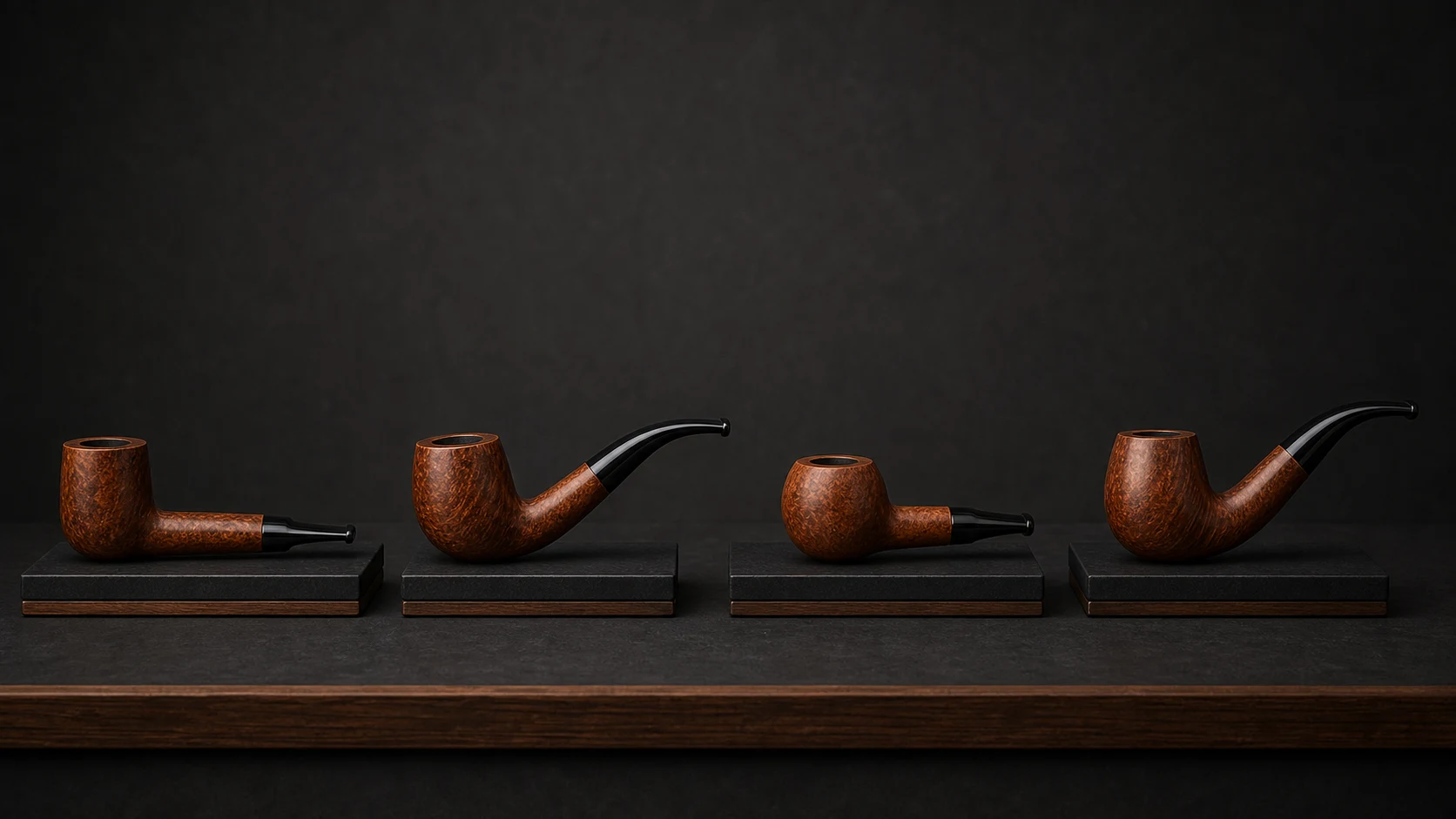
Put two side-profile photographs on the same screen and trace an imaginary line through the center of each shank and stem. On a straight pipe, that line continues with little vertical change. On a bent example, it curves or angles downward between the bowl and mouthpiece. The bowl may also sit higher relative to the end of the stem, producing a more compact-looking outline.
That comparison should stay descriptive. A photograph can show where the parts appear to sit; it cannot establish actual weight distribution, comfort, airflow, or smoking characteristics. Even apparent length can be misleading when the photos use different crops or camera distances.
| Visible point | Straight listing | Bent listing | What still needs its own evidence |
|---|---|---|---|
| Shank and stem line | Broadly direct or level | Curves or angles downward | Whether the seller's bend label matches the exact item |
| Bowl-to-mouthpiece height | Often closer to one axis | Often shows more vertical offset | Exact dimensions and camera angle |
| Overall outline | Frequently reads as extended | Frequently reads as compact or arched | Stated total length rather than photo impression |
| Bowl family | Can be Apple, Billiard, or another shape | Can be Apple, Billiard, or another shape | The listing's separate shape label |
| Filter status | Not determined by the silhouette | Not determined by the silhouette | Exact filter specification or seller confirmation |
Bent and straight do not describe the whole pipe
A bend label describes one part of the profile, not a complete design specification. Two straight pipes can look very different because one has a rounded Apple bowl and another has a straighter-sided Billiard bowl. Likewise, two bent pipes can share a curved stem line while differing in bowl height, rim treatment, finish, or overall length.
That separation is consistent with Smokingpipes' public shape reference, which notes that traditional bowl families can have straight or bent versions and varied stem configurations. The source is useful for vocabulary; it is not a basis for predicting how any one pipe performs.
This is why it helps to separate four observations:
- Bowl profile: rounded, cylindrical, tapered, carved, or another visible form.
- Bend profile: straight, slightly bent, bent, or full bent according to the listing.
- Length: an actual supplied measurement, not an estimate from an image.
- Listing facts: finish, condition, filter status, package contents, and availability when explicitly stated.
The bent pipe collection and straight pipe collection are useful ways to see how varied each family can be. A collection label narrows the catalog; the individual product page remains the controlling record for the item.
Two current catalog titles make the two-axis idea concrete. The
Natural Egg Sherlock Full Bent
combines a named bowl/style description with Full Bent, while the
Large Billiard Straight
combines Billiard with Straight. Those titles demonstrate how this catalog
records labels; they do not define every Egg, Sherlock, or Billiard elsewhere.
For the individual labels, continue with the Full Bent profile guide or the straight-stem guide. The broader pipe-types guide explains why bend, bowl family, and length belong in separate fields.
Other shape terms need the same separation. The Sherlock shape guide covers a style label that may appear beside a bend description, while the Bulldog and Rhodesian guide compares two bowl-family labels. Neither guide turns the bowl or style name into proof of a particular bend.
How to read the stem angle in photographs
A clean side view is the most useful image for comparing bend. Look for the transition from bowl to shank, then follow the stem to the mouthpiece. Some pipes begin turning at the shank. Others keep a straighter shank and show more of the curve in the stem. Both may be sold under a bent label, so the visible path matters more than assuming a uniform degree.
Use additional views to check whether the apparent curve is real rather than a perspective effect. A three-quarter photograph can make a straight line appear shorter, and rotation can hide a downward angle. If the listing supplies only one image, note that limitation instead of filling in the missing view.
Pay attention to the following:
- Is the full bowl, shank, stem, and mouthpiece visible in one side view?
- Does the stem line change gradually or through a more obvious turn?
- Is the bowl vertical in the photograph, or has the whole pipe been tilted?
- Are multiple images consistent with the same bend label?
- Does the listing provide a total length or other dimensions?
These checks help describe the object accurately. They do not turn a visual inspection into a promise about handling or use.
Compare length with numbers, not silhouette alone
Bent pipes can appear shorter because part of their length is distributed through a curve. Straight pipes can appear longer because the bowl-to-stem line extends horizontally. Neither impression is a reliable measurement.
When dimensions are supplied, compare them directly and confirm that the unit is clear. Total length is especially useful, but bowl height, bowl width, and stem length may also help distinguish two listings. If no dimensions are present, ask the seller rather than estimating from a decorative background, hand, stand, or box in the photograph.
Image scale is also inconsistent across product pages. A tightly cropped small pipe may occupy more pixels than a loosely photographed large one. Use photos to compare proportion within one pipe; use stated measurements to compare size between pipes.
Do not infer performance from the profile
Shape discussions often drift from visible form into universal claims about comfort, cooling, moisture, or smoking quality. A bend alone does not support those conclusions. Construction, dimensions, materials, condition, and the individual item all introduce facts that a silhouette cannot resolve.
The same restraint applies to balance. A side image may suggest that a bowl is visually closer to or farther from the mouthpiece, but it does not provide the pipe's weight, center of mass, or a buyer's physical experience. Describe the distribution you can see and leave ergonomic conclusions unclaimed.
Filter compatibility is another separate question. Straight and bent pipes may be listed with or without filter information. Never infer a filter size or system from the bend category. Look for an explicit specification attached to the exact product, and request confirmation if that detail matters.
A practical listing-by-listing decision process
Start with the profile you prefer visually, then compare actual inventory in the shop. For each candidate, record the seller's shape and bend labels, the visible stem line, supplied dimensions, finish, condition, filter information, price, stock, and package contents. Mark a field “not stated” when the evidence is absent.
This simple discipline prevents a category label from doing too much work. It also makes two very different designs easier to compare: the shared question is not “Are all bent pipes better or worse than all straight pipes?” but “What does each exact listing show, and which important facts are confirmed?”
Frequently asked questions
What should I verify when researching bent vs straight tobacco pipes?
Verify the individual listing's bend label, bowl shape, stated dimensions, finish, condition, filter information, current availability, and exact product photos. The profile category alone does not confirm the rest.
Can side-view photos settle the bent-or-straight comparison?
Clear photographs can support observations about silhouette, stem angle, bowl outline, color, finish appearance, and visible features. They cannot reliably confirm hidden construction, exact dimensions, compatibility, or performance.
What listing gaps matter when comparing bend profiles?
Ask about any missing measurement, material or condition statement, filter specification, package contents, and the identity of the exact item pictured. Questions should be tied to omissions in the listing, not assumptions based on the shape.
How should I use the bent and straight collections?
Use the separate bent and straight collections to narrow the current catalog, then open each product page to compare its photographs and confirmed facts. Availability can change, so the live listing is more reliable than a general shape guide.
Related posts
Product notes, store updates, and purchase guidance for the storefront.