Pocket Pipes vs Sitter Pipes: Size and Base
Compare the Pocket size label with the Sitter base-design label through stated dimensions, visible contact surfaces, and possible overlap.
Written by
The Tobacco Pipe Editorial Team
The store editorial team reviews product facts, care boundaries, and buying guidance against the current catalog and source evidence.
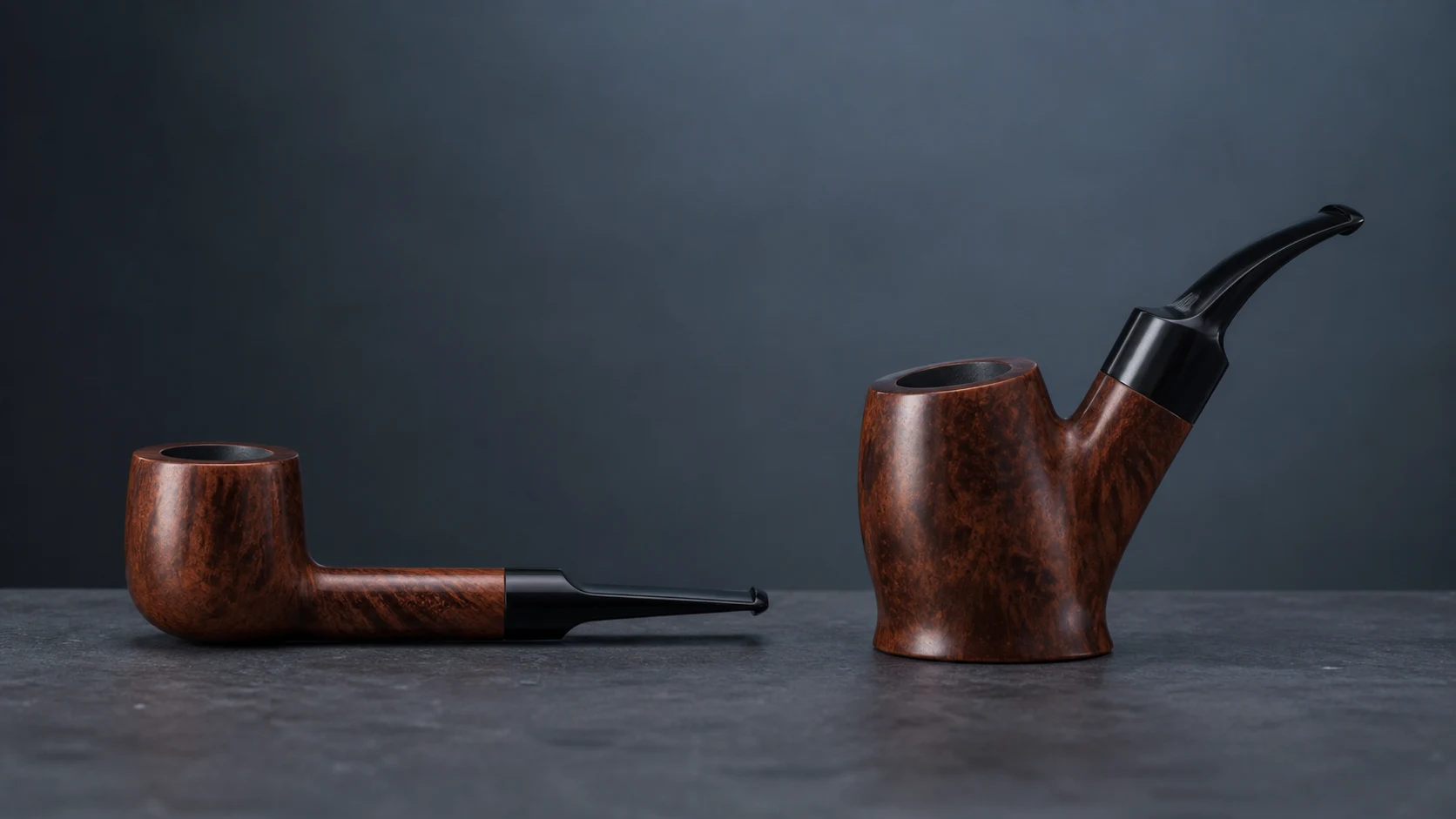
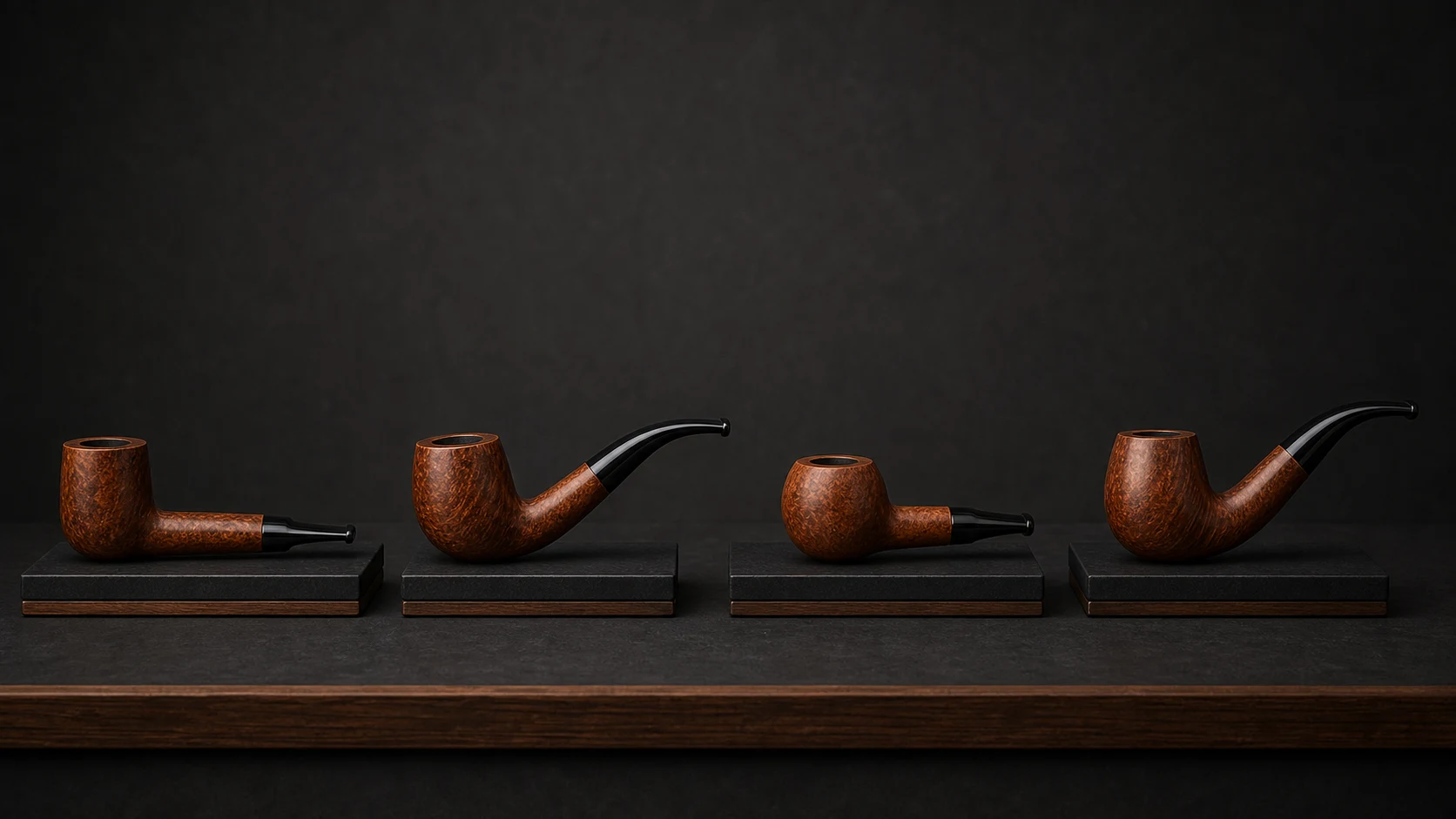
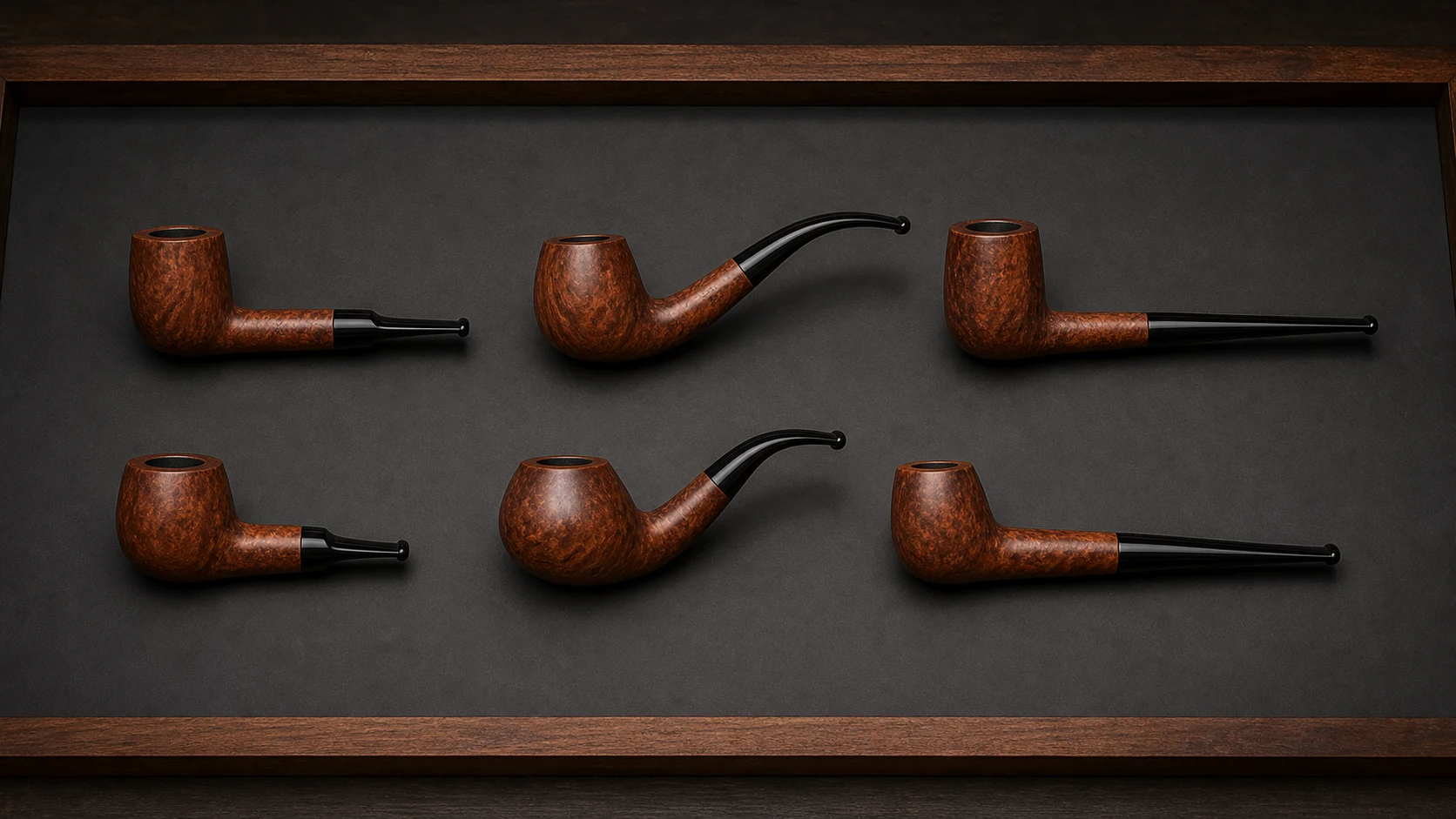
“Pocket” and “sitter” answer different catalog questions. Pocket describes a compact-looking length or carrying profile. Sitter describes a base that appears intended to let the pipe rest upright on a level surface. Neither term supplies a universal measurement. They can overlap in principle, but the site's 2026-07-16 intake snapshot contains nine Pocket Size titles and nine Sitter titles with no item carrying both labels. A theoretical overlap should not be presented as a current catalog example.
No independently accessible source reviewed defines a universal Pocket-versus-Sitter taxonomy. This page therefore explains how the two labels are used in this catalog, while external terminology is used only to keep Vest Pocket shapes and underside panels from being mistaken for universal rules.
The most reliable comparison is therefore not “Which shape is better?” but “Which visible feature does each label describe, and what does the exact listing state?” Use photographs to inspect the overall length profile and base, then use stated dimensions and product attributes for facts that a photo cannot prove. The current Pocket and Sitter collection groups both supported catalog labels without treating them as one rigid shape.
The pipe types guide explains why length profile and base feature belong on different taxonomy axes. The visual shape index is the better starting point when the question is Apple, Acorn, Billiard, or another bowl family rather than compactness or resting position.
Pocket and sitter at a glance
| Question | Pocket label | Sitter label | What still needs checking |
|---|---|---|---|
| Main catalog idea | Compact overall profile | Seller-applied self-resting intent | Whether the exact base supports the claim |
| Most useful view | Full side profile | Side and underside views | Whether photos show the exact item |
| Key comparison | Stated total length and proportions | Base contact area and balance at rest | Exact dimensions and stable-surface behavior |
| Bowl family | May vary | May vary | Seller's separate shape attribute |
| Stem line | May be straight or bent | May be straight or bent | Listing's bend description |
| Stand relationship | Does not imply self-standing | Does not prove a separate stand is unnecessary | Stand fit and real-world stability |
This table is a reading guide, not an industry specification. Catalogs may apply either term more broadly or narrowly.
What “pocket” can tell you
A pocket tobacco pipe is commonly presented as compact relative to ordinary catalog offerings. That can be visible as a shorter overall line, a smaller looking bowl-and-stem combination, or both. The term does not establish a maximum length, bowl capacity, weight, or any other numeric threshold.
Start with a photograph that shows the entire pipe from bowl to mouthpiece. Notice the relationship between the bowl, shank, and stem instead of judging size from the image frame. A tightly cropped product can look large, while a loosely framed product can look small. If two listings provide total length, compare the stated numbers and units rather than their thumbnail sizes.
“Pocket” also does not identify the bowl shape. The live Acorn Pocket Size listing combines the Acorn bowl family with a size modifier; an Apple, Sherlock-style form, or another catalog family may be sold with a pocket-size modifier. Record the shape and bend as separate fields. Doing so preserves what the title actually says and avoids turning a size-oriented label into a silhouette rule.
What “sitter” can tell you
A sitter tobacco pipe commonly has a visible base treatment that suggests it can rest upright when placed on a level surface. Depending on the listing, that may be a flattened lower bowl, a broader heel, a foot-like extension, or a combination of surfaces. There is no single sitter bowl outline shared by all catalog examples.
Use at least one side view and, when available, an underside or three-quarter view. Look for a deliberate contact surface rather than assuming any broad bowl will stand. A photograph of a pipe posed upright is useful visual evidence, but it still does not prove stability on every desk, shelf, or stand. Surface level, stem weight, and the exact contact points all matter.
Sitter is also not a promise that no separate pipe stand will ever be useful. A listing may rest on its own in one position yet fit poorly in a particular stand. If stand compatibility matters, compare the stand's supported width and rest geometry with the pipe's stated dimensions or ask the seller about the pairing.
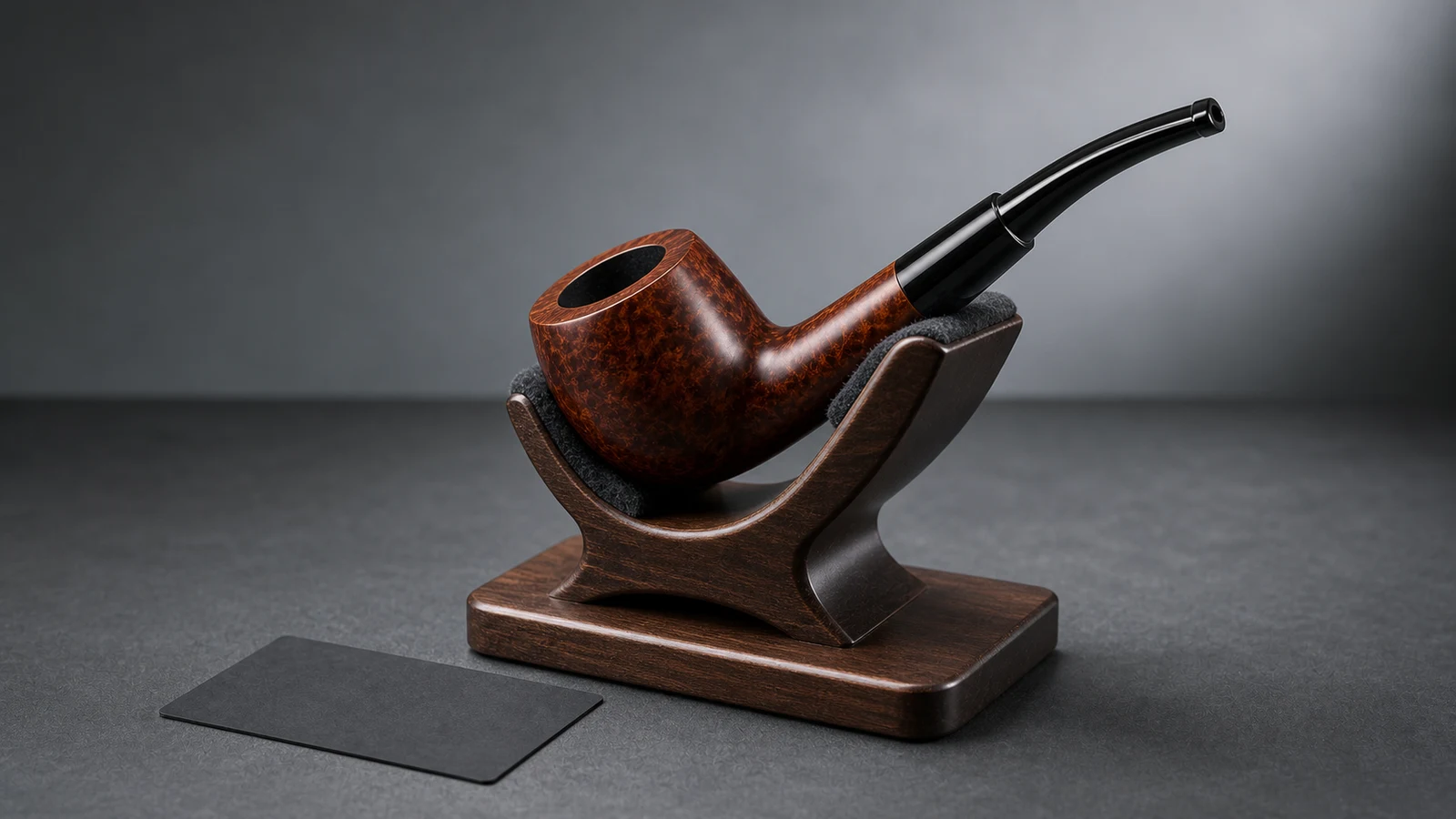
The external Smokingpipes glossary notes that an underside panel can allow some pipes to sit upright, but that is one construction cue, not the definition of every sitter. The live Judge Straight Sitter page is a current catalog example; its Judge shape and Straight modifier remain separate from the Sitter feature.
A pipe can carry both labels
Pocket and sitter describe different axes, so overlap is expected. A compact pipe may have a flat base; a sitter may also be full length. The first case can be labeled both pocket and sitter, while the second may be a sitter without being marketed as pocket size.
This is why the combined collection is useful for discovery but not sufficient for product-level conclusions. Current catalog records include pocket-size titles, sitter titles, and titles that combine a sitter feature with a straight or bent profile. Those names support the presence of the labels. They do not establish a universal measurement or guarantee that every product in the group shares the same construction.
When a title and photograph appear to conflict, keep the seller's exact wording in your notes and request clarification. Do not silently convert a compact looking pipe into a “pocket” item or a broad-based pipe into a “sitter” when the listing does not use those terms.
Photo and listing identification checklist
Use this sequence for a consistent comparison:
- Find one side-profile image that shows the full pipe.
- Record each supplied label: bowl shape, bend, length profile, and features.
- For “pocket,” find the stated total length instead of estimating from crop.
- For “sitter,” inspect the base from more than one angle when possible.
- Check whether an upright product photo shows the exact item or only a styled example.
- Record supplied dimensions with their units and leave absent values blank.
- Check material, finish, condition, filter details, package contents, price, and availability on the exact live listing.
- Ask about stand compatibility if a particular stand is part of the buying decision.
The broader product guide provides a reusable method for separating visible observations from seller-stated specifications.
Dimensions matter more than the adjective
If compactness affects storage or carrying, the word “pocket” is only a search filter. Total length, bowl height, bowl width, and weight—when stated—are the details that allow two listings to be compared. Do not infer any of those values from another product bearing the same label.
For a sitter, dimensions help describe the object but do not by themselves prove stable resting. The contact surface is a three-dimensional feature, and photos may hide a curve or uneven point. Ask the seller whether the exact item is designed to stand upright if the listing does not clearly say so.
Neither label determines comfort, balance in hand, airflow, heat behavior, durability, filter compatibility, or product quality. Those are not reliable consequences of a compact profile or a visible base treatment.
For the separate accessory decision, the pipe stand guide focuses on actual support geometry rather than assuming that a Sitter label answers stand fit.
How to compare current catalog examples
Begin with the combined collection and open the exact product pages that match your preferred outline. Compare their titles, attributes, stated dimensions, and photographs line by line. Then use the wider shop to see whether a similar bowl family appears without the pocket or sitter modifier.
The goal is to find a listing with enough specific information, not to assume that either label is universally preferable. Availability and product details can change, so recheck the live record before making a decision.
Frequently asked questions
What should I check when comparing a pocket pipe with a sitter pipe?
For a pocket-labeled pipe, check total length and any other relevant stated dimensions. For a sitter, inspect the base and make sure the seller applies the self-resting label to the exact item. For either one, record shape, bend, materials, condition, filter details, package contents, and availability separately.
What can photos establish about a pocket or sitter label?
Photos can support observations about overall proportions, stem line, visible base shape, color, texture, and whether the item is pictured upright. They cannot reliably establish exact dimensions, hidden construction, stand fit, filter compatibility, or performance.
Which pocket-or-sitter facts need separate confirmation?
Ask for missing measurements, weight if relevant, the intended meaning of the pocket or sitter label, material and finish statements, condition, filter details, package contents, and evidence that the images show the exact item.
How should I compare products in the Pocket and Sitter collection?
Use the Pocket and Sitter collection for the combined label group, then open each product page for exact details. Use the shop when you want to compare those products with other shape and length profiles.
Related posts
Product notes, store updates, and purchase guidance for the storefront.