Freehand Pipe Shape Explained
Understand Freehand as a broad shape label, then inspect the individual bowl, shank, stem line, finish, and supported listing details.
Written by
The Tobacco Pipe Editorial Team
The store editorial team reviews product facts, care boundaries, and buying guidance against the current catalog and source evidence.
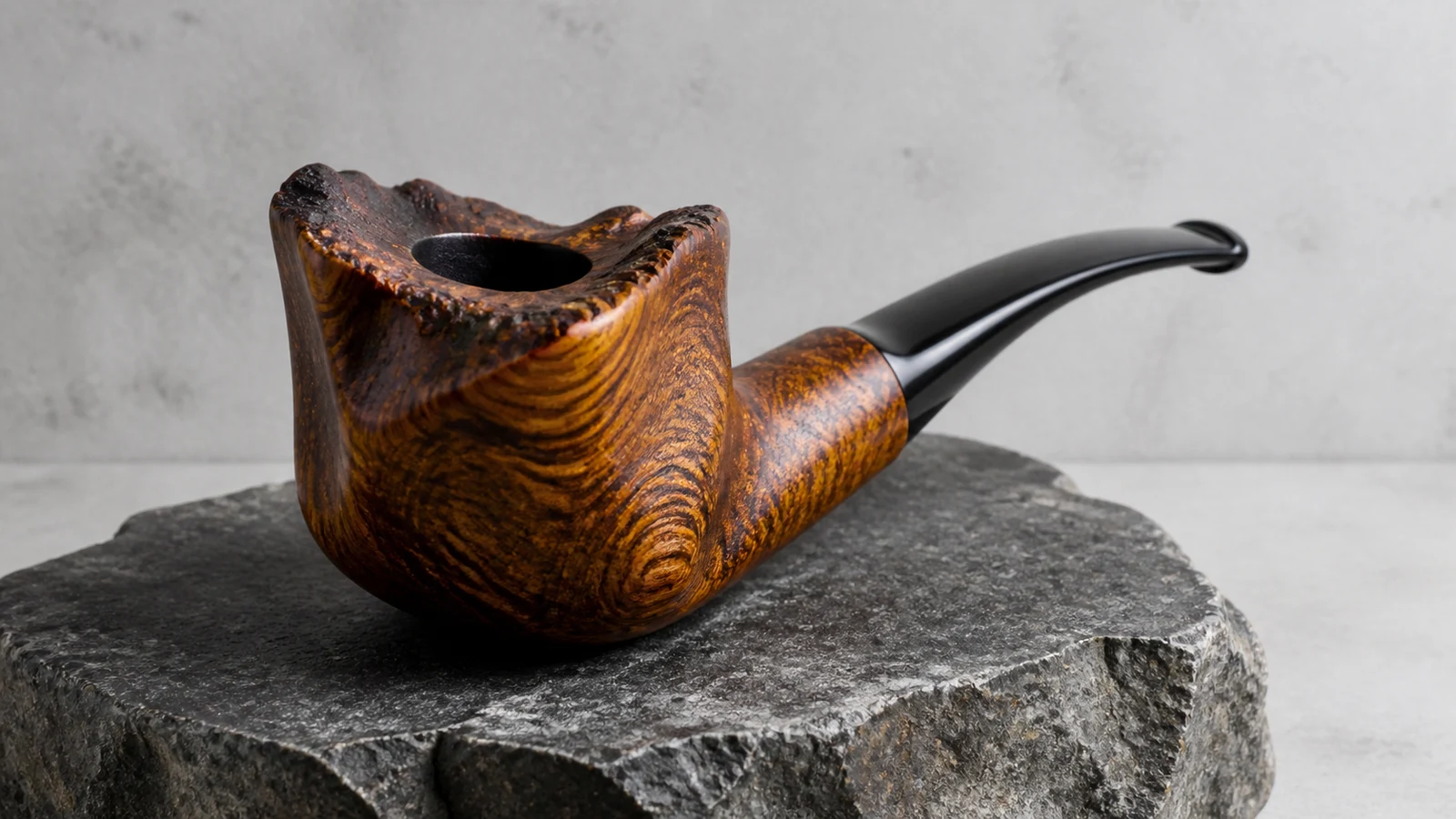
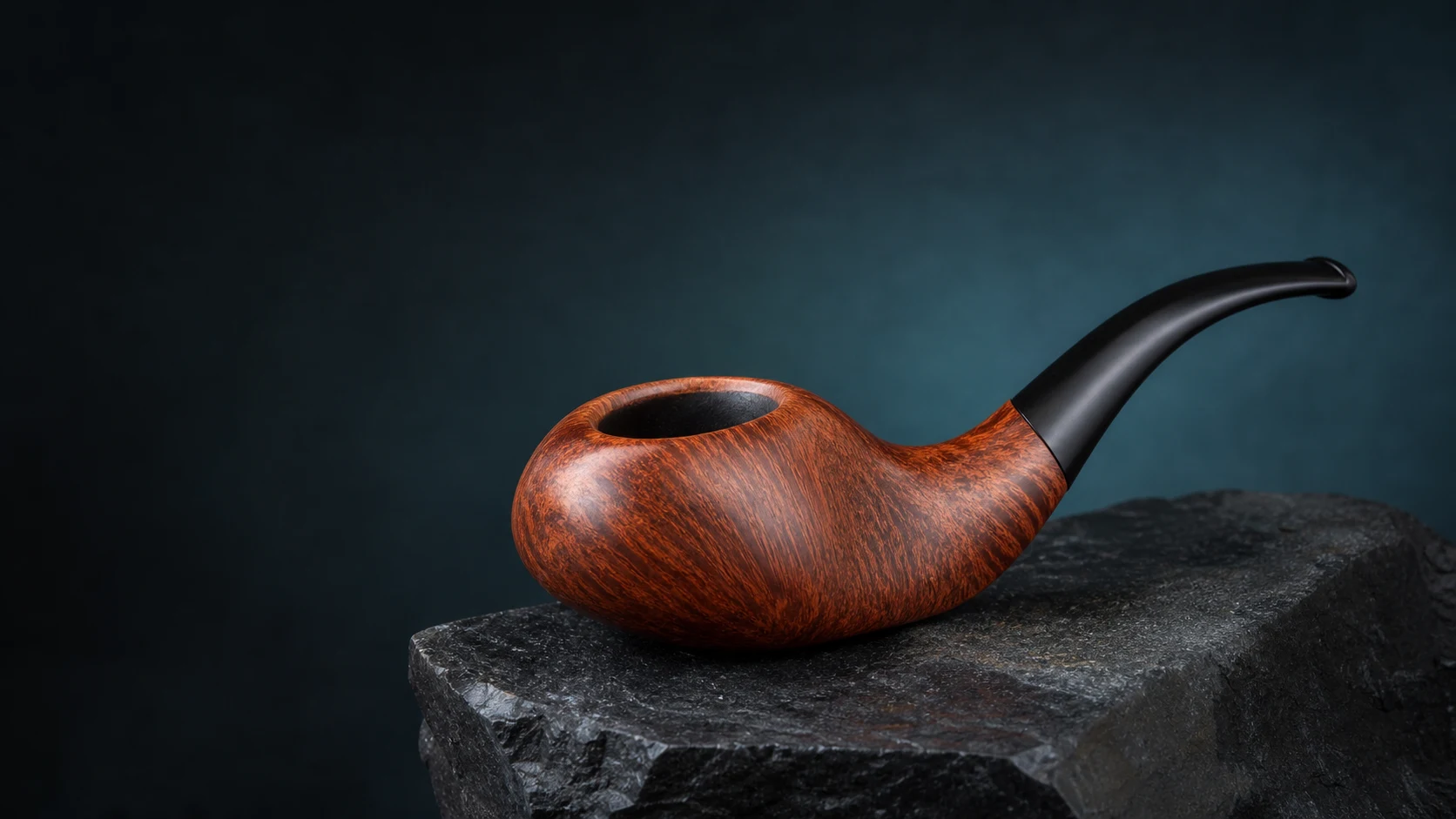
Freehand is a broad pipe-design label for forms that do not follow one uniform, repeatable silhouette. A Freehand listing may emphasize an asymmetrical bowl, an organic rim, a sculptural shank, an unconventional stem line, or a combination of distinctive visible choices. The category's defining feature is variation, not one mandatory outline.
That freedom makes item-by-item inspection essential. “Freehand” does not prove that a pipe is handmade, one of a kind, made by a particular artisan, or built from a specific material. The catalog's Freehand and Artisan group contains supported examples, but each product page controls its own claims.
For the wider taxonomy, start with the pipe types guide and the visual shape index. This page stays with Freehand composition; the separate handmade versus Freehand guide owns the production-claim question.
Why Freehand is different from a fixed shape family
A familiar family such as Billiard or Apple can be described through a recurring bowl cue. Freehand is less prescriptive. The Smokingpipes glossary describes Freehand broadly as forms that cannot simply be turned as a regular lathe shape and notes that named designs such as Blowfish can sit within that wider tradition. The useful cue is an individual composition, not a required rim treatment or bend.
Blowfish remains its own catalog term rather than a synonym for every Freehand. The Blowfish shape guide explains which visible cues belong to that narrower label and which product facts still need separate confirmation.
This does not mean every irregular-looking pipe is automatically Freehand. Carving, camera perspective, and surface texture can make a conventional shape look less regular. Read the seller's label and examine multiple angles before deciding how to describe the item.
| Feature to inspect | Possible Freehand expression | What is not guaranteed |
|---|---|---|
| Bowl profile | Asymmetry, sculptural mass, unusual taper | One shared proportion or chamber size |
| Rim | Organic, angled, plateau-like, or otherwise distinctive | Material, condition, or natural origin of detail |
| Shank | Nonlinear or individually shaped transition | Internal airway construction |
| Stem line | Straight, bent, offset, or integrated into the composition | Comfort, balance, or performance |
| Listing claim | Freehand, artisan-style, carved, or related wording | Handmade process, named maker, or uniqueness |
The table offers observation categories, not a checklist that every Freehand must satisfy.
Start with the bowl profile
Look at the bowl from the side, front, and top when those views are available. Unlike a standardized shape comparison, the goal is not to find one expected outline. Instead, identify what makes this exact bowl distinctive and whether that feature remains visible across multiple angles.
An angled rim may look dramatic from one side and nearly level from another. An apparently asymmetrical body may be a perspective effect. A carved surface may interrupt the edge without changing the underlying bowl geometry. Multiple views help separate three-dimensional form from presentation.
Do not infer chamber shape, wall thickness, capacity, weight, or internal condition from the exterior. If those details matter, look for explicit measurements and seller statements.
Read the stem and shank as part of the composition
In many Freehand designs, the shank and stem do more than connect a bowl to a mouthpiece: their visible line participates in the overall form. The shank may appear broad, angled, flowing, or deliberately offset. The stem may continue that line or create a contrasting curve.
There is no required bend. A Freehand can look broadly straight, gently bent, or dramatically curved. Therefore, bend should be recorded as a separate visible attribute rather than treated as proof of the Freehand label.
Follow the complete side profile, then check another angle for twist, offset, or transitions hidden by the first view. Photographs can document the exterior line, but they cannot establish stem material, tenon fit, filter compatibility, or airway geometry unless the listing supplies that information.
Freehand, handmade, and artisan are not synonyms
These terms often appear near each other, but they answer different questions. Freehand describes a broad design approach or catalog style. Handmade is a production claim. Artisan may indicate positioning, maker involvement, or a seller's category. None should be substituted for another without evidence.
A product can be marketed as Freehand without a detailed account of how it was made. Conversely, a handmade pipe can follow a traditional, repeatable shape. A named artisan claim requires a reliable maker attribution; visual distinctiveness alone does not establish it.
When a listing uses several terms, quote them accurately in your comparison. When it uses only one, do not add the others. The product guide offers a broader framework for keeping seller statements, visible observations, and unknown specifications separate.
How to inspect Freehand catalog photos
Freehand designs benefit from more angles because asymmetry and sculptural details are difficult to understand from one image. Use this sequence:
- Find the complete side view and identify the dominant silhouette.
- Compare the opposite side for asymmetry and surface continuity.
- Check the front and top views for rim angle and bowl form.
- Trace the shank-to-stem transition from more than one direction.
- Separate visible texture from claims about material or process.
- Record every seller-supplied dimension and condition statement.
- List missing compatibility and package details as unknown.
If an important area is never shown, request another image. A highly styled hero photograph is valuable for discovery but may hide the evidence needed for a careful comparison.
Comparing two Freehand pipes
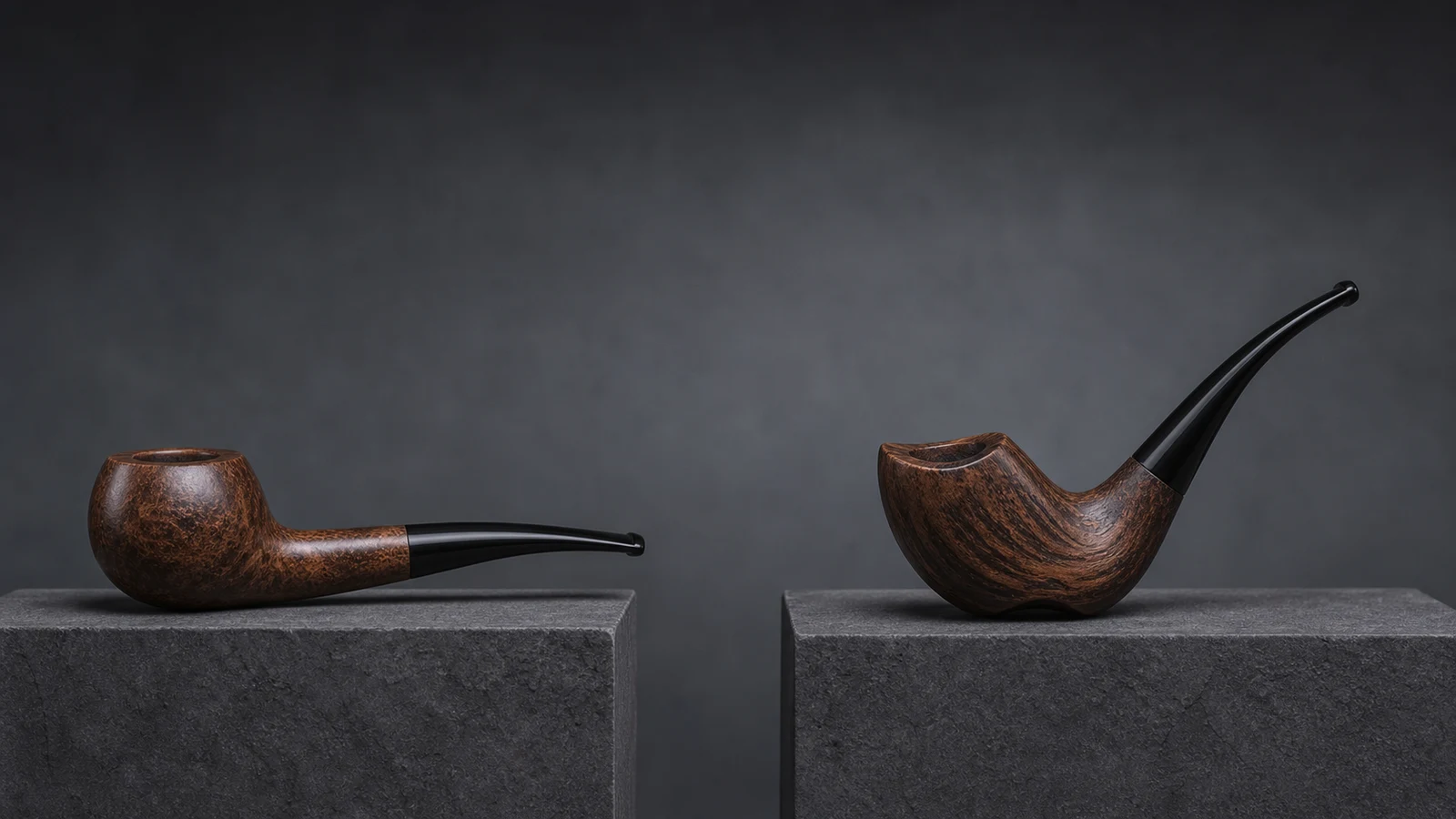
Because the label permits variation, avoid asking which item is the “truest” Freehand. Compare them on observable and stated dimensions instead: overall silhouette, bowl form, rim treatment, visible bend, finish, supplied views, stated measurements, condition, and listing claims.
One item may emphasize an organic bowl while another emphasizes a sculptural shank. The live Faceted Volcano Straight Freehand listing is a concrete example of several independent labels appearing together. It does not make Faceted, Volcano, Straight, and Freehand interchangeable, and none of those visible features guarantees a performance result.
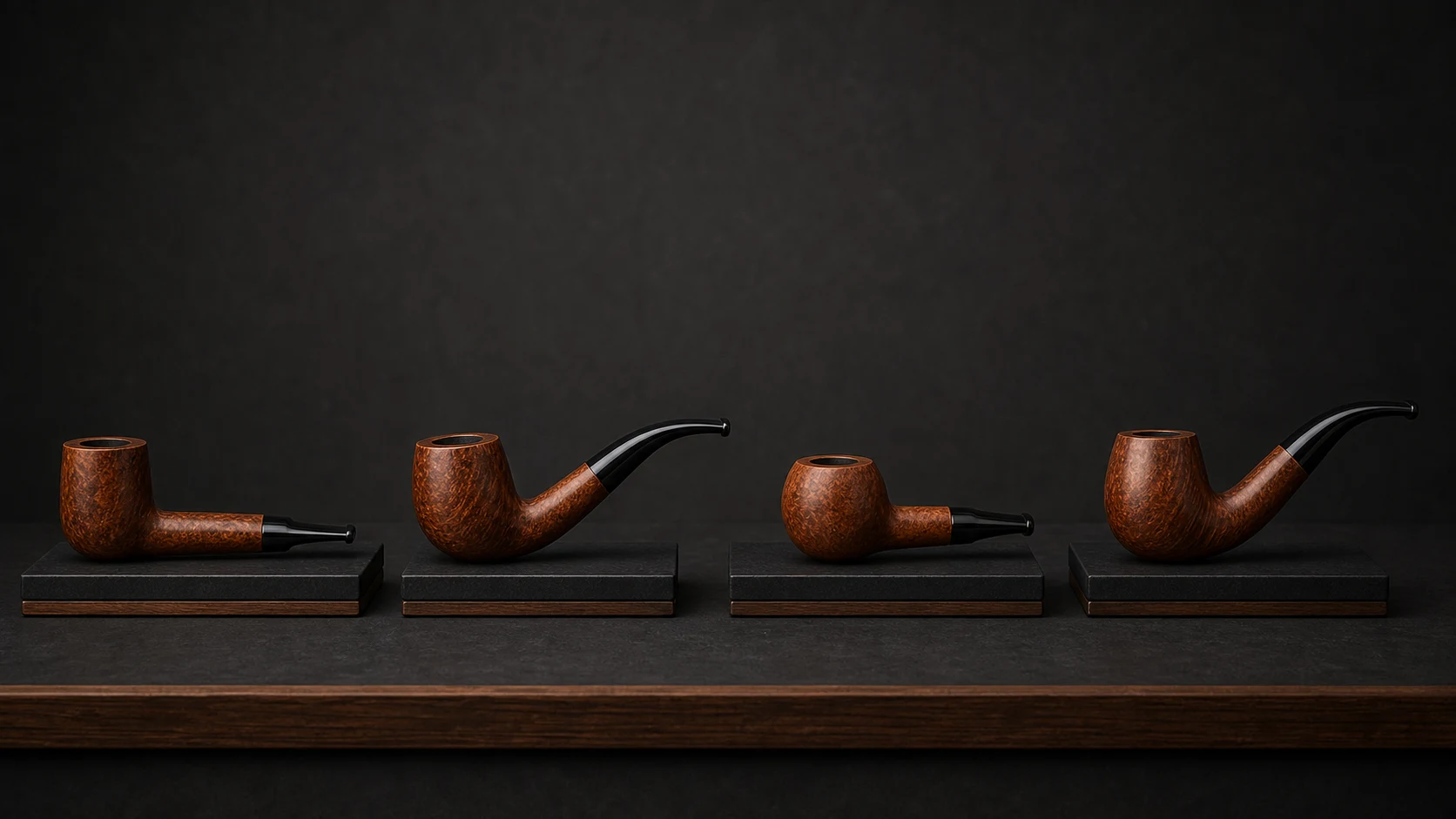
The shop can provide context by showing Freehand listings beside more regular shape families. This contrast may clarify the visual category, but the individual product page remains the authority for price, stock, origin, material, dimensions, and included items.
What to check before making a decision
First check the claims that cannot be established by appearance: stated material, exact measurements, condition, maker attribution, production method, filter information, and package contents. Check whether every statement applies to the exact item pictured rather than to a broader collection.
Then review the photographs for consistency. Make sure the finish, rim, bowl, and stem shown across the gallery appear to describe the same item. If a Freehand is presented as individually distinctive, that makes exact image-to-item matching especially important, but it still should not be assumed without a clear listing statement.
Finally, check current price and availability at the time of purchase. A category page can group examples, but it may not carry every changing product fact.
How to narrow a Freehand shortlist
If the appeal is an individual, less standardized silhouette, browse the Freehand and Artisan collection. Shortlist by the complete set of images rather than the hero photo alone. Then return to each listing and read the factual fields that matter to the decision.
The category is most useful when it preserves difference. Avoid expecting two Freehands to share one bowl shape, bend, size, material, or handling outcome. That variation is precisely why conservative comparison matters.
Frequently Asked Questions
What defines a Freehand pipe shape?
Freehand is a broad design label for individually expressive forms rather than one standardized silhouette. Distinctive bowl, rim, shank, stem, or overall composition may support the label, but examples can differ substantially.
Is every Freehand pipe handmade?
The shape label alone does not prove a handmade production process. Look for an explicit, supportable statement about how the exact item was made.
Does Freehand mean one of a kind?
Not automatically. Uniqueness is a separate product claim. A distinctive form or artisan-style category does not establish that no matching or similar item exists.
Which details can photographs confirm?
Multiple photos can support observations about external silhouette, asymmetry, rim treatment, bend, finish, and visible surface detail. They cannot reliably confirm internal construction, exact measurements, maker, origin, filter fit, condition beyond what is shown, or included items.
Where can I compare current Freehand examples?
The Freehand and Artisan collection groups supported examples. Read each product page independently because the items are not expected to share uniform specifications.
Related posts
Product notes, store updates, and purchase guidance for the storefront.