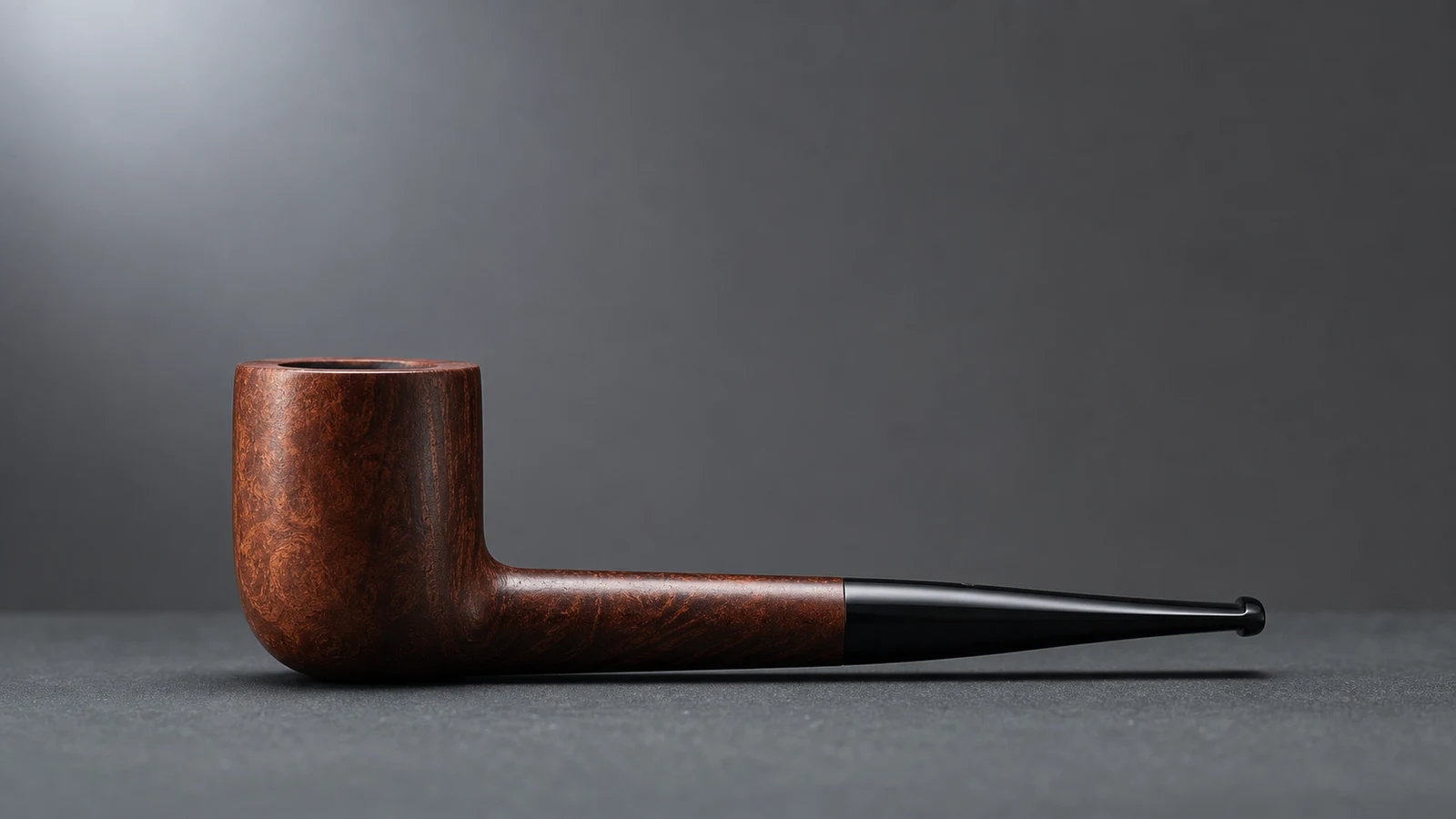
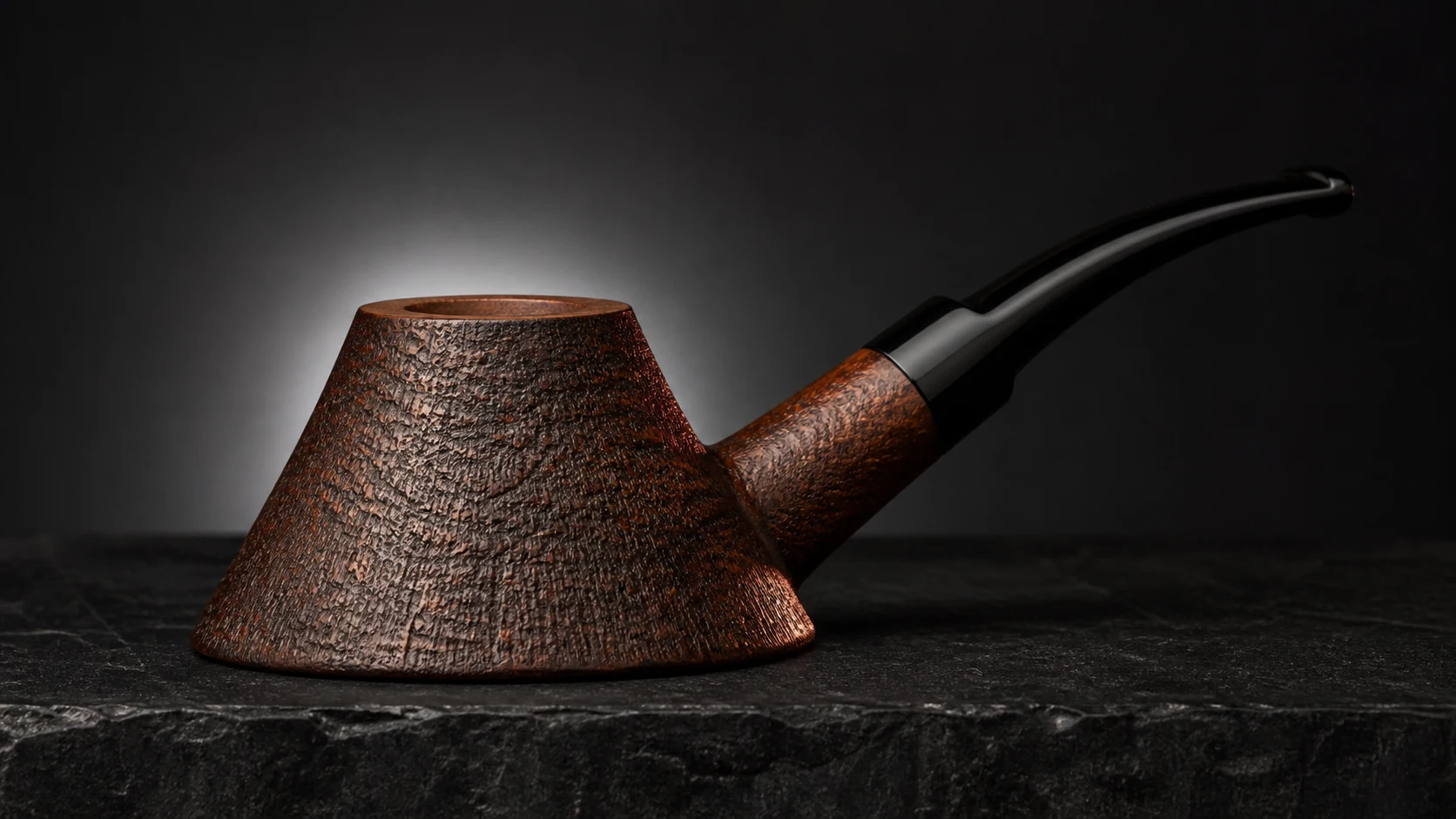
Dublin vs Billiard Pipes: A Visual Shape Comparison
Compare Dublin and Billiard pipe shapes through bowl taper, side profile, rim, and stem line using visible evidence and stated listing labels.
Written by
The Tobacco Pipe Editorial Team
The store editorial team reviews product facts, care boundaries, and buying guidance against the current catalog and source evidence.
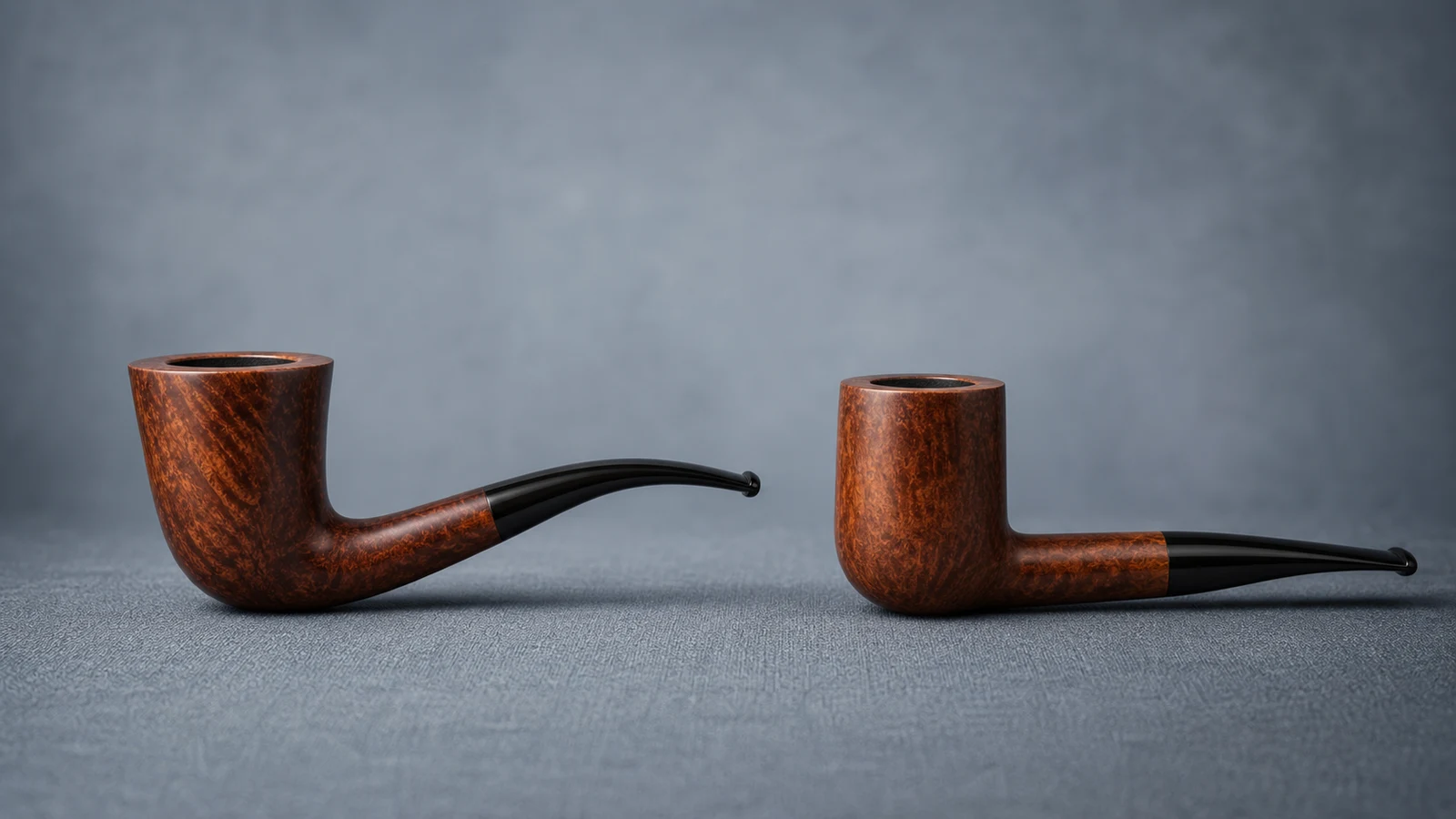
The clearest visual difference between a Dublin and a Billiard pipe is the outer bowl profile. A Dublin generally widens toward the rim, so its sides read as upward-flaring or tapered. A Billiard generally keeps a more cylindrical, upright bowl with sides that appear closer to parallel. That comparison is a shape-reading tool, not a universal dimensional rule.
Judge the bowl before the stem. Either family can appear with a straight or curved stem line, and photographs cannot establish hidden construction, materials, dimensions, condition, or performance. When the silhouette is ambiguous, keep the seller's label as a listing claim and ask for a clean side view rather than forcing the pipe into a category.
The visual shape index provides the wider family map. The Billiard shape guide goes deeper on that single family; this page owns only the upward-flaring Dublin versus cylindrical Billiard comparison.
Dublin and Billiard at a glance
The two shapes share a traditional upright-bowl vocabulary, which is why one angled photograph can make them look similar. A useful comparison separates the bowl wall, rim, lower bowl, and stem line instead of evaluating the whole object as a single impression.
| Visible area | Dublin tendency | Billiard tendency | What the photo cannot settle |
|---|---|---|---|
| Outer bowl wall | Flares outward toward the rim | Reads straighter and more cylindrical | Exact angle or measurements |
| Rim relationship | Rim often appears wider than the lower bowl | Rim and mid-bowl often look more consistently aligned | Chamber size or wall thickness |
| Lower bowl | Usually narrows more noticeably toward the base | Often maintains a steadier upright body before rounding below | Internal chamber geometry |
| Shank and stem | May be straight or bent | May be straight or bent | Airway, tenon fit, or filter compatibility |
| Overall label | Describes a recognizable shape family | Describes a recognizable shape family | Maker, origin, material, or condition |
Treat these as tendencies. Hand shaping, carving, camera perspective, and catalog conventions can soften the boundary between the families.
Start with the bowl taper
The Smokingpipes glossary defines Dublin by a bowl that tapers downward from a typically flat rim and Billiard by a cylindrical bowl. It also notes that different stem types can remain Billiards. That is why the comparison should begin with the outer bowl, not bend or mouthpiece style.
For a Dublin, trace the outer edge from the base toward the rim. The outline usually expands as it rises. Some examples show a pronounced flare; others are subtle enough that the taper becomes clear only in a level side photograph. The defining comparison is external: the upper bowl looks broader in relation to the lower bowl.
For a Billiard, the same tracing exercise typically reveals a more vertical wall. The bowl may still curve, carry surface texture, or round into its base, but it does not usually present the same steady upward flare. The current Billiard pipe collection provides catalog examples whose listing labels and photographs can be inspected together.
Do not estimate a taper from a three-quarter view alone. Perspective can make the near side expand and the far side contract. Compare at least one level profile and one second angle. If a listing supplies measurements, use those figures as source claims rather than deriving numbers from pixels.
Read the rim as part of the silhouette
The rim is useful because it completes the upper boundary of the bowl. In a Dublin profile, the visual flare often leads to a rim that appears broad in relation to the lower body. In a Billiard profile, the rim tends to continue a more consistent cylindrical line.
Rim treatment can complicate the comparison. A rounded rim, bevel, stain contrast, carving, or camera angle may exaggerate or disguise apparent width. Look at the structural outline rather than a bright highlight. A top-down image can show the visible shape of the rim, but it should not be used to infer chamber depth, exact wall thickness, or internal condition that the photograph does not clearly reveal.
When a rim looks uneven, do not immediately interpret that as damage or craftsmanship evidence. It may reflect shaping, perspective, lighting, or an incomplete view. The careful description is simply what can be seen and which additional angle would resolve the uncertainty.
Keep the stem line separate from the bowl family
A straight stem does not make a pipe a Billiard, and a bend does not make it a Dublin. Shape names and bend labels answer different visual questions. The bowl family describes the outer bowl silhouette; straight, bent, or similar terms describe the line formed by the shank and stem.
This separation matters when comparing a bent Dublin with a straight Billiard. The strong curve of one pipe may dominate the photograph, but the bowl taper remains the relevant distinction. Mentally cover the shank and stem, then compare the two bowl outlines. After identifying that visible cue, restore the whole image and record the bend as a separate attribute.
The same caution applies to mouthpiece styling, color, and surface finish. Those details can help distinguish listings, yet none changes a cylindrical bowl into a flared one. Nor does a particular visible profile guarantee an airway design or any performance result.
A photo-by-photo comparison method
Use this short sequence when a listing title and photographs do not seem to agree:
- Choose the most level side view with the full bowl visible.
- Trace the outer wall from the lower bowl to the rim without following grain, highlights, or rustication.
- Decide whether the sides visibly flare upward or stay broadly parallel.
- Check a second angle for the same relationship.
- Inspect the rim only after judging the main wall.
- Record the stem line separately as straight, slightly curved, or visibly bent without converting that observation into a hidden specification.
- Compare the observation with the seller's shape label and supplied facts.
- If the evidence conflicts, ask for a direct side image or clarification.
This method produces a defensible visual note: “the listing calls this a Dublin, and the side view shows a bowl that widens toward the rim.” It avoids the stronger and usually unsupported statement that every construction detail has been independently authenticated.
What current catalog examples can establish
The 2026-07-16 catalog snapshot contains one Dublin and 14 Billiards, so it is not an equal-depth assortment. The live Saucer Dublin Bent and Billiard Straight pages provide a real label-and-photo comparison. Their different bend modifiers must be kept out of the bowl-shape conclusion. The product guide explains how to separate visible facts from details that remain unknown.
Catalog examples should not be turned into universal standards. One Billiard listing does not define the only acceptable bowl ratio, and the absence of a Dublin label in a particular view of the current catalog does not redefine the shape. Availability can also change. Use live listings as examples of stated labels and visible outlines, then check the individual item before making a decision.
If the comparison is for a purchase, check the facts that silhouette cannot provide: stated measurements, source-described material, condition, included items, and any compatibility requirement that matters to you. A shape match is only one part of that review.
Common visual misreads
The first common error is treating camera perspective as geometry. A lens positioned below the rim can make an ordinary upright bowl seem to flare. A high camera can make a tapered Dublin appear more cylindrical. Multiple angles are the simplest correction.
The second is following surface decoration instead of the bowl boundary. Carving, contrast stain, and strong grain create lines that may run in a different direction from the actual wall. Read the outer edge first.
The third is letting the stem determine the answer. “Bent Dublin” and “straight Dublin” remain meaningful combinations, as do bent and straight Billiard labels. Compare the bowl, then describe the stem.
Finally, avoid treating a traditional name as proof of origin. “Dublin” is a shape term in this context; it does not by itself establish that a specific pipe was made in Dublin or Ireland. Maker and origin require explicit, credible listing evidence.
Frequently Asked Questions
What is a Dublin style pipe?
A Dublin is generally identified by an upright bowl whose outer sides widen toward the rim. The degree of flare varies, so compare the label against a clear side photograph rather than expecting one fixed ratio or dimension.
How does a Dublin differ visually from a Billiard?
The Dublin usually has a visibly tapered, upward-flaring bowl. The Billiard usually appears more cylindrical, with bowl walls that stay closer to parallel. Rim treatment and perspective can blur the difference, so use more than one image.
What is the difference between Zulu and Dublin pipes?
A Dublin is identified primarily by its bowl widening toward the rim and can be listed with a straight or bent stem. A Zulu normally adds a more forward-canted Dublin-like bowl and a curved, rising shank-and-stem profile. By contrast, a straight Dublin usually presents a more direct line behind the bowl; a bent Dublin keeps Dublin as the bowl label without automatically becoming Zulu. The accessible GQ Tobaccos shape guide uses that full-profile distinction. Catalog conventions still vary, so preserve the seller's exact term when the cant or curve is unclear.
Is a Volcano the same as a Dublin?
No. A classic Dublin widens toward the rim, while a Volcano concentrates more visual mass near the lower bowl and narrows upward. The Volcano shape guide shows that opposite taper without turning either family into a fixed measurement.
Does “Dublin” mean the pipe was made in Ireland?
No. A Dublin shape label does not establish manufacturing origin. Check origin, maker, and material through explicit source information for the individual listing.
Which specifications cannot product photos confirm?
Photos alone generally cannot confirm exact dimensions, internal airway construction, tenon fit, filter compatibility, material authenticity, condition beyond what is visible, or package contents outside the frame. Ask for stated specifications and clarification where those details affect your decision.
Use the visible bowl taper as the first discriminator, keep rim and stem observations separate, and leave hidden facts marked unknown. When you are ready to compare current labeled examples, review the shop and check the individual listing rather than choosing from shape name alone.
Related posts
Product notes, store updates, and purchase guidance for the storefront.