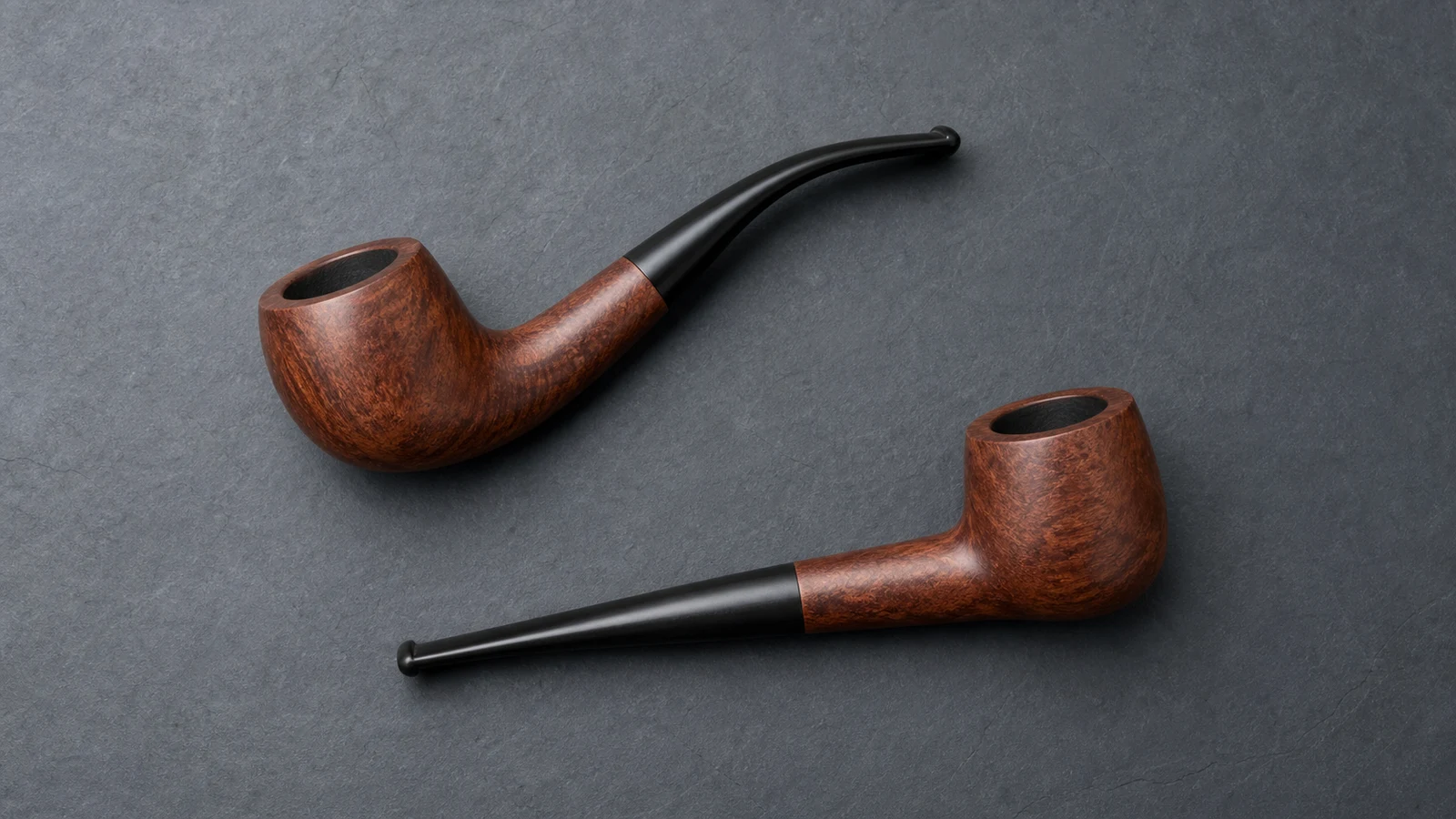
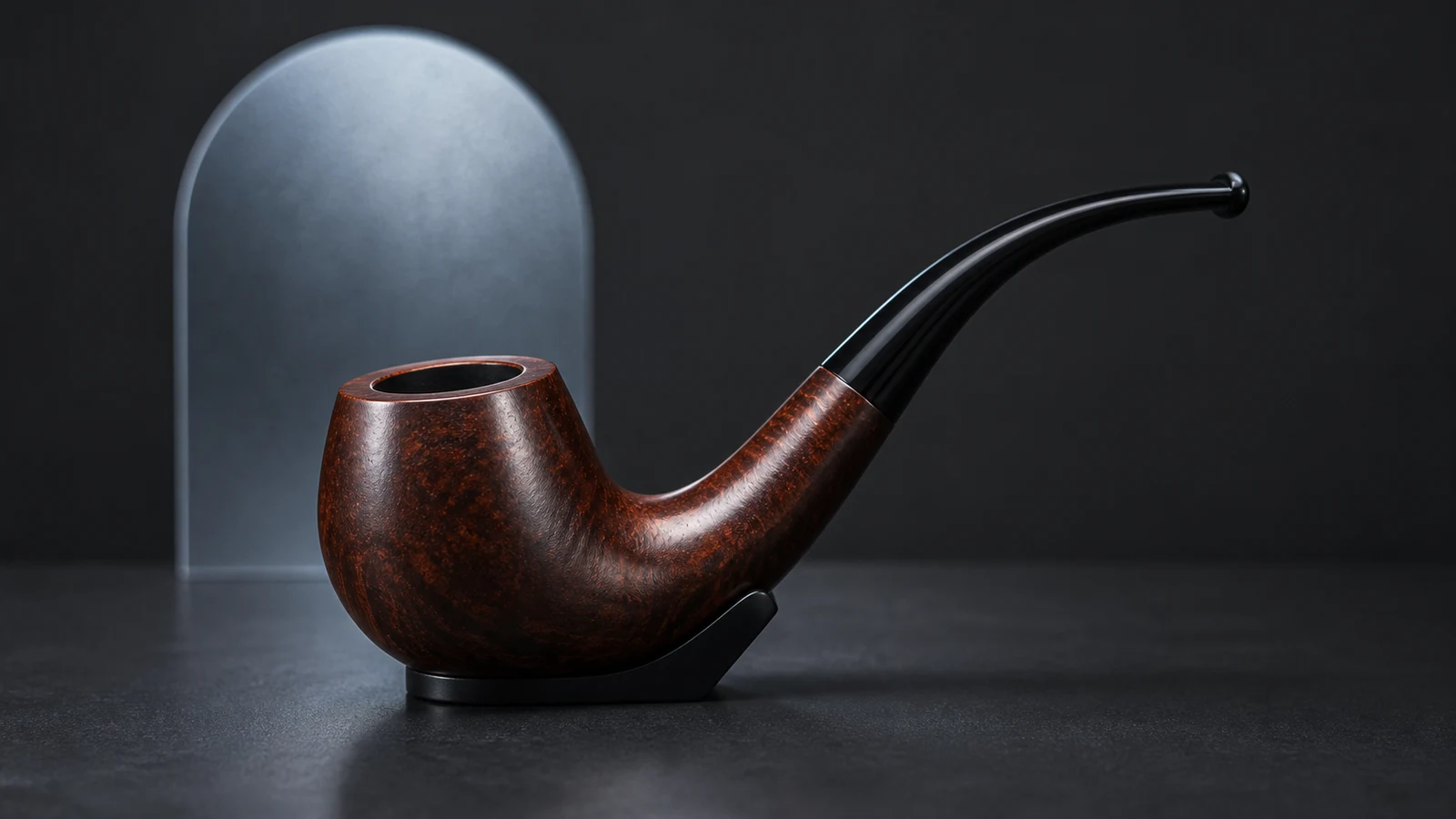
Full Bent Tobacco Pipes: How the Profile Differs
Learn what a Full Bent tobacco pipe label can show, how it differs from lesser bends, and which listing details still need verification.
Written by
The Tobacco Pipe Editorial Team
The store editorial team reviews product facts, care boundaries, and buying guidance against the current catalog and source evidence.
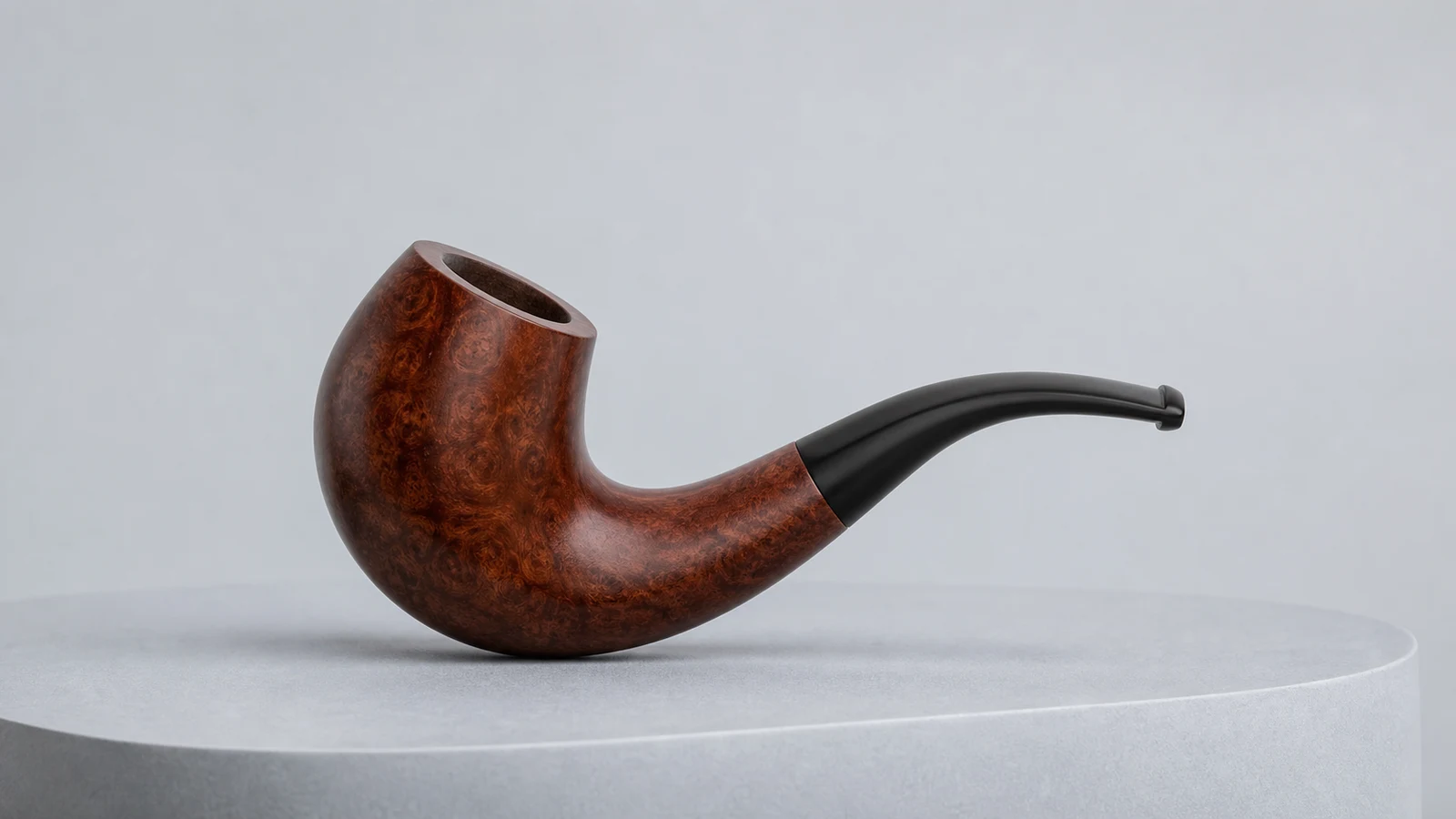
A Full Bent tobacco pipe is a seller-labeled pipe with a pronounced turn from
bowl through shank and stem to mouthpiece. In this catalog, Full Bent sits
beside Straight, Slightly Bent, and Bent as a source-reported bend field.
It is the strongest wording in that local sequence, but it is not a universal
angle or an industry measurement standard.
Read the label together with a complete side view. Record where the curve begins, where it becomes most visible, and where the mouthpiece ends relative to the bowl. Use source-reported dimensions for size; do not use total length as a substitute for bend angle.
For the wider two-way decision, use the bent-versus-straight comparison. The pipe-types hub keeps bend, bowl family, and length in separate fields.
What the 150-item catalog snapshot actually records
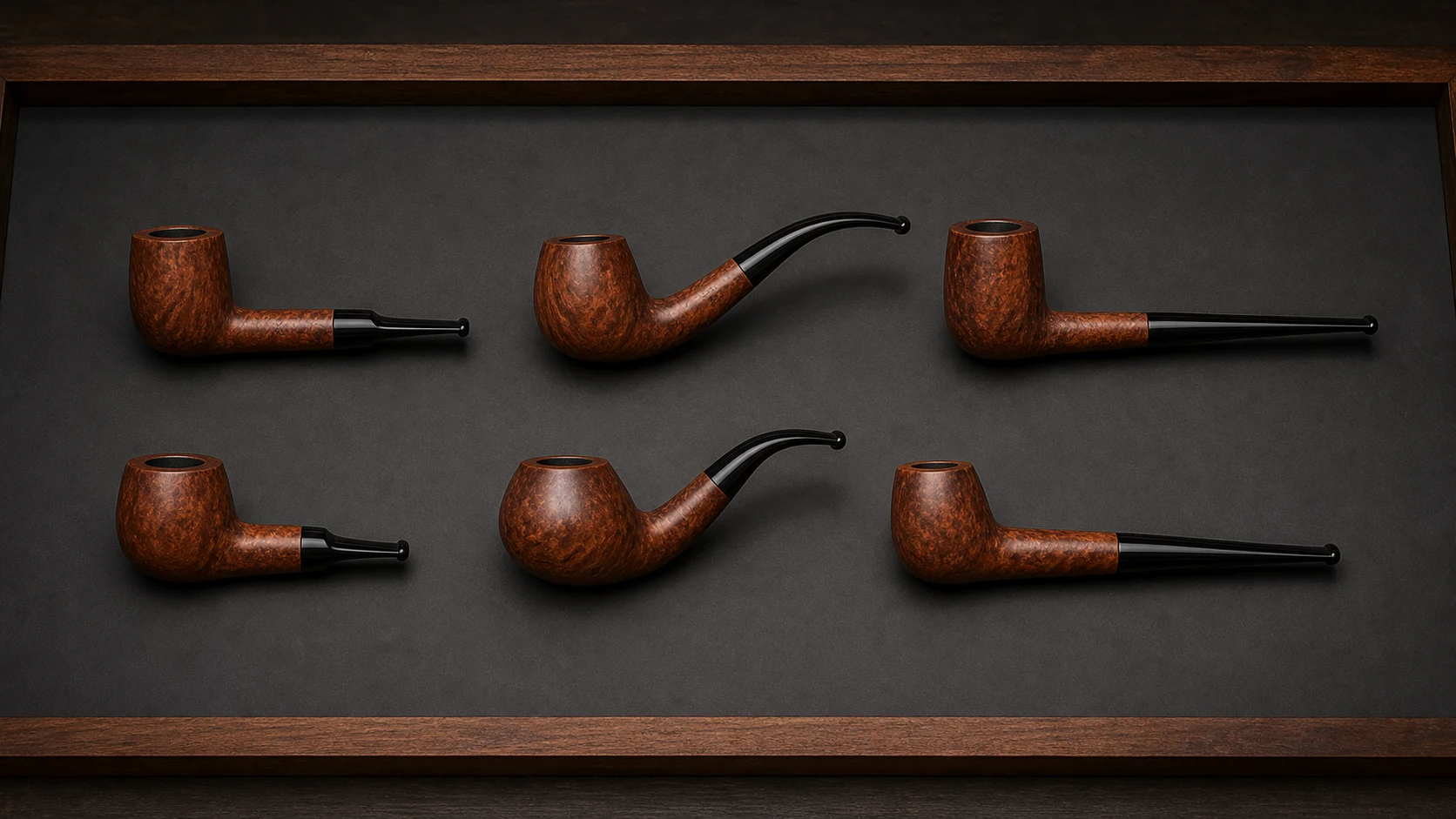
The committed catalog snapshot contains 150 items. Within its source-supplied
bend attributes, 38 items are labeled Straight, 10 Slightly Bent, 52 Bent,
and 8 Full Bent. These counts describe the captured catalog, not current stock
and not a universal market distribution.
The four examples below show how those labels coexist with different bowl families and source-reported lengths. The measurements were translated from the original source records and have not been independently verified by this site.
| Bend label | Snapshot count | Catalog example | Source-reported overall length | What the side image is useful for |
|---|---|---|---|---|
| Straight | 38 | Billiard Straight 9250 | 145.6 mm | A broadly direct shank-and-stem course |
| Slightly Bent | 10 | Prince Apple Slightly Bent 7123 | 151 mm | A restrained visible change in the line |
| Bent | 52 | Apple Bent Cooling Chamber 1853 | 115.4 mm | A clear curve or vertical offset |
| Full Bent | 8 | Natural Egg Sherlock Full Bent 2728 | 112.3 mm | The catalog's more pronounced turn |
The lengths do not rise or fall with the bend categories. The 151 mm Slightly Bent example is longer than the 112.3 mm Full Bent example. That is exactly why length and bend must remain separate measurements.
Read the curve in three locations
Full Bent can be produced visually in more than one way. The shank may leave
the bowl at an angle before the stem continues the turn, or the shank may remain
more restrained while the stem carries most of the arc. A continuous curve can
make the transition difficult to divide.
Use this three-point reading:
- Departure: note the direction where the shank leaves the bowl.
- Transition: follow the shank-to-stem junction and identify where the line changes most visibly.
- Endpoint: compare the mouthpiece's vertical position with the bowl and upper shank.
A complete side image is the most useful view. Confirm it with a second angle so
rotation does not hide or exaggerate the curve. If the title says Full Bent
but the supplied images crop the stem or obscure the profile, the label remains
source-reported and the visual reading remains incomplete.
Do not calculate a bend angle from an ordinary product photograph. The item may be rotated, the camera may not be level, and the image supplies no dependable scale or reference axis. A numeric angle is usable only when the exact source or maker documents how it was measured.
Keep bend, bowl family, and length separate
The four snapshot examples deliberately use different bowl labels. Billiard,
Apple, Sherlock, and Full Bent do not occupy one taxonomy field. A useful
catalog description can stack them: bowl family first, bend separately, then
length or feature labels when the source provides them.
The Natural Egg Sherlock Full Bent
therefore supports one narrow fact: this catalog combines Sherlock and
Full Bent on that exact item. Its 112.3 mm source-reported length, material,
condition, filter information, or construction must not be transferred to the
other seven Full Bent records.
Likewise, the Full Bent label cannot establish filter compatibility, comfort, balance, airflow, cooling, condition, or quality. Those are product-level facts or user-dependent outcomes, not consequences of the curve.
A focused Full Bent comparison
When comparing two Full Bent listings, record only fields that help distinguish their curves and size:
- the exact bend label as written;
- a complete side view plus one confirming angle;
- the point where the shank departs the bowl;
- where the curve becomes most visible;
- the mouthpiece endpoint relative to the bowl;
- the separate bowl-family label; and
- source-reported total length and any other stated dimensions.
Use the bent pipe collection to find current candidates, then open each product record. The collection can include more than Full Bent items, and the 150-item snapshot counts are not an availability promise.
Two final questions
Is Full Bent a standardized angle?
No universal numeric cutoff is established by the sources reviewed here. Smokingpipes' public shape glossary shows that traditional shapes can have straight and bent variants, while Savinelli's separate bent and half-bent groups illustrate merchant-specific taxonomy.
Can total length prove that one pipe is more fully bent?
No. Total length measures size along the seller's stated method, not the degree or location of a curve. Compare the exact side views for profile and the stated dimensions for size; keep the two conclusions separate.
Related posts
Product notes, store updates, and purchase guidance for the storefront.