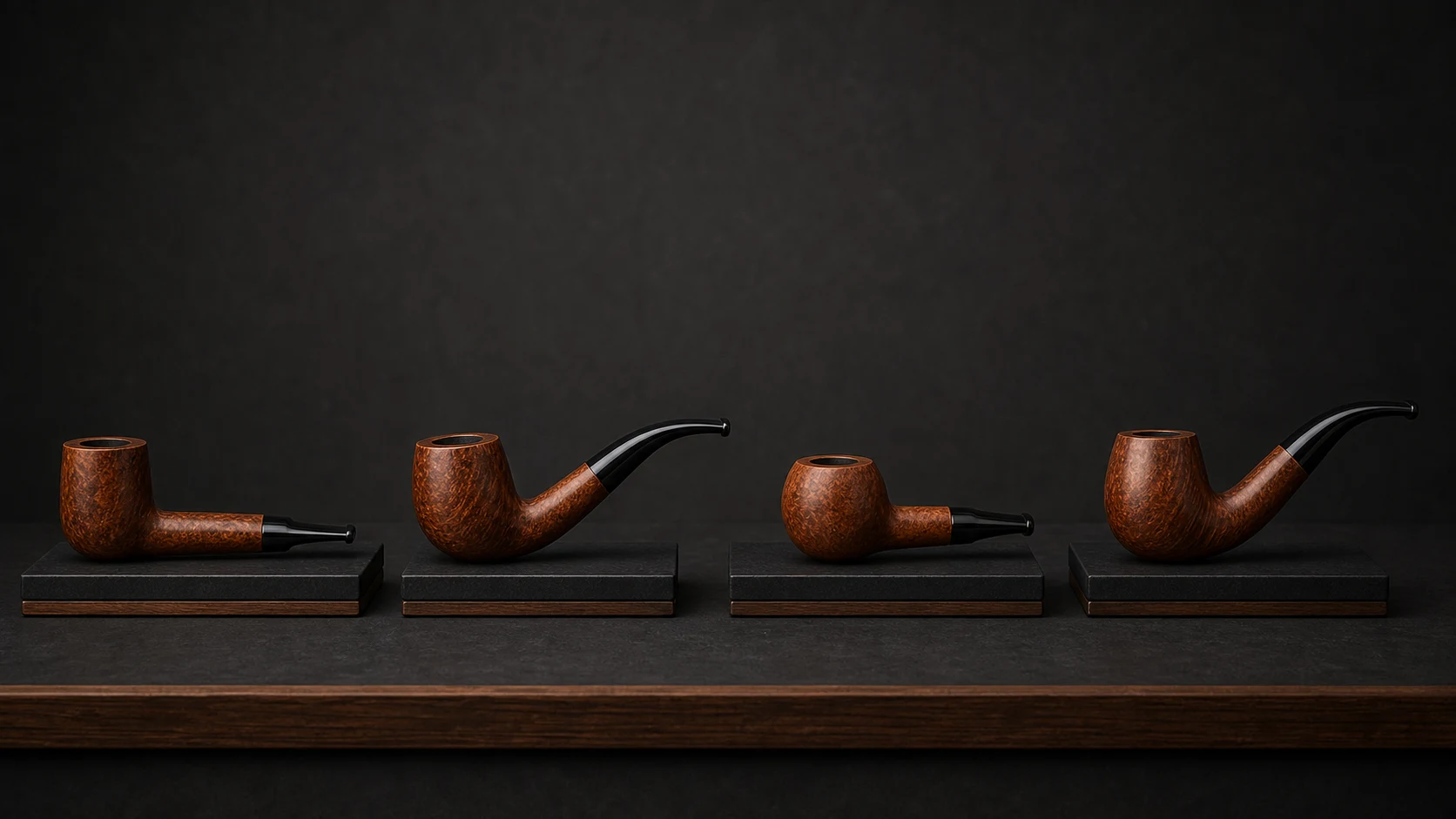
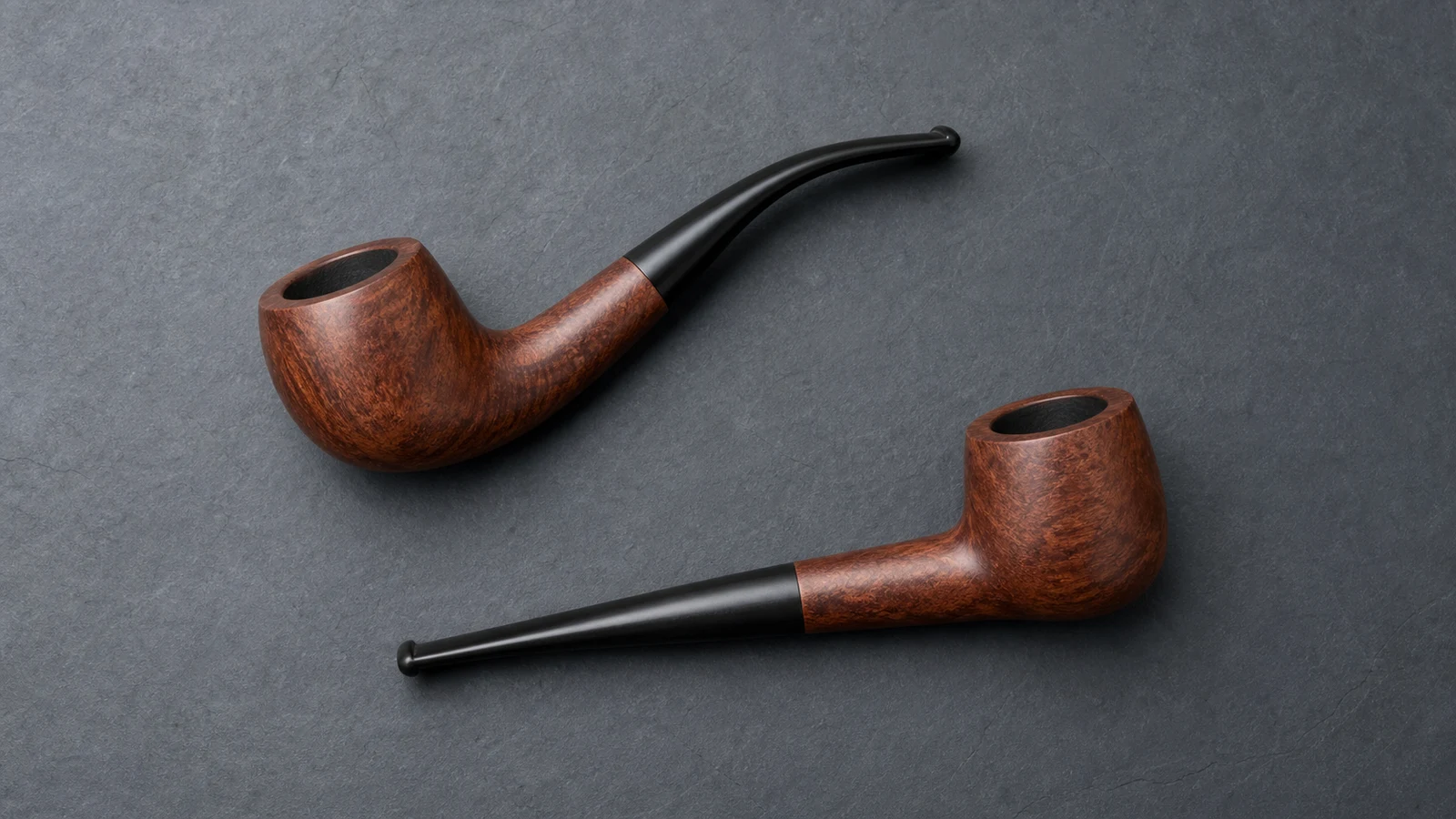
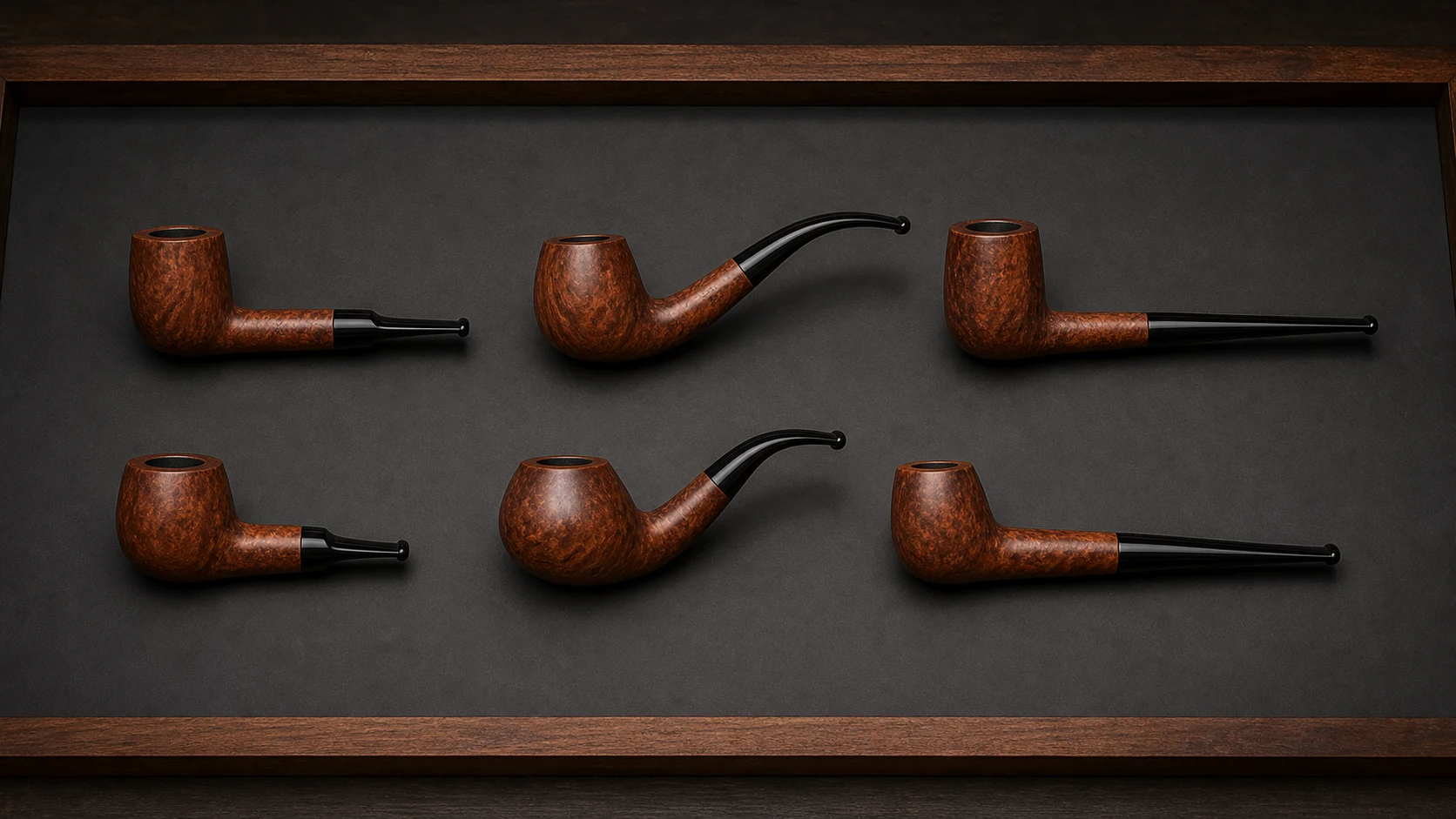
Sherlock Pipe Shape Explained
Read a Sherlock pipe listing as a broad sculptural style, then check bowl profile, bend, length, material, and exact product facts separately.
Written by
The Tobacco Pipe Editorial Team
The store editorial team reviews product facts, care boundaries, and buying guidance against the current catalog and source evidence.
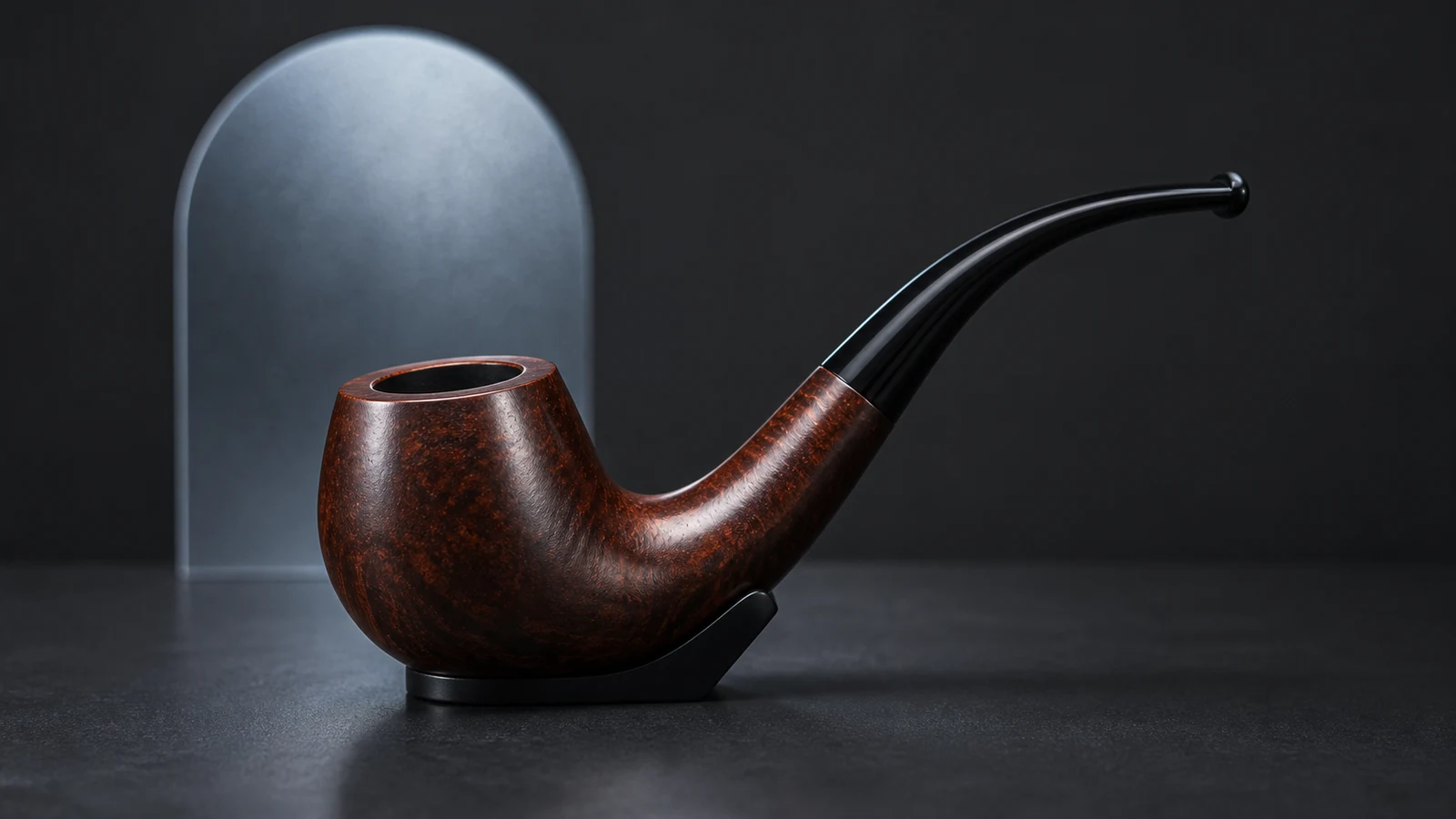
On this site, “Sherlock pipe” is a catalog style label for expressive, usually curved silhouettes associated with classic detective imagery. We did not find an independently accessible shape glossary that defines Sherlock as one industry-standard geometry. The term therefore must not be treated as a universal bowl shape or fixed set of dimensions; the exact bowl, stem line, bend, finish, and measurements belong to each listing.
Do not identify a Sherlock-style listing from one dramatic curve alone. Review the complete outline and the seller's terminology, then keep unverified details such as material, origin, condition, filter compatibility, and package contents out of the conclusion. The catalog's Sherlock group contains supported examples without implying that they share identical specifications.
This page has a deliberately narrow role. The pipe types guide explains how bowl shape, bend, and length work as separate catalog axes, while the visual shape index compares named bowl families. Here, the question is only how to read the less-standardized Sherlock retail label.
A style family rather than a technical shape standard
Some pipe names point mainly to a bowl geometry. Sherlock works differently in many retail catalogs: it can describe the overall visual character, especially an arched or sculptural bowl-to-mouthpiece line. The bowl may be upright, rounded, tapered, or otherwise distinctive, depending on the individual item.
That flexibility explains why two Sherlock-labeled pipes can look noticeably different. One may emphasize a pronounced bend; another may combine a curved stem with a more unusual bowl or shank transition. The shared category is a recognizable style impression, not a fixed blueprint.
| Area | Sherlock-style cue to inspect | Boundary of the evidence |
|---|---|---|
| Overall silhouette | Expressive or sculptural curve | No uniform dimensions |
| Bowl profile | May contribute to a dramatic outline | No single mandatory bowl family |
| Shank and stem | Often visibly curved or arched | Bend degree is not standardized |
| Surface detail | Can reinforce the visual style | Finish does not prove material or maker |
| Listing name | Seller explicitly uses Sherlock or Sherlock-style | The label does not prove performance |
Use all five areas together instead of treating one feature as a decisive test.
Read the bowl and stem as separate features
First isolate the bowl. Trace its walls, rim, base, and transition into the shank without considering the stem. Ask whether the listing supplies a second shape word or whether the bowl simply forms part of the broader Sherlock-style composition.
Then trace the stem line from shank to mouthpiece. The curve may start close to the bowl, appear mainly through the stem, or continue through a more complex shank form. A side view is the best starting point, but a second angle helps distinguish actual curve from camera perspective.
Keeping these observations separate avoids describing every curved pipe as a Sherlock. Many familiar shape families can be bent without being sold under that style label. Seller terminology and the whole silhouette matter.
Bend options are not one uniform degree
The Sherlock category often contains curved examples, but there is no single bend angle that every listing must meet. The external Smokingpipes glossary defines “bent” as a catch-all modifier that can occur across classic shapes; it is not a Sherlock-only feature. A restrained curve and a dramatic arc may both appear under the same collection heading.
Photographs can show visible vertical offset and the location of a curve. They cannot prove balance, comfort, airflow, heat behavior, or how the item will feel in use. Those outcomes should never be inferred from the detective-associated silhouette.
If exact dimensions or bend clearance matter for a stand, case, or display, look for stated measurements. The product guide explains why visual categories should narrow a search while confirmed item data controls the final comparison.
How to inspect a Sherlock-style listing
Use an evidence checklist rather than relying on the product name alone:
- Find a complete side view with no part of the stem cropped out.
- Trace the full bowl-to-mouthpiece silhouette.
- Identify the bowl form independently from the style name.
- Compare a second image for bend and three-dimensional shaping.
- Record whether the seller explicitly uses Sherlock or Sherlock-style.
- Record stated measurements, finish, condition, and compatibility fields separately.
- Mark every missing fact as unknown.
A styled image may intentionally emphasize drama through lighting or angle. Use plainer product views for comparison. If those views are absent, ask for more evidence rather than assuming the unseen side matches the visible one.
Detective imagery is context, not provenance
The Sherlock name refers to a familiar cultural association, but that does not prove an individual pipe's historical design source, manufacturer, place of origin, or connection to a particular adaptation. Similar silhouettes can be marketed with different names, and sellers may use “Sherlock-style” broadly.
Likewise, an ornate or old-fashioned appearance does not establish age or condition. A new item can use historical-looking styling, while a used item requires explicit condition information. Treat the images as evidence of visible form only.
This boundary is particularly important when a listing title is short. Do not turn a marketing label into a story about maker, material, or authenticity unless the product page supplies verifiable details.
Comparing catalog examples without assuming sameness
The live Black Tuxedo Hexagonal Sherlock Bent page shows why the words must be separated: Hexagonal, Sherlock, and Bent all appear in the title, but none replaces the others. When several Sherlock listings appear together, record the bowl outline, where the curve begins, whether the complete stem is visible, supplied dimensions, finish, condition, and filter information in separate columns.
Do not copy facts between products. One example's stated material, included items, or measurements do not describe the neighboring item. Current price and availability can also change, so those fields should be checked at the time of the decision.
The broader shop can help compare Sherlock-style silhouettes with other curved pipes. The useful question is not whether every dramatic pipe fits one name, but whether the exact listing provides the look and confirmed facts the buyer is seeking.
How to narrow a Sherlock shortlist
If the expressive detective-associated profile is the main visual preference, browse the Sherlock collection and shortlist items by complete side view. Then open each product page and check dimensions, condition, bend, finish, filter information, included items, and current availability where those details are stated.
Unknowns should remain part of the decision. A collection page is useful for discovery, but it is not evidence that every item shares the same construction or practical characteristics.
Frequently Asked Questions
What defines a Sherlock pipe shape?
In catalog use, Sherlock usually describes an expressive, curved, or sculptural overall silhouette associated with detective imagery. It does not require one exact bowl shape, length, or bend angle.
Is every bent pipe a Sherlock pipe?
No. Bent describes the shank-and-stem line and appears across many shape families. Use the seller's label and complete visual profile before applying the more specific Sherlock-style description.
For a side-by-side explanation of that modifier, see the bent versus straight guide.
Which visible Sherlock features can listing photos establish?
Photos can support observations about the bowl outline, visible curve, surface finish, and supplied exterior angles. They cannot reliably confirm exact dimensions, internal construction, condition beyond what is shown, filter compatibility, or package contents.
Does the name prove a historical or branded connection?
No. A Sherlock or Sherlock-style label describes catalog positioning and visual association. Provenance, maker, age, origin, and licensing require separate evidence.
Which live page groups the current Sherlock-style examples?
The Sherlock pipe collection groups supported catalog examples. Read every shortlisted item's own page because listing facts and availability may differ or change.
Related posts
Product notes, store updates, and purchase guidance for the storefront.