Acorn Pipe Shape Explained
Identify the Acorn pipe shape by its tapered bowl and rounded lower profile, then check bend, proportions, and listing details separately.
Written by
The Tobacco Pipe Editorial Team
The store editorial team reviews product facts, care boundaries, and buying guidance against the current catalog and source evidence.
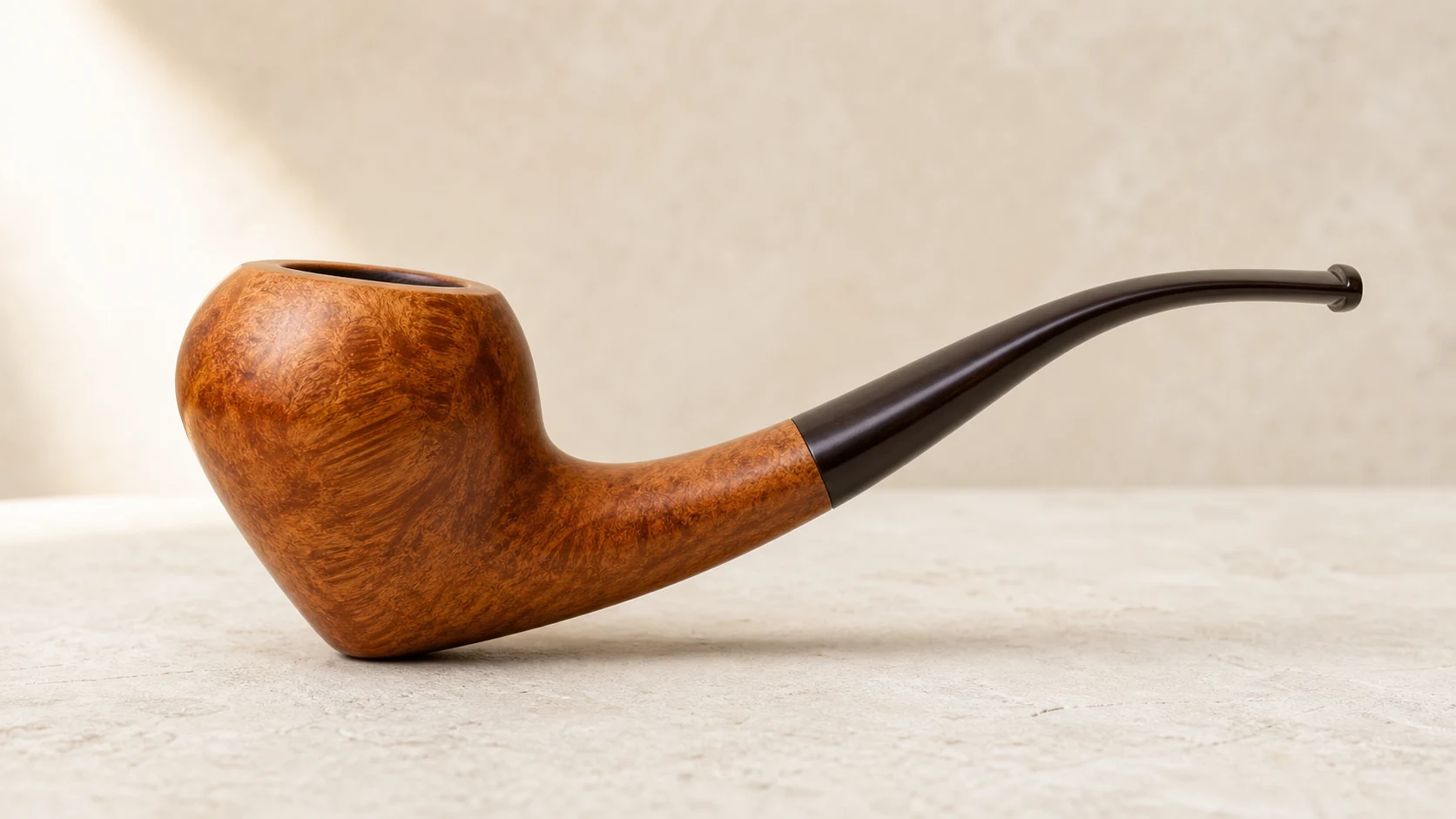
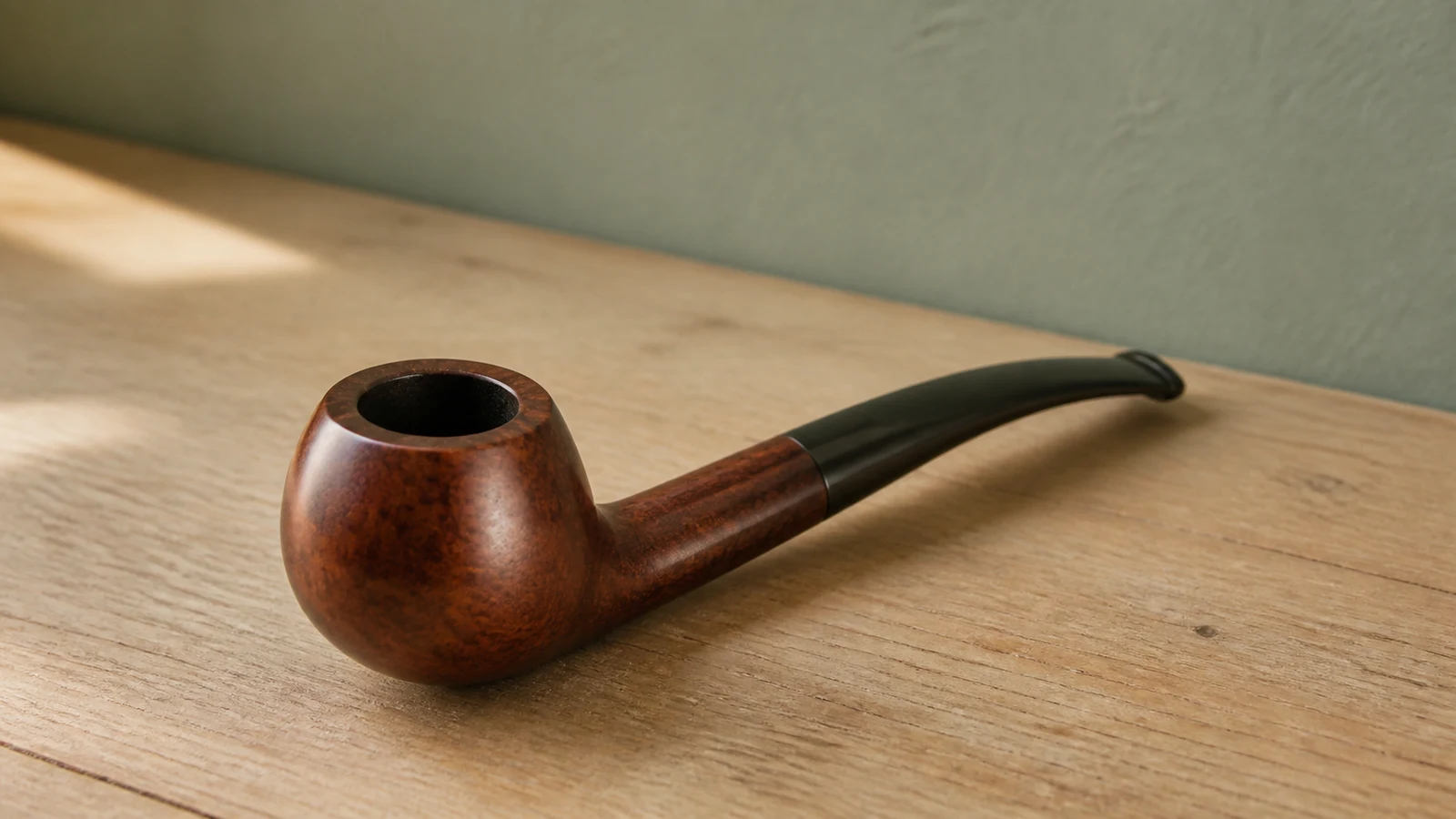
An Acorn pipe is commonly identified by a bowl that looks fuller toward the upper or middle area and narrows toward a rounded or pointed heel. The outline suggests an inverted acorn, but the name is a catalog family rather than an exact geometric standard. Use the visible taper and the seller's label together; do not impose a fixed ratio or base shape on every example.
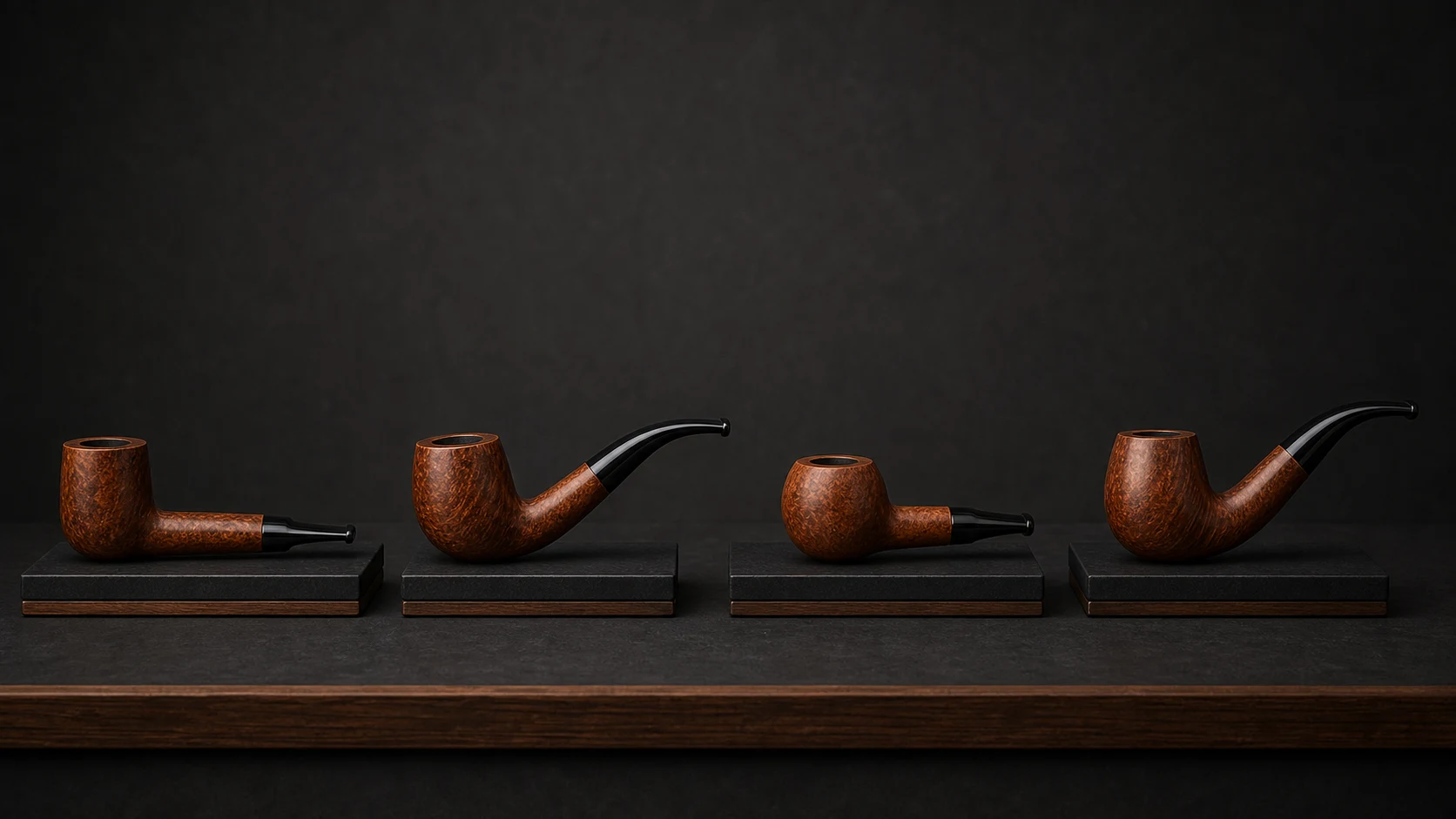
Acorn describes the bowl, not the bend. Current catalog records include Acorn titles with bent, long-stem, freehand, and other modifiers. Those combinations show that the bowl family can appear in several overall profiles. They do not prove that any one bend, finish, material, or dimension is required.
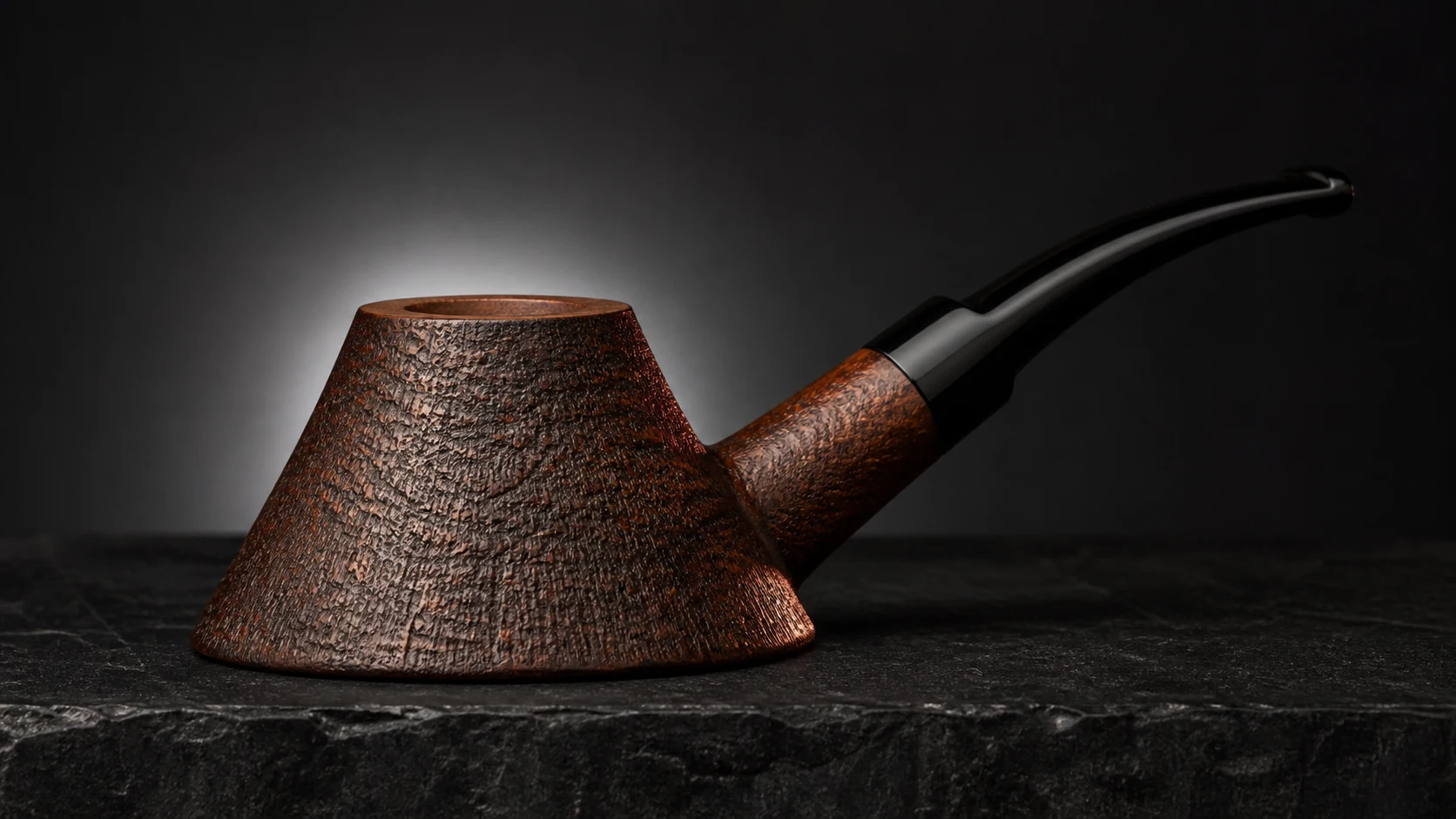
Use the visual shape index for the full family map. This article stays with the Acorn's upper fullness and narrowing heel; the Volcano guide owns the opposite visual emphasis of a wider lower bowl tapering upward.
An Acorn is a widest-point and heel test
| Observation zone | Evidence for an Acorn reading | Keep separate |
|---|---|---|
| Upper bowl | Often full or rounded | Fullness varies by listing |
| Side walls | Commonly narrow toward the lower bowl | No standard taper angle |
| Heel | May look rounded, compact, or softly pointed | Exact base treatment varies |
| Bowl-to-shank line | Can be clean or sculptural | Junction style does not define every Acorn |
| Stem | Straight, bent, or elongated treatments may appear | Bend is a separate attribute |
| Finish | Smooth, textured, or carved examples may be labeled Acorn | Surface does not determine shape |
The name provides a useful visual starting point, not a complete product specification.
Look for fullness above a narrowing heel
Begin with a side-profile photograph. The Smokingpipes glossary places the Acorn visually between Dublin and Apple: the bowl swells outward toward the upper area and then narrows markedly toward the heel, sometimes continuing into a spur. Trace that widest-point-to-heel relationship instead of looking for a fixed angle.
That description should remain flexible. One Acorn may be tall and gently tapered; another may be broad with a more obvious lower point. Carving and freehand shaping can interrupt the outline. A seller may also apply Acorn to a design that sits near another shape family.
Do not use the chamber opening as the main test. Perspective can make the rim look wider, narrower, or more oval than it is. The outer side profile and heel are more useful visible cues, and stated dimensions are necessary for any numeric comparison.
Bend is metadata, not the Acorn test
An Acorn bowl can connect to a bent stem, a straighter line, or an elongated shank-and-stem profile. A curved stem changes the complete silhouette but does not create the Acorn name. Likewise, a long stem does not make the bowl taller or alter its supported shape label.
Record these attributes separately:
- Shape: Acorn, when supported by the title or structured attribute.
- Bend: use the exact listing term, or describe the visible line cautiously.
- Length profile: record “long stem” or another modifier only when stated.
- Features: keep freehand, carved, textured, or other terms in their own field.
This approach makes two Acorn listings comparable without pretending that they should share every proportion. The product guide offers a broader worksheet for these listing-level checks.
Trace an Acorn in three views
Begin with the side image and put an imaginary horizontal mark through the widest part of the bowl. The Acorn reading becomes stronger when that mark sits above the heel and the outline contracts below it. Next use the front image to see whether the narrowing belongs to the wood rather than to a rotated camera. Finish with the underside: a rounded end, a soft point, or a spur can all fit, but a large flat footprint points elsewhere.
Write the observation as a short note—“full above, narrowing below, soft point at heel”—before reading the title. Then compare that note with the Acorn label. Keep bend, stem length, surface finish, and dimensions in separate fields. When only a three-quarter image exists, treat the identification as tentative because the shank can conceal exactly the lower contour that matters most.
Acorn compared with nearby shape ideas
An Apple generally reads as continuously rounded through its middle and lower bowl. An Acorn more often directs the eye downward toward a narrowing heel. The difference can be subtle, and neither family has a universal width-to-height formula.
A Volcano also uses a taper, but its common visual idea places more weight at a broader lower footprint that narrows toward the top. An Acorn more commonly places its fullness higher and tapers toward the heel. Individual products can blur this distinction, so use the listing label rather than treating these descriptions as a geometry exam.
Freehand is another possible overlap. An Acorn product may use freehand as an additional descriptor when the seller supports it. The combination does not make “Acorn” and “freehand” synonyms; one describes the recognizable bowl idea, while the other can indicate a catalog style or making approach.
Finish can disguise the underlying outline
Strong grain-like patterns, rustication, sandblasting, carving, facets, or contrasting color can draw attention away from the bowl boundary. When classifying the shape, follow the outer edge rather than the surface pattern. A textured Acorn can retain the same broad family as a smooth example.
At the same time, a photo cannot independently establish how a finish was made, which wood species is present, or where material originated. Use the seller's text for named material and finish claims, and preserve any qualification included in the product description.
Catalog records support several Acorn modifiers
The 2026-07-16 catalog snapshot contains eight Acorn-classified products. The live Large Acorn Bent page is a concrete example of the bowl family paired with a bend modifier. Other local titles add Pocket Size, Long Stem, Saddle Stem, Music Note, or Freehand, none of which is required for an Acorn.
It does not support copying one product's measurements, filter detail, finish, or construction claim onto another. Nor does an intake record guarantee current stock. Open the live shop, select the exact item, and check the latest title, photographs, price, availability, and structured details.
What the Acorn label cannot promise
The shape name cannot establish exact dimensions, weight, chamber geometry, wall thickness, filter compatibility, material, origin, condition, or package contents. It also does not guarantee comfort, balance, airflow, heat behavior, durability, craftsmanship, or a health result.
Photos are strongest for visible outline, relative proportions within the same item, stem line, color, and surface appearance. They are weak evidence for hidden construction and cross-product size. Use measurements with units when available, and ask for clarification when an important field is missing.
A cautious way to choose an Acorn listing
First decide whether the visual priority is a fuller upper bowl with a tapered lower profile. Next choose the preferred stem line without assuming that bend changes the bowl family. Finally compare exact listings by stated dimensions, finish, condition, filter information, photographs, price, availability, and included items.
Leave unsupported fields blank. If a title says Acorn but the photos are ambiguous, ask the seller rather than replacing the label with your own. When the visible profile and the stated details both fit your criteria, the listing is easier to evaluate than one chosen from the shape name alone.
Frequently asked questions
Where should an Acorn bowl appear widest?
Usually above the lower bowl, before the walls draw inward toward the heel. The widest point does not need a prescribed height, so compare the direction of the outline rather than calculating a ratio from a photograph.
Must the heel end in a sharp point?
No. A distinct spur is possible, but a rounded or softly pointed termination can still carry the same downward-converging idea. A blunt heel does not invalidate the label when the upper mass and lower taper remain visible.
Can an Acorn be straight, bent, or long-stemmed?
Yes. Those words describe other parts of the profile. The local catalog contains Acorn titles with several such modifiers, so none should be folded into the bowl definition.
What does the live Large Acorn Bent page establish?
It establishes that this catalog currently uses both words for one item and shows the photographs and fields attached to that listing. Its measurements, material wording, price, and availability belong to that product alone.
Which neighboring shape is easiest to confuse with Acorn?
Apple can look similarly rounded, but it tends to continue its curve through the lower bowl rather than converging toward a smaller heel. The Apple shape guide illustrates that rounded counterexample; Volcano moves its visual weight lower instead.
Related posts
Product notes, store updates, and purchase guidance for the storefront.