Tobacco Pipe Types: Shapes, Bends, and Length Profiles
Classify tobacco pipe types by shape family, bend, length, and source-labeled features while keeping visible facts separate from unknown specifications.
Written by
The Tobacco Pipe Editorial Team
The store editorial team reviews product facts, care boundaries, and buying guidance against the current catalog and source evidence.
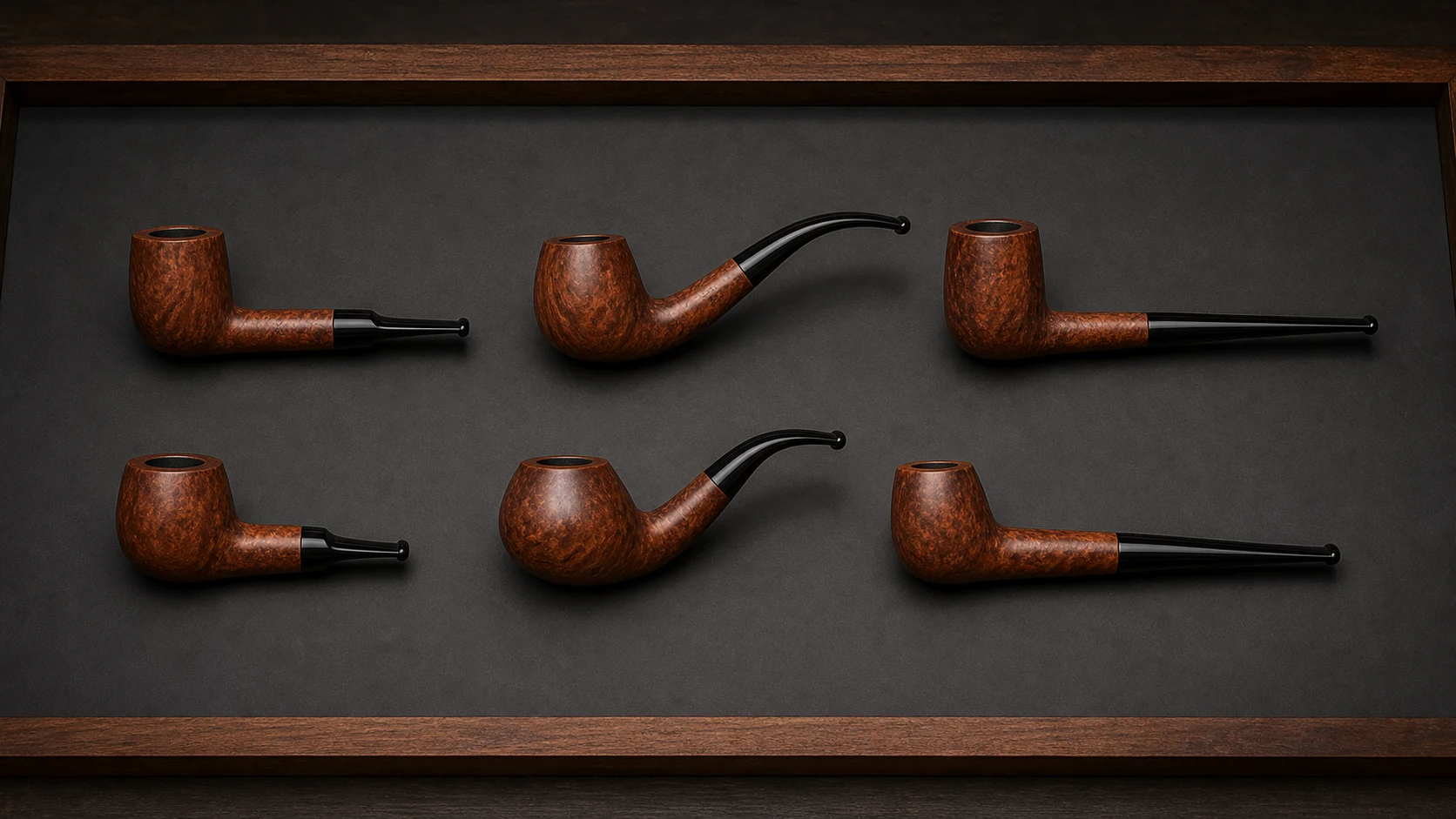
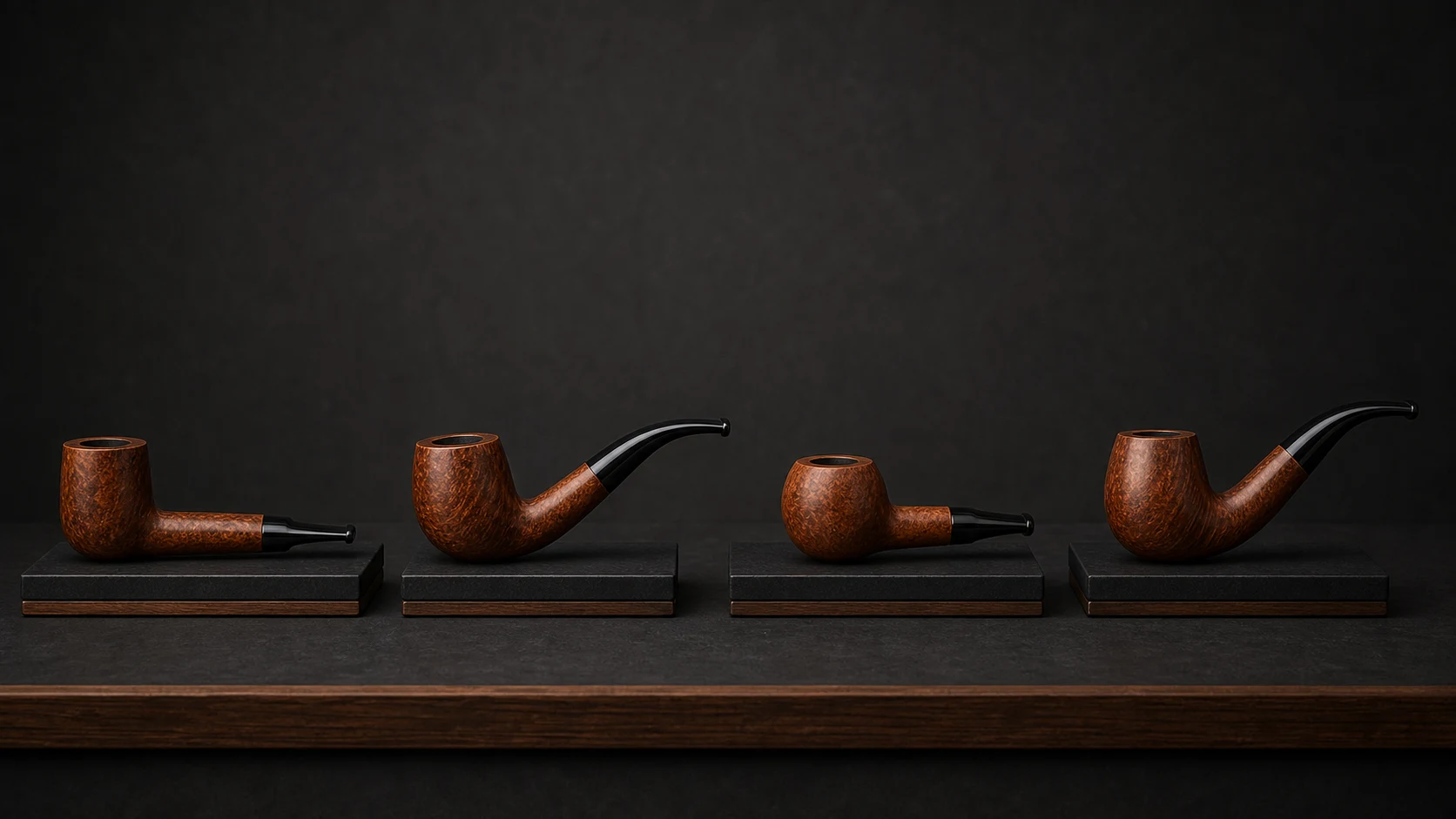
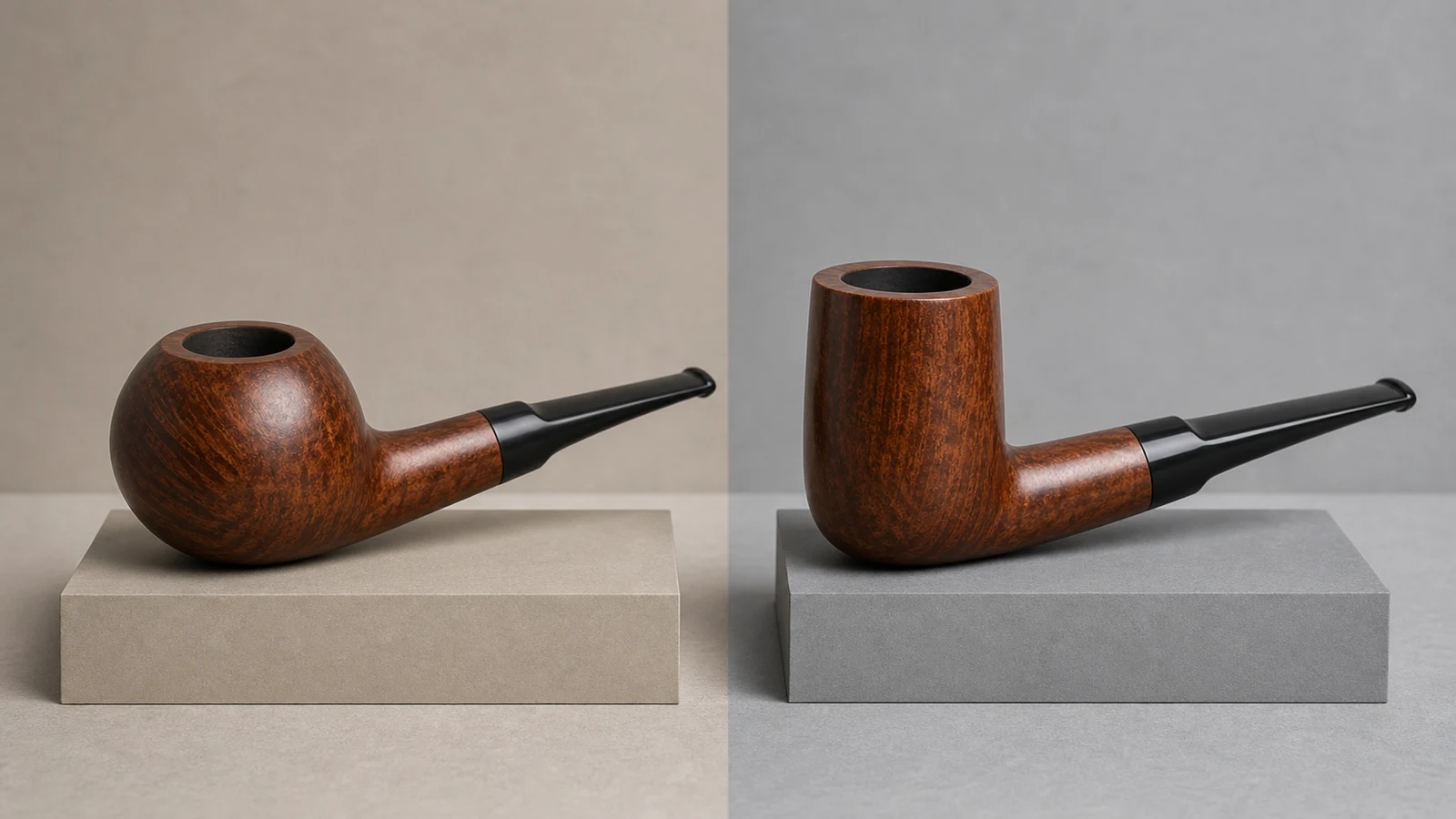
The clearest way to understand tobacco pipe types is to classify each pipe on four separate axes: shape family, bend profile, length profile, and source-labeled features. A single pipe can belong to several groups at the same time—for example, an Apple shape can be straight or bent, and either version may have a saddle-style stem if the listing says so.
This layered system is more accurate than treating every catalog label as a different construction. Its job is classification: it explains where a term belongs and how several labels can describe one pipe at the same time. The separate product guide owns the later question of how to choose among current listings.
This page is the taxonomy hub: it explains how the four axes fit together. Use the pipe-shapes guide for bowl-profile distinctions, the bent-versus-straight comparison for bend, and the long-stem comparison for length. Keeping those questions separate prevents four pages from giving the same broad answer.
The four-axis classification system
| Axis | The question it answers | Examples in the current catalog context | What it does not prove |
|---|---|---|---|
| Shape family | What is the overall bowl and body silhouette called? | Apple, Billiard, Dublin, Bulldog, Egg, Freehand | Exact dimensions, material, maker, or condition |
| Bend profile | How direct or curved is the shank-and-stem line? | Straight, slightly bent, bent, full bent | Comfort, balance, weight, or internal alignment |
| Length profile | Is the overall form standard-looking, extended, or compact? | Churchwarden, long stem, nose warmer, pocket | Exact length without stated measurements |
| Feature label | What visible or source-stated detail distinguishes it? | Rusticated, saddle stem, bamboo shank, sitter, army mount | A guaranteed engineering or performance benefit |
Use the table as a vocabulary map, not a specification sheet. The individual product page remains the source for product-specific facts.
Use the right guide for each axis
This Hub routes a term to the page that owns its detailed explanation. It does not repeat the complete bowl-shape encyclopedia or the commercial selection workflow.
| Axis | Start here | Continue when the question is narrower |
|---|---|---|
| Shape family | Tobacco pipe shapes encyclopedia | Apple vs Billiard or Dublin vs Billiard |
| Bend profile | Bent vs straight | Full Bent or straight-stem labels |
| Length profile | Long stem vs standard | Churchwarden or Pocket vs Sitter |
| Source-labeled feature | Briar finishes | Handmade vs Freehand, filter terminology, or cooling-chamber wording |
The current 150-record catalog snapshot supports 16 shape labels, four bend profiles, four length profiles, and a separate set of source-labeled features. It also contains records where one or more axes are unspecified. “Unknown” is therefore a valid taxonomy state; the system should not manufacture a label to fill a blank.
Shape family is one axis, not the whole taxonomy
A shape family normally begins with the visible relationship between the bowl and shank. PipeOnline's illustrated parts overview and Wikipedia's referenced pipe-shapes section show how extensive and convention-based the vocabulary can be.
The shape encyclopedia owns bowl mass, rim-to-heel outline, shank transition, and silhouette-family distinctions. This Types Hub only records “shape family” as one field alongside bend, length, and features.
Bend profile is a separate taxonomy axis
Straight, slightly bent, bent, and full bent describe the visible relationship of the bowl, shank, and stem line. They are not separate bowl-shape families. That is why both a Billiard and an Apple can appear in straight and bent forms.
When comparing bend profiles, look at the complete side silhouette rather than only the mouthpiece. A cropped image can make a modest curve appear more dramatic, while camera angle can flatten a bend.
The site's straight pipe collection and bent pipe collection provide useful starting points for a visual comparison. Even within a collection, inspect each listing individually. A category label does not confirm exact angle, length, weight, or fit.
No bend profile is universally “best.” A visible curve cannot by itself prove comfort, balance, or any smoking-performance result. Those conclusions would require product-specific evidence beyond an ordinary storefront photograph.
Length profiles cut across shapes and bends
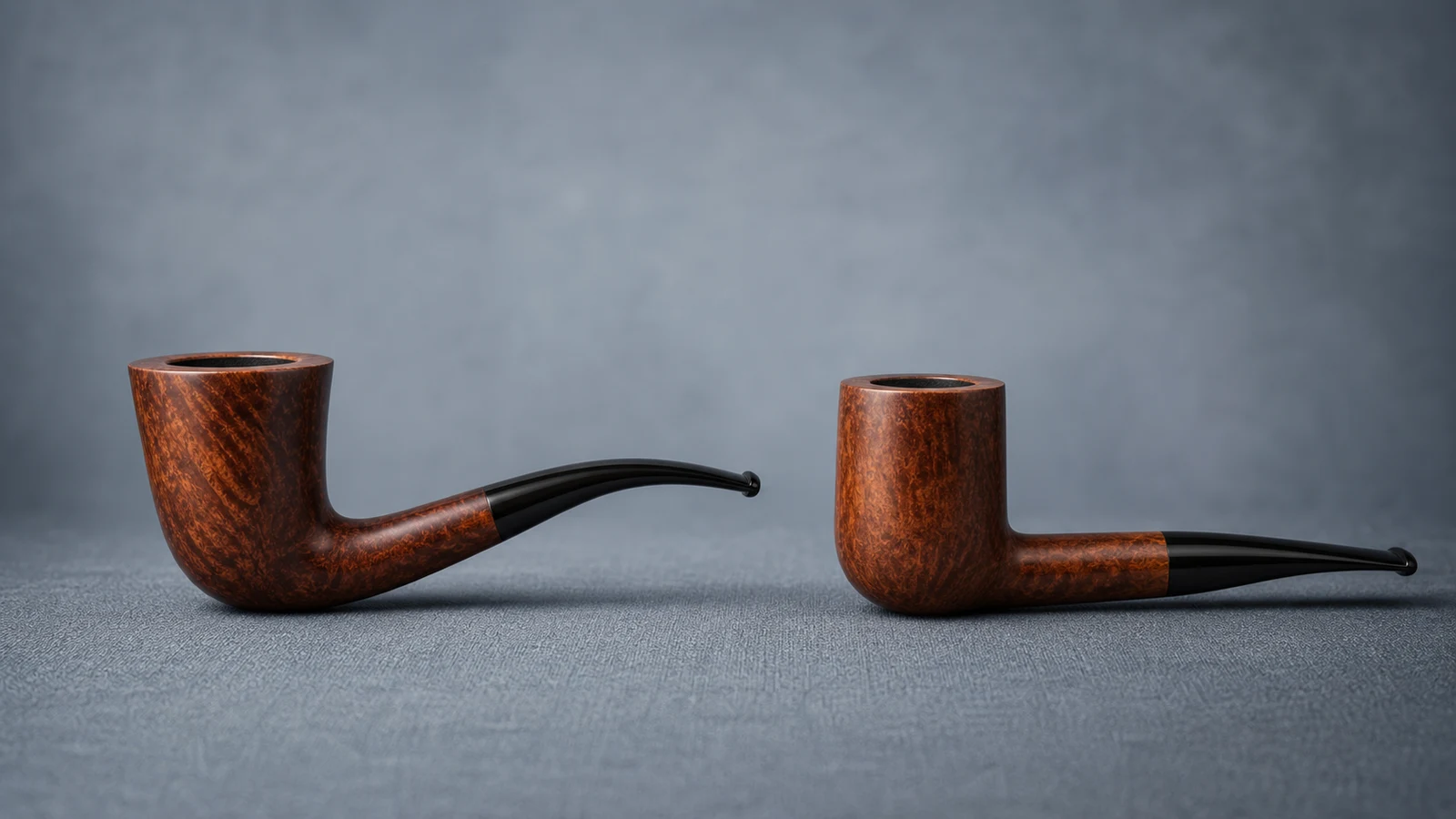
Length labels organize pipes by an extended or compact overall impression. Current catalog vocabulary includes Churchwarden, long stem, nose warmer, and pocket. These terms help discovery, but they are not substitutes for numbers.
If storage, a case, a stand, or another accessory depends on size, confirm the exact listed length and relevant measurements. “Long” and “pocket” are relative terms; two sellers may use them differently.
The long-stem and Churchwarden collection groups extended profiles, while the pocket and sitter collection groups compact or self-standing source labels. These collections express catalog taxonomy, not a promise that every item shares identical dimensions or construction.
Feature labels add detail without creating a new type
Product titles often combine a base shape with descriptive features. In the current catalog context, verified source-labeled features include 3mm, 9mm, army mount, bamboo shank, birdseye grain, carved, cooling chamber, diamond-cut, faceted, freehand, handmade, pocket size, rusticated, saddle stem, sandblasted, sitter, and system.
These labels need careful reading:
- A finish term such as rusticated or sandblasted describes the stated exterior treatment, not the pipe's origin or condition.
- A saddle-stem label describes a visible stem profile when the source uses the term; it does not establish stem material or filter size.
- A 3mm or 9mm label should not be converted into filter compatibility unless the product page explicitly explains what the measurement refers to.
- “Handmade” should appear only when the source record states it.
- “Cooling chamber” or “system” may be repeated as source terminology, but the label alone does not prove a specific performance benefit.
In other words, feature labels help you form questions. They do not answer every question automatically.
How to read real compound product titles
Three current catalog records show why the axes should stay separate:
- Prince Apple Slightly Bent combines an Apple-family label with a slight bend.
- Large Billiard Straight combines a Billiard-family label, a straight bend profile, and a relative size word that still needs measurements.
- Faceted Volcano Straight Freehand combines a Volcano-family label, a straight profile, and two source-labeled features.
None of the titles alone tells you exact dimensions, weight, condition, maker, origin, filter compatibility, included items, current stock, or final checkout total. Check those fields separately.
This method also prevents duplicate classifications. You do not need to invent a standalone type for every compound phrase. Compare each axis with other products that share the same relevant attribute.
Classify a compound title without turning it into buying advice
For taxonomy, a short four-field record is enough:
- Copy the source-stated shape family, or record it as unknown.
- Record the bend profile separately, without inventing an angle.
- Record the length label separately, without converting a relative word into a measurement.
- Preserve finish, mount, filter, maker, and other feature wording as source-labeled fields rather than promoting them to new shape families.
A complete side view can help check whether the visible form is consistent with the source label, but a photograph does not replace an absent taxonomy field. When the task changes from classifying vocabulary to selecting a pipe, continue to the commercial product guide. It owns the comparison workflow for condition, dimensions, current price, stock, shipping, and returns.
Frequently asked questions
Can one tobacco pipe belong to more than one type?
Yes. One record can combine an Apple shape, a slightly bent profile, a compact length label, and a rusticated finish. Those terms describe different axes and do not need to be collapsed into one compound type.
Are straight and bent pipes different shape families?
Not necessarily. Straight and bent are bend profiles that can appear across multiple bowl shapes. A Billiard, Apple, Dublin, or another shape may have more than one bend variation.
Is Churchwarden a shape or a length label?
It is often used as a familiar type name with a strong extended-length cue. Record the source term, then keep the specific bowl family, bend, and measured length as separate facts when they are available.
Do finish and filter terms create new pipe shapes?
No. Rusticated, sandblasted, 6mm, 9mm, adapter, and similar terms belong in feature or compatibility fields. They do not redefine the bowl-and-shank silhouette.
When should I leave the taxonomy Hub?
Use the shape encyclopedia for bowl-and-shank identification. Use the product guide when you are ready to compare current listings and commercial details.
Once you separate shape, bend, length, and feature labels, tobacco pipe types become easier to compare—and much harder to overinterpret.
Related posts
Product notes, store updates, and purchase guidance for the storefront.