Volcano Pipe Shape Explained
Identify the Volcano pipe shape by its rising bowl mass and lower profile, then check stem line, bend, material, and dimensions separately.
Written by
The Tobacco Pipe Editorial Team
The store editorial team reviews product facts, care boundaries, and buying guidance against the current catalog and source evidence.
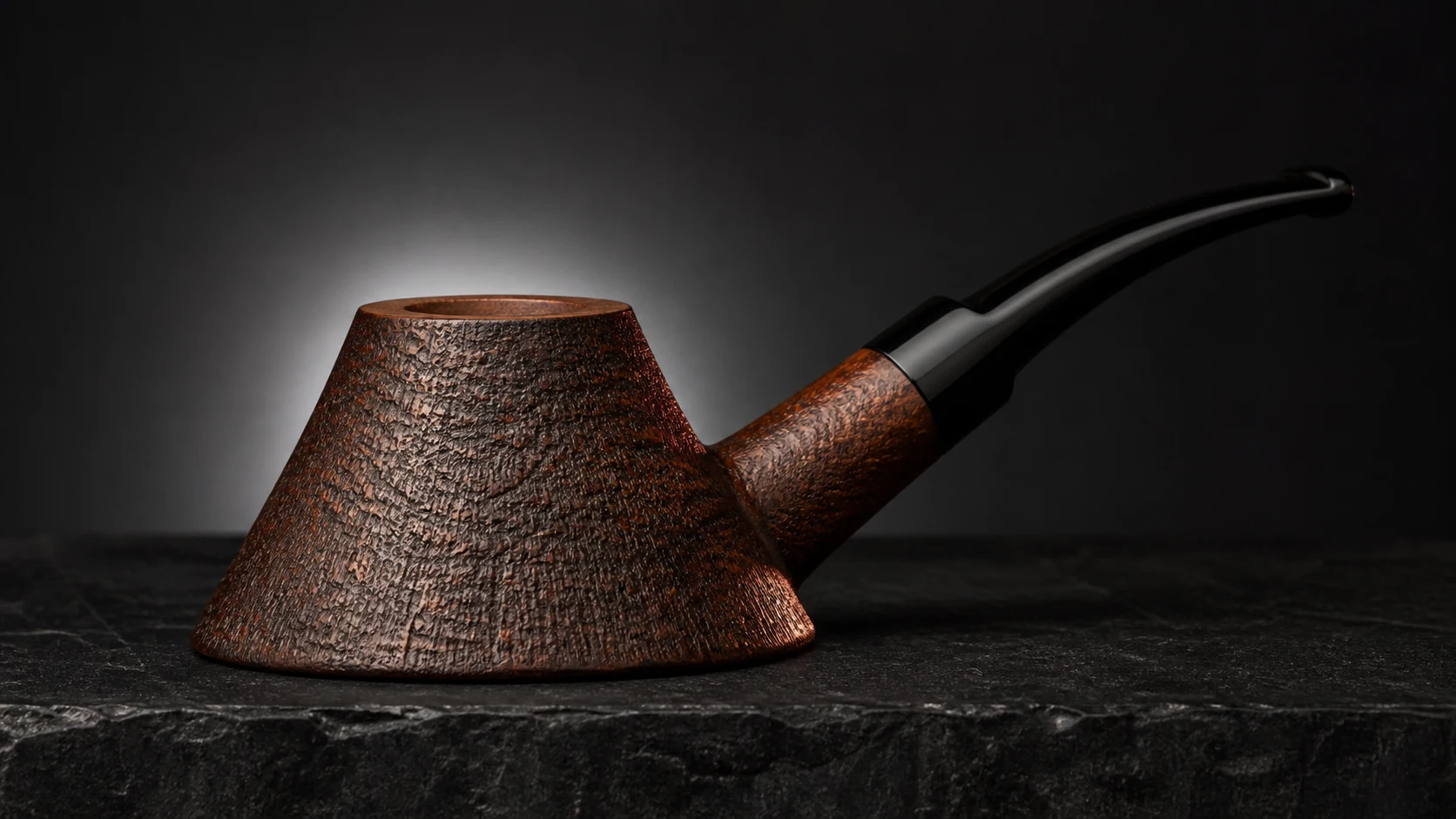
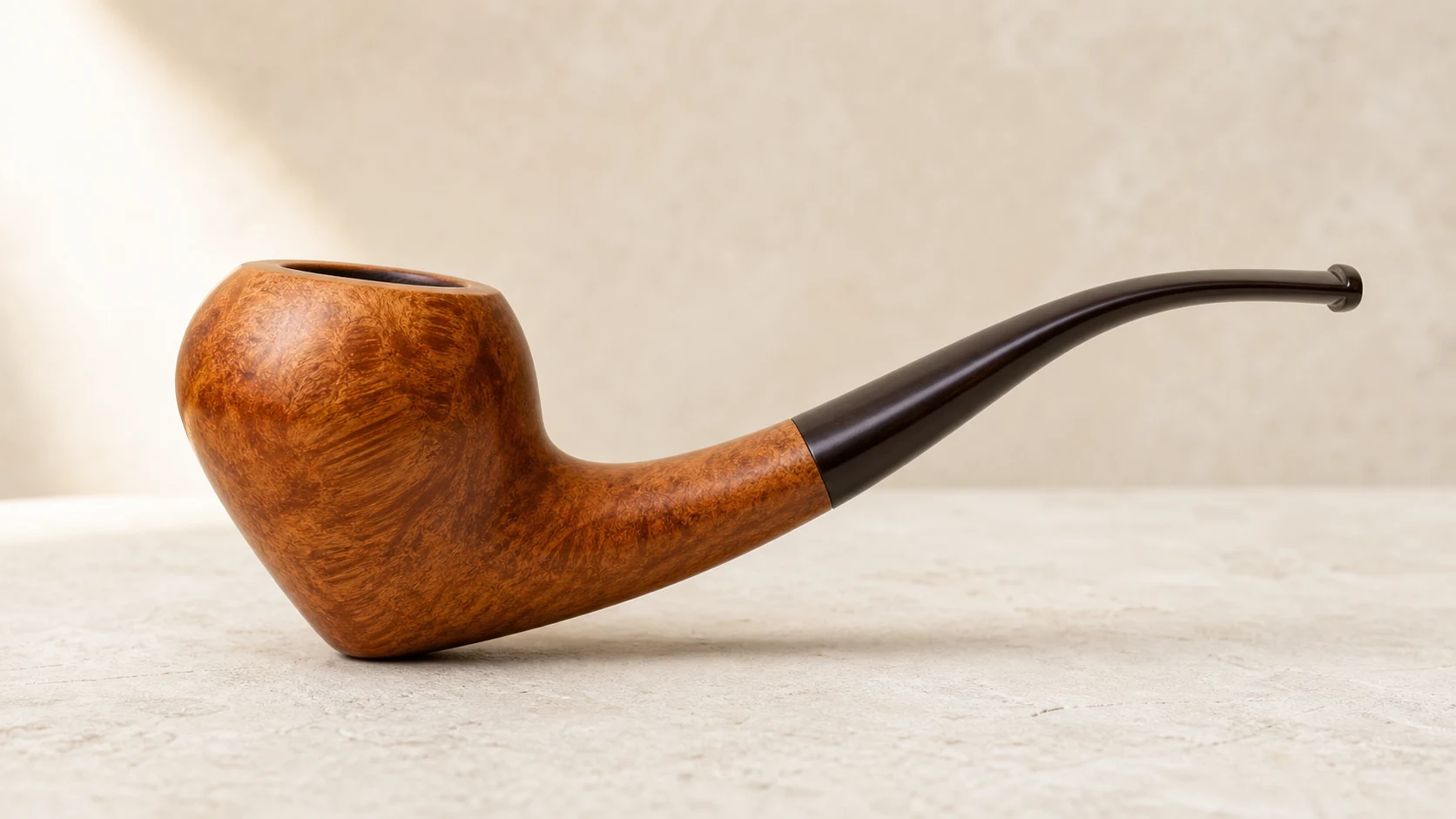
A Volcano pipe commonly has a bowl that is broad toward the base and narrows as it rises, creating a mound-like or conical outer silhouette. The heel may look wide, low, or visually integrated with the shank. This is a catalog shape family, not a standardized taper angle, base diameter, or set of dimensions.
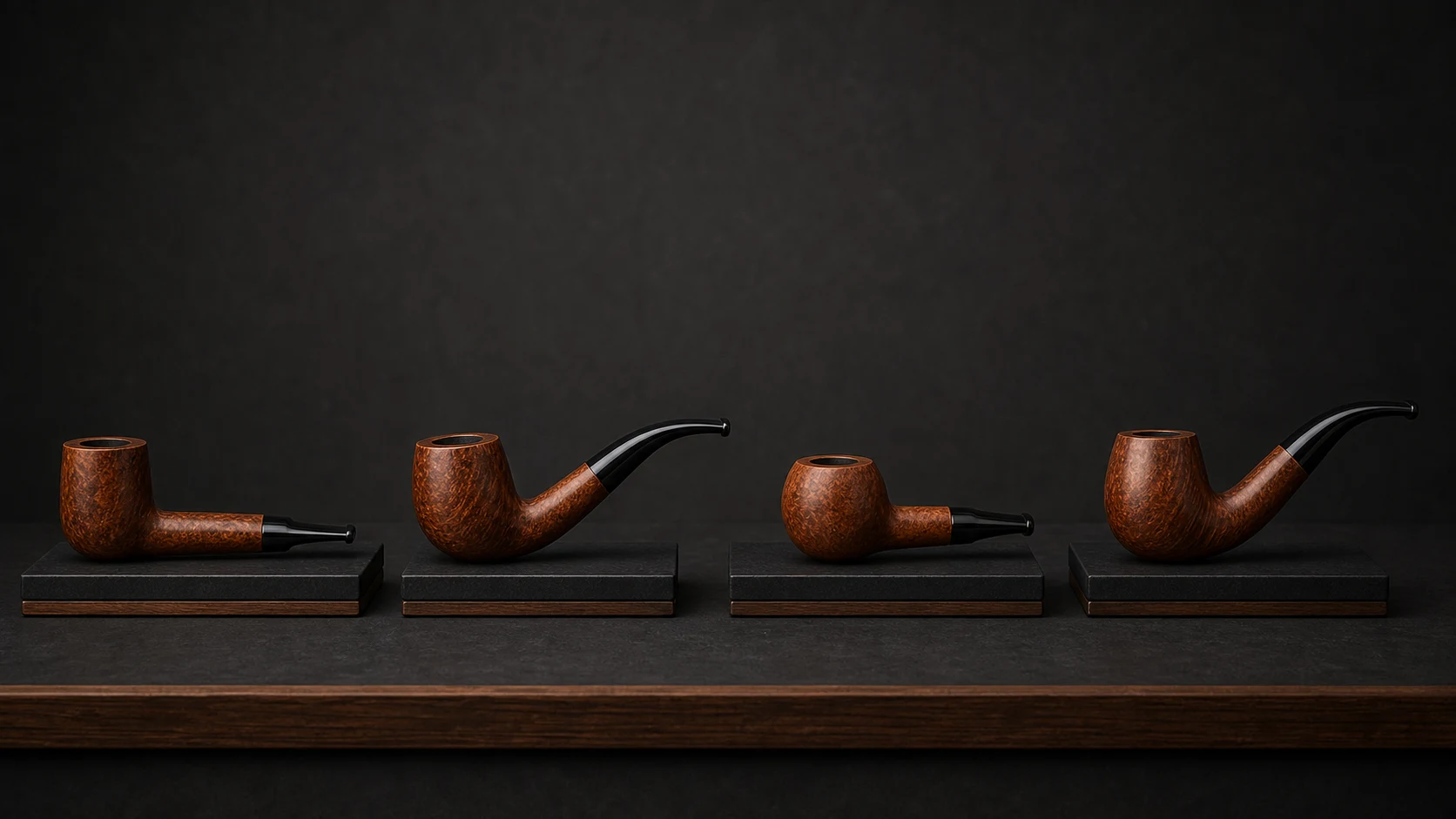
The name describes the visible bowl idea, while bend and stem line remain separate attributes. Current catalog records include Volcano-labeled straight, bent, and freehand examples. That variation is useful: it shows why a buyer should identify the bowl first and then read every modifier on the exact listing.
Use the visual shape index for the broad family map. This page owns the Volcano's lower mass and upward taper; the Acorn guide owns a bowl that is fuller higher up and narrows toward its heel.
A Volcano is a base-to-rim mass test
| Reading pass | What supports the Volcano label | Do not conclude |
|---|---|---|
| Lower bowl | Broad visual footprint | No universal base width |
| Side walls | Often taper inward toward the upper bowl | Taper angle varies |
| Upper bowl | Commonly narrower than the lower body | Rim and chamber need separate evidence |
| Heel | May appear low, wide, rounded, or sculpted | Base treatment is not identical |
| Stem line | Straight and bent treatments can occur | Bend does not define Volcano |
| Additional labels | Freehand, faceted, natural, or other modifiers may appear | Each modifier belongs to the exact listing |
Use the table to describe visible relationships, not to calculate a shape from one photograph.
Read the bowl from base to rim
The easiest way to recognize the common Volcano idea is to start at the heel. The Smokingpipes glossary describes the classic form as flatter underneath with a conspicuous continuous taper toward the rim, while acknowledging modern reinterpretations. In a clear side view, the lower bowl therefore occupies more visual space than the upper portion.
“Stable-looking” is only a description of appearance. It does not prove that the pipe will stand by itself or remain balanced on a surface. A rounded or uneven underside can be hidden in a side image. If self-standing behavior matters, look for an explicit sitter label or ask the seller about the exact item's base.
The Volcano outline can be smooth and regular or more sculptural. Facets, freehand transitions, and textured surfaces may interrupt the clean cone-like idea. Focus on the overall distribution of the bowl's mass rather than requiring straight diagonal walls.
Stem direction does not control the bowl name
A straight Volcano extends the shank and stem along a more direct line from the bowl. A bent Volcano introduces a visible curve or angle. Either can retain the broad-lower, narrower-upper bowl profile associated with the shape name.
Record the shape and bend independently. If a title says “Volcano Bent,” both labels are supported. If it says only “Volcano,” inspect the structured attributes and photos before assigning a bend category. Neutral description is better than turning a visual impression into a formal seller claim.
Freehand can also appear beside Volcano. That combination may signal a more individual outline, but it does not prove a making process or construction method unless the listing provides that information. The product guide gives a fuller framework for keeping title claims, visible evidence, and unknown facts separate.
Read a Volcano from the floor upward
Use the lowest visible contour as the starting line. Ask whether the bowl spreads out near that line, then follow both edges upward to see if they steadily close in toward the rim. A level side photograph is best for this pass. An underside image then reveals whether the apparent floor is flat, rounded, or partly hidden; that view is about form, not a promise that the pipe stands.
Repeat the trace while mentally removing color blocks, facets, carving, and grain. Finally read the product title and note Volcano, bend, Freehand, and finish as distinct labels. Measurements may compare two specific items, but thumbnail scale cannot. A high camera position can make the rim look too broad, whereas a low position can exaggerate the lower mound, so conflicting views should remain unresolved until a level profile is available.
Volcano compared with nearby profiles
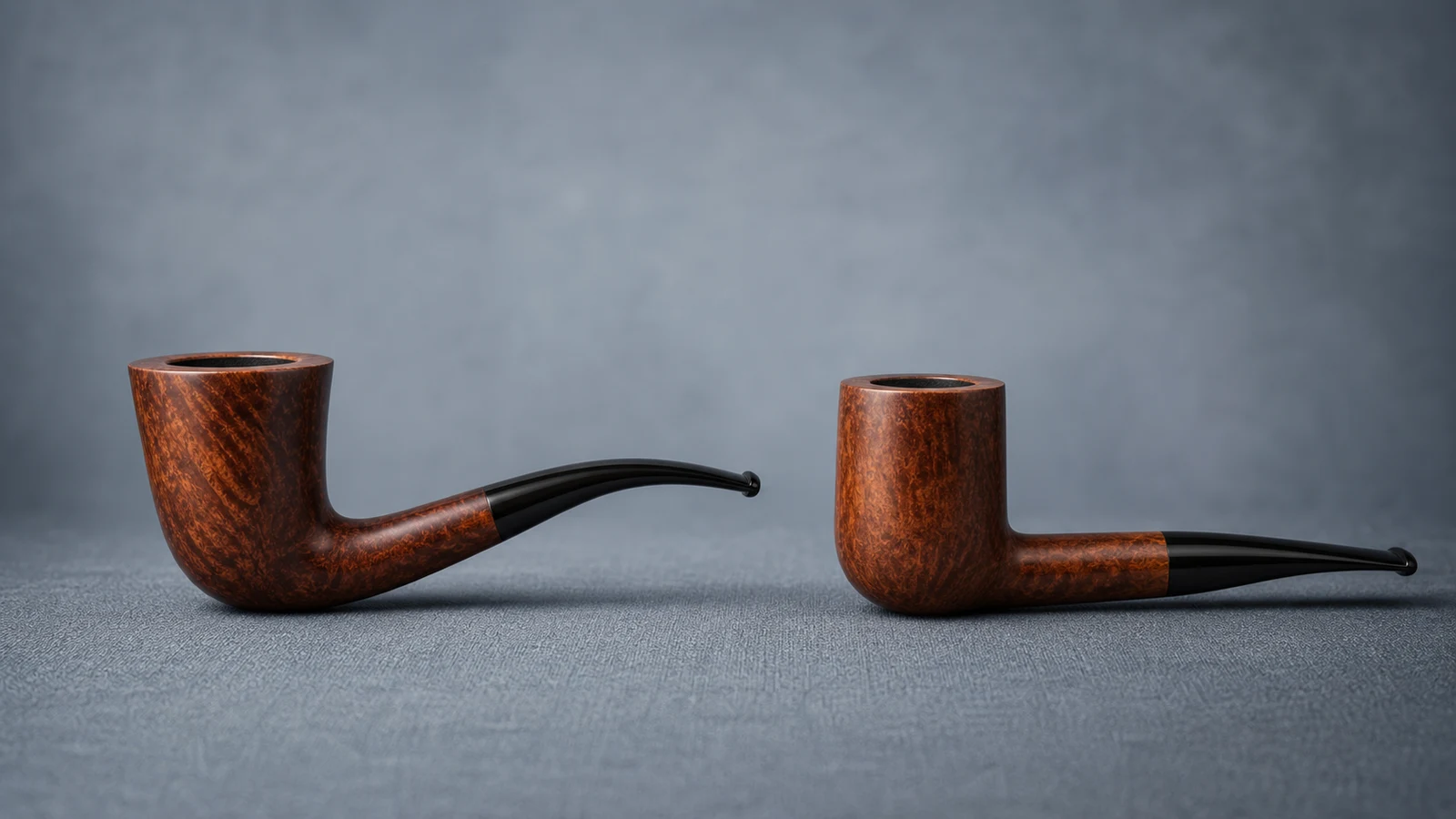
A Dublin is also commonly described through tapered bowl walls, but the classic visual emphasis is often a bowl that widens toward the rim rather than a broad lower mound narrowing upward. A Volcano reverses that visual center of gravity. Catalog examples can blur the boundary, and the seller's own label remains necessary.
An Acorn may have a full upper or middle body that narrows toward a smaller heel. The Volcano commonly places more visual weight at the lower bowl. Again, these are broad reading cues, not universal formulas.
A sitter can share a broad base with a Volcano, but the words answer different questions. Volcano is a bowl-family label. Sitter indicates a claimed or visible self-resting base treatment. Do not infer sitter behavior merely from a Volcano silhouette.
Catalog examples show useful variation
The 2026-07-16 catalog snapshot contains six Volcano-classified products. The live Natural Volcano Bent page shows the bowl label paired with bend. Other titles add Straight, Faceted, Carved, or Freehand; those remain item-level modifiers rather than requirements of the shape.
The records do not justify a claim that every modifier is currently in stock or that all Volcano products share materials, dimensions, condition, filters, or package contents. Even where a source listing supplies measurements, those numbers belong only to that exact product. Review the live catalog before making a comparison or purchase decision.
Finish and photographs: what they prove
A smooth surface may make the taper easy to follow because highlights run across the bowl. A rusticated, sandblasted, faceted, or carved appearance can break up that outline. Neither surface treatment changes the identification method: trace the outer edge and compare it with the catalog label.
Photos can support visible color, surface texture, stem curve, relative proportions, and the presence of facets or carving. They cannot independently prove wood species, material origin, exact finish process, hidden drilling, filter compatibility, or condition beyond what is clearly visible. A box, pouch, or stand shown in a styled image is not necessarily included.
What the Volcano label cannot promise
Shape is not a performance specification. A broad base and tapered wall do not guarantee balance, self-standing behavior, comfort, airflow, heat behavior, durability, craftsmanship, or health outcomes. Exact wall thickness and chamber geometry also cannot be calculated safely from the external outline.
Filter details are product-specific. If the product page does not name a system or size, ask the seller. Do not copy a filter value from another Volcano. The same restraint applies to dimensions, materials, origin, condition, and availability.
How to compare Volcano listings carefully
First decide whether the broad-lower, tapered-upward silhouette is the visual priority. Then compare stem line and bend. Finally, make a product-level table with the exact title, supplied measurements, named material and finish, condition, filter information, photos, price, availability, and included items.
Leave missing fields unresolved. If a Volcano label is present but the photos are ambiguous, request another side or underside view. The current shop is the appropriate place to review live examples; this shape guide should not be used as evidence that a particular item remains available.
Frequently asked questions
Where does a Volcano carry most of its visual mass?
Near the bottom of the bowl. From there, the exterior normally contracts on the way to the rim. The cue is directional: lower breadth followed by an upward taper, not a required base diameter.
Does a flat-looking underside make every Volcano a sitter?
No. Volcano names the bowl family; Sitter is a separate claim about resting position. A side image may hide curvature or uneven contact points, so the base needs its own description and, if important, product-specific evidence.
Can the same Volcano shape use a straight or curved stem?
Yes. Local titles include both directions. Stem treatment changes the complete silhouette but not the defining concentration of bowl mass near the bottom.
How is a Volcano different from a Dublin?
Their tapers run in opposite visual directions. Dublin generally expands toward the rim; Volcano starts broader near the floor and contracts as it rises. The Dublin versus Billiard comparison shows the upward-flaring Dublin cue.
What can the Natural Volcano Bent listing tell me?
It is a live example of this site's Volcano and Bent labels appearing together. Use its own gallery and stated fields for that item, without transferring its dimensions, finish, compatibility, or availability to the other five Volcano-classified records in the intake snapshot.
Related posts
Product notes, store updates, and purchase guidance for the storefront.