Handmade vs Freehand Tobacco Pipe Labels
Separate handmade and Freehand pipe labels by meaning, visible shape, and maker evidence without assuming either term proves origin or quality.
Written by
The Tobacco Pipe Editorial Team
The store editorial team reviews product facts, care boundaries, and buying guidance against the current catalog and source evidence.
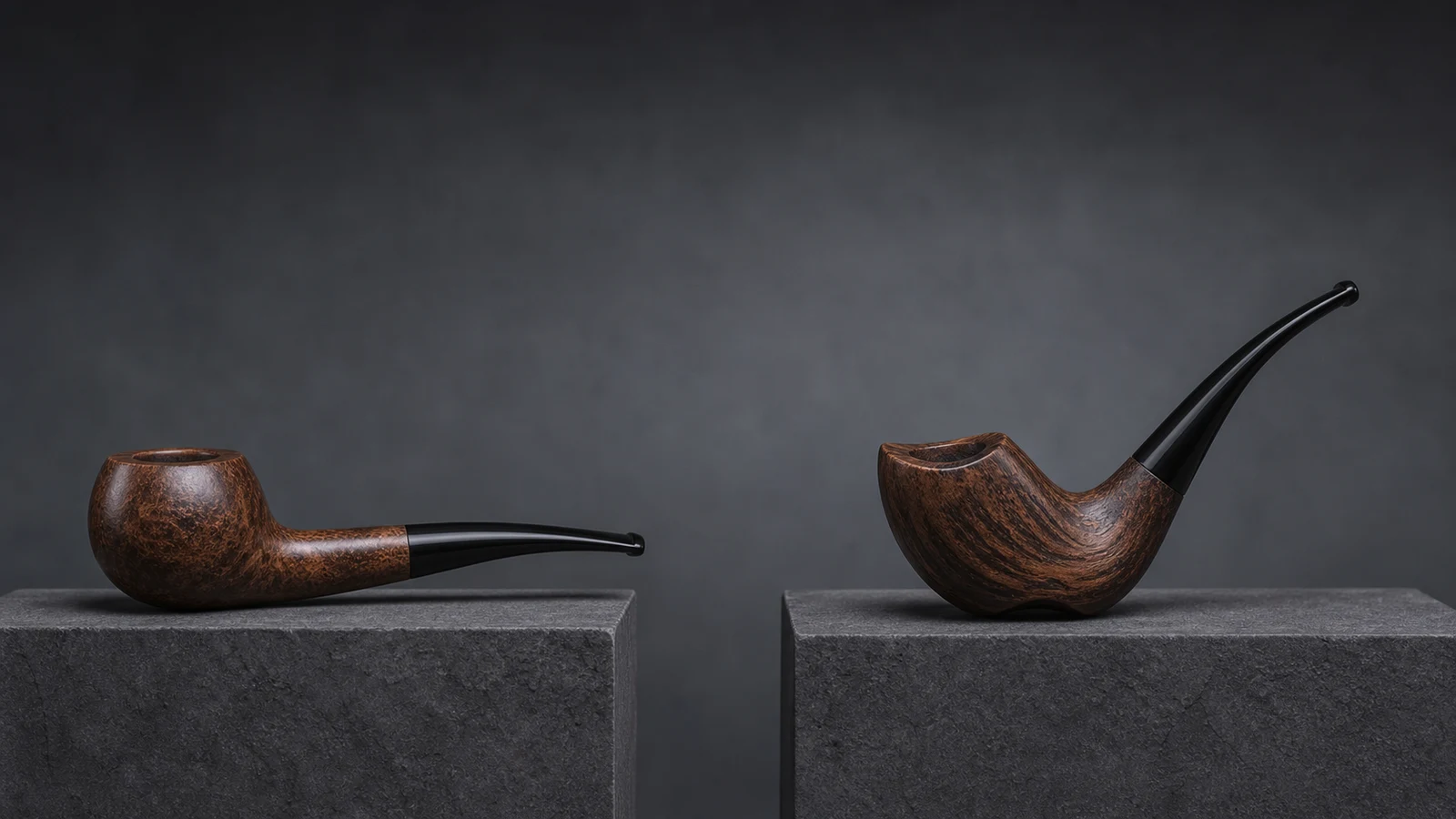
“Handmade” and “Freehand” are not interchangeable tobacco pipe labels. Handmade is a production claim: it says something about how an item was made. Freehand is usually a design, shape, or catalog label: it describes freedom from one fixed, repeatable silhouette. A pipe may be sold as Freehand without enough evidence to call it handmade, and a handmade pipe may follow a conventional shape.
When comparing a handmade vs Freehand tobacco pipe listing, keep the seller's exact words, the visible form, and the unknown manufacturing details in separate columns. The current product guide applies this same evidence-first method to material, condition, dimensions, and order facts.
The labels answer different questions
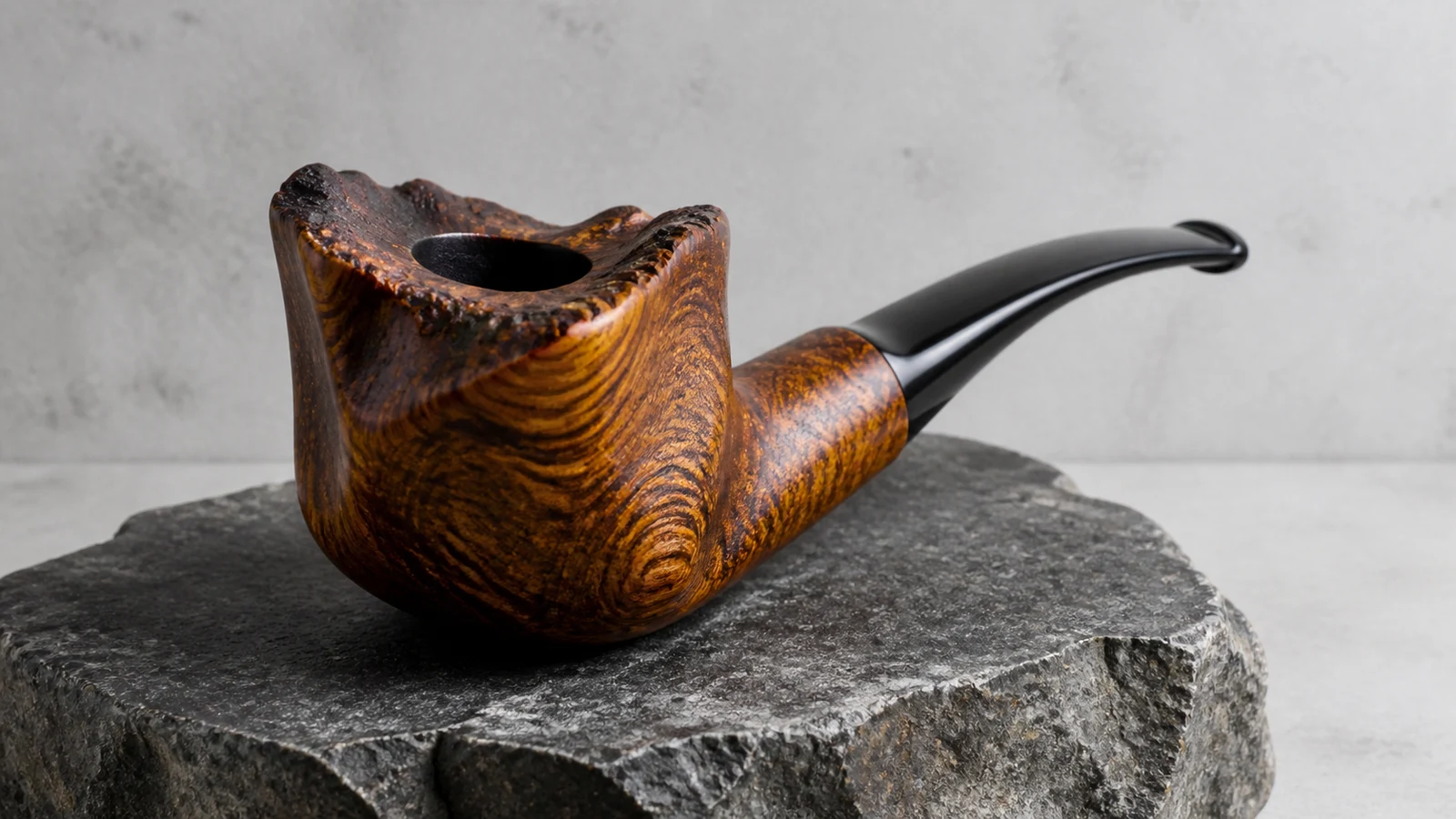
Freehand can help a shopper find expressive or less standardized forms. It may group pipes with asymmetrical bowls, organic rims, carved surfaces, sculptural shanks, or distinctive stem lines. None of those features is mandatory, and none proves the labor or tools involved.
Handmade points toward human participation in production, but the word can be underspecified. It may refer to shaping, carving, assembly, finishing, or a larger process with both manual and mechanized stages. The label alone does not identify the maker, the amount of handwork, the workshop, the origin, or whether the photographed piece is unique.
BriarWorks' own history, for example, describes both a factory-pipe project and a team of artisan pipe makers. It is valid first-party evidence about that company, but it also shows why “factory,” “artisan,” and “handmade” should not be guessed from silhouette. Its separate pipe-design discussion notes that visual classifications are useful but incomplete. A design category still cannot prove a particular item's production history.
| Listing term | The question it may answer | Evidence still needed |
|---|---|---|
| Freehand | How is the form categorized or styled? | Exact silhouette, dimensions, material, condition |
| Handmade | What production claim does the seller make? | Scope of handwork, maker, process, exact-item connection |
| Hand carved | What surface-process claim is supplied? | Which parts, who did it, and how the claim is documented |
| Artisan or artisan-style | How is the item positioned or grouped? | Named attribution, process, uniqueness, specifications |
| One of a kind | Is uniqueness claimed? | What is unique and whether the claim applies to this exact item |
These terms can appear together, but one never proves the others. Record each only when the source actually uses it.
Shape freedom is visible; production history is not
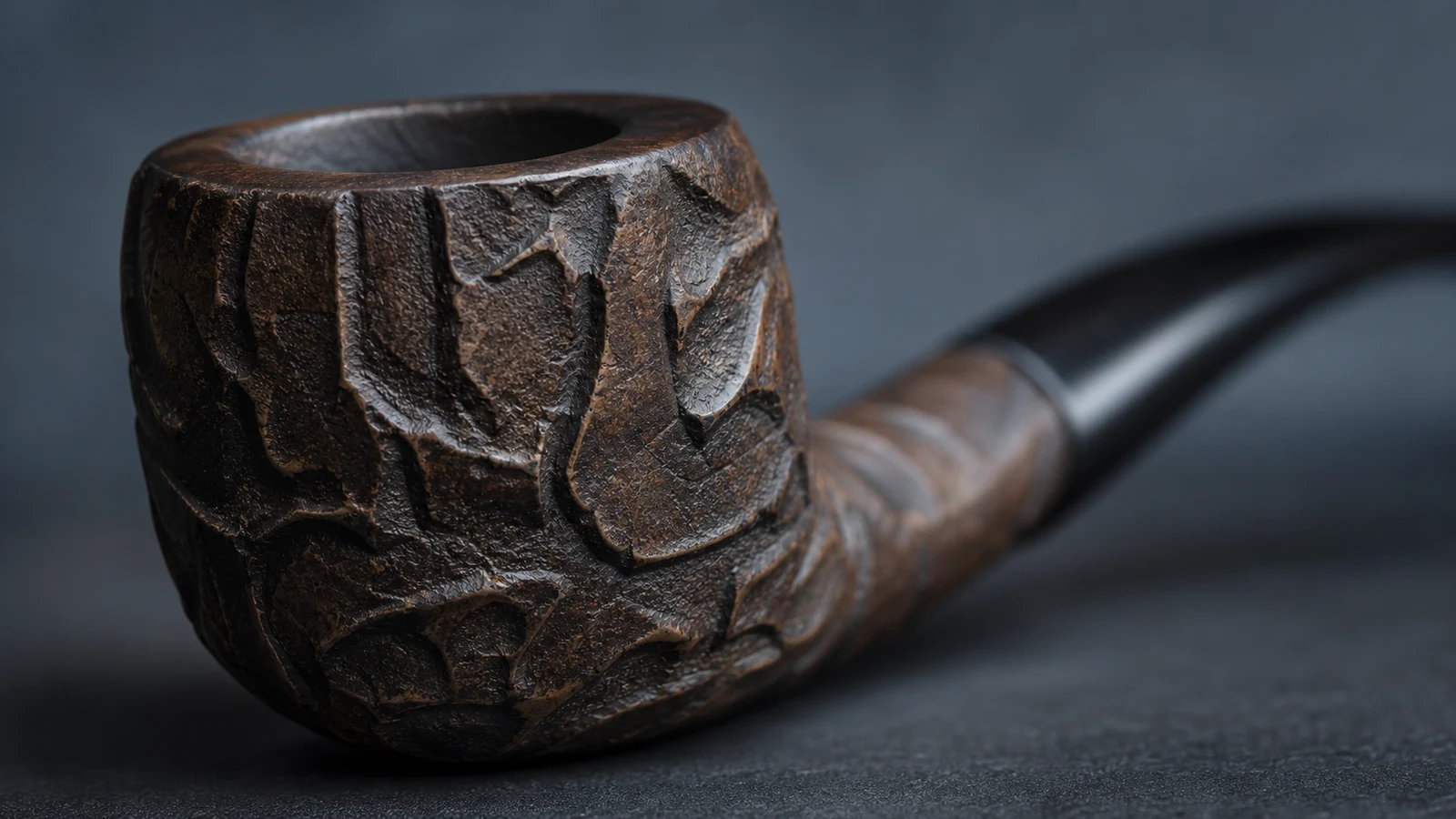
Several photographs can show that a pipe has an irregular rim, asymmetrical mass, nonstandard shank, or sculptural transition. Those observations may help explain why the seller placed it in a Freehand category. They cannot establish how the form was produced.
For an angle-by-angle treatment of that visible profile, use the Freehand shape guide. Keep that shape observation outside the handmade evidence column.
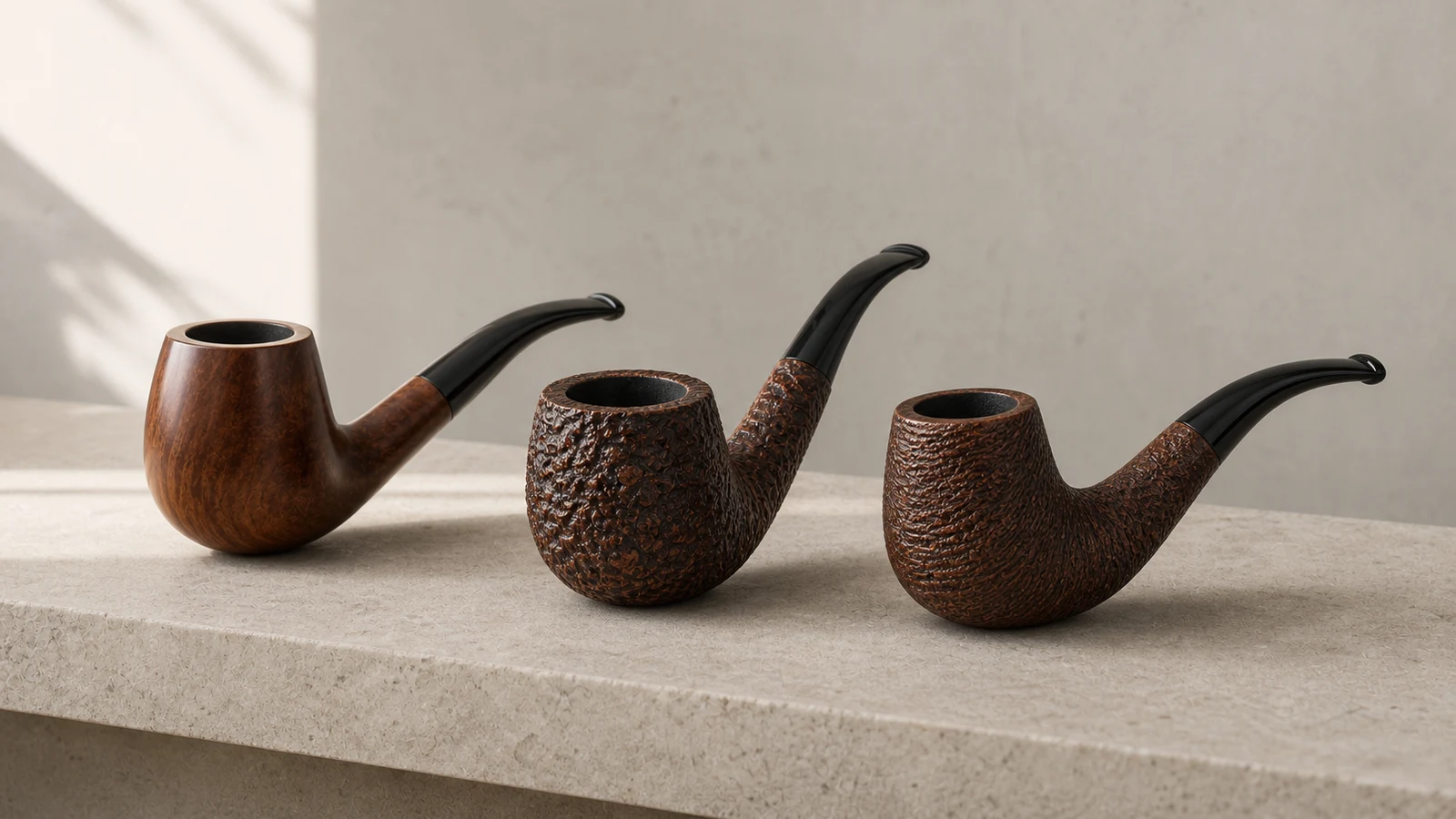
A regular silhouette does not disprove handwork either. A maker can manually produce a Billiard, Apple, or another familiar form. Conversely, an irregular shape can be produced with repeatable tooling or derived from a standard model. Appearance therefore cannot settle a production question in either direction.
Use photos for the evidence they can provide:
- the complete external silhouette;
- visible asymmetry from more than one angle;
- rim, bowl, shank, and stem transitions;
- carved or textured areas that are actually shown;
- stamps or signatures legible in the supplied image;
- consistency between the item described and the gallery.
Keep tool choice, labor time, workshop sequence, internal construction, and authorship out of the visual column. Those require seller documentation or other reliable item-specific evidence.
What counts as useful maker evidence
A confident handmade claim should connect the stated process to the exact item. A named maker profile, a clear product-page attribution, a legible maker's mark, or process documentation supplied by a responsible source can contribute to that connection. One clue is not always enough, especially when a gallery uses representative images.
Ask four direct questions:
- Does “handmade” apply to this exact pipe or to a product line?
- Which stages does the seller mean by handmade?
- Is a maker or workshop named, and is the attribution documented?
- Do the photographs show the exact item that will be shipped?
A seller may not provide every workshop detail. That does not automatically invalidate the listing, but it limits how specifically the claim can be repeated. “Listed as handmade” is more accurate than inventing a detailed making story when the source supplies only the label.
Freehand, artisan, and carved require separate fields
The site's catalog includes a supported Freehand and Artisan collection as a discovery path. Its category description emphasizes distinctive carving, grain, shaping, or construction rather than one uniform silhouette. That helps readers find items to inspect; it does not make every grouped pipe handmade, attributable to a named artisan, or unique.
Carved is likewise a surface or design term unless the listing makes a stronger production claim. A carved-looking bowl may support a visible-detail note, but it does not prove hand carving. Artisan-style may express a visual category, while artisan with a named maker may carry a different level of attribution. Preserve those differences instead of treating all expressive pipes as one production class.
The carved-pipe photo guide provides the separate visible-relief checklist. It deliberately does not answer who made the marks or which tools were used.
Neither label guarantees performance or quality
Handmade and Freehand can be meaningful search filters, but they do not promise comfort, balance, cooling, durability, airflow, or any other performance outcome. They also do not establish material, condition, chamber geometry, filter compatibility, dimensions, package contents, stock, or price.
Quality cannot be measured by visual irregularity or by the presence of a prestigious-sounding label. A careful product record still needs clear photos, confirmed specifications, condition disclosure, and current commercial terms. The shop can show source-labeled examples, but each product page should be evaluated independently.
A two-column comparison method
For every shortlisted item, create a short note with two sections.
Supported now
- exact terms used in the title and description;
- visible silhouette and surface details across the supplied photos;
- legible marks or signatures without speculative interpretation;
- explicit maker, material, condition, and dimension statements;
- whether the images are exact-item or representative, when stated.
Needs confirmation
- what handmade means for this listing;
- maker or workshop attribution not directly documented;
- uniqueness or limited-production status;
- internal construction and filter compatibility;
- unlisted dimensions, condition history, and included items;
- current availability, shipping, taxes, and return terms.
This approach makes two products comparable even when their marketing language differs. It also prevents a Freehand shape cue from filling gaps in a handmade claim.
Before relying on either label
- Quote the exact listing terminology rather than rewriting it.
- Confirm the term applies to the exact item, not only the collection.
- Inspect multiple angles for the visible shape or surface description.
- Ask what stage or process “handmade” refers to.
- Verify maker attribution separately from the handmade label.
- Verify uniqueness separately from Freehand or artisan wording.
- Confirm material, dimensions, condition, and filter information.
- Confirm which items are included in the package.
- Recheck price, stock, shipping, and returns before payment.
- Avoid turning either label into a performance guarantee.
Frequently Asked Questions
What is the main difference between handmade and Freehand pipe labels?
Handmade is a claim about production, while Freehand is generally a broad design or shape category. A product can carry either label, both labels, or neither. One should not be inferred from the other.
Can product photos prove that a tobacco pipe is handmade?
Photos can show visible form, surface detail, and sometimes a maker's mark. They cannot reconstruct the production process or establish how much work was performed by hand. Look for an explicit, item-specific source claim.
Does Freehand mean the pipe is one of a kind?
No. Freehand permits visual variation but does not itself prove uniqueness. Treat “one of a kind,” limited edition, and individual-item photography as separate claims that need their own support.
Which facts remain separate from a handmade or Freehand label?
Confirm the exact material wording, dimensions, condition, maker attribution, stem and filter information, package contents, image-to-item relationship, current price, stock, shipping, and returns. None follows automatically from handmade, Freehand, carved, or artisan wording.
How should I compare Freehand or artisan listings without treating the category as maker proof?
Start with the current pipe catalog or the Freehand and Artisan collection, then open the exact product page. Use the site's product guide to separate what is visible, what the source states, and what still needs confirmation before ordering.
The clearest comparison does not choose a winner between two labels. It asks what each label actually claims, whether that claim applies to the exact item, and which important facts remain unresolved. That preserves the value of an expressive Freehand form without inventing a handmade history, and it preserves a handmade claim without assuming one required silhouette.
Related posts
Product notes, store updates, and purchase guidance for the storefront.