Smooth, Rusticated, and Sandblasted Briar Pipe Finishes
Compare smooth, rusticated, and sandblasted briar pipe finish labels through visible texture, photo evidence, and seller-confirmed process details.
Written by
The Tobacco Pipe Editorial Team
The store editorial team reviews product facts, care boundaries, and buying guidance against the current catalog and source evidence.
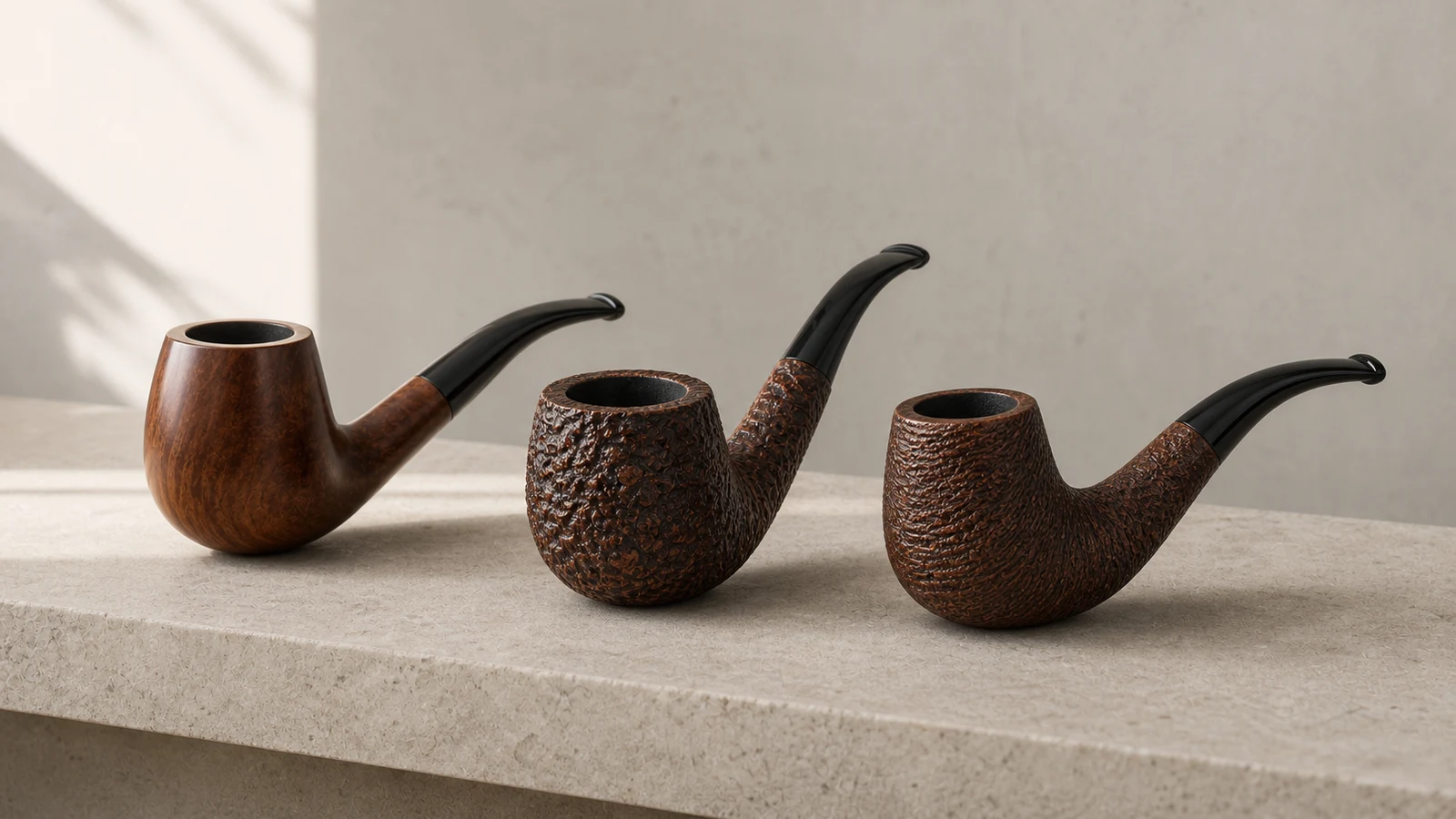
Smooth, rusticated, and sandblasted are briar pipe finish labels that describe different surface presentations. A smooth pipe has a largely continuous exterior surface; a rusticated pipe has deliberately created texture; and a sandblasted pipe is labeled as having a surface shaped by blasting. Product photos can show visible texture and pattern, but they cannot reliably prove which process was used, the material's grade, the maker's technique, or any performance benefit.
Use the listing label and the exact product images together. If the text and appearance disagree, ask the seller rather than assigning a finish from one photograph. Finish is primarily a material-and-surface fact plus an aesthetic choice; it should not become a shortcut for claims about engineering, condition, durability, or use.
Quick finish comparison
| Finish label | Typical visible presentation | What to verify in the listing | Do not assume |
|---|---|---|---|
| Smooth | Broad continuous areas where color and grain may be visible | Exact finish wording, stain or coating details if stated, condition | That uninterrupted grain proves grade or quality |
| Rusticated | Deliberate grooves, cuts, pits, or repeating texture | That the seller explicitly calls it rusticated; coverage and color | The exact tool, handwork, depth, or performance from appearance |
| Sandblasted | Relief that may follow or expose directional surface patterns | That the seller explicitly calls it sandblasted; coverage and finish details | Blasting method, intensity, material grade, or engineering benefit |
| Carved or textured | A broad label for a deliberately altered surface | The seller's own term and which areas it covers | That every rough texture is rustication or sandblasting |
| Mixed finish | Smooth and textured zones on one pipe | Boundaries, exact labels, and product-specific photos | That one treatment covers the entire bowl and shank |
Seller terminology can vary, especially for older, handmade, translated, or marketplace listings. Preserve the supplied term instead of upgrading “textured” to “sandblasted” or treating “carved” as a synonym for rusticated.
A useful first-party comparison is Peterson's separate smooth, rusticated, and sandblasted System Standard families. The maker applies distinct finish labels within one range, but those pages do not establish a universal process definition for every seller.
What a smooth finish shows
A smooth finish leaves broad exterior areas visually continuous. Depending on color, lighting, and surface treatment, photographs may show directional grain, eye-like figures, small marks, or color transitions more clearly than on a heavily textured surface.
That visibility has limits. A polished highlight can cover grain. Dark stain can reduce contrast, while image sharpening can exaggerate it. A smooth-looking photo does not establish which coating, stain, sanding sequence, or polishing method was used. If those details matter, they must come from the exact listing or maker information.
Smooth also does not mean flawless, new, restored, or high grade. Product-specific condition still needs to be stated. A distant image can hide marks, and an evenly lit promotional scene cannot replace close-ups of the exact bowl, rim, shank, stem connection, and underside.
What a rusticated finish means
Rusticated is generally used for a deliberately textured surface created with tools or a defined texturing process. The visible result can range from fine, regular cuts to deep, irregular relief. Some pipes have full rustication, while others combine textured areas with a smooth rim, panel, shank section, or other contrast zone.
Do not identify the exact tool or amount of handwork from the finished image. Similar marks can be made in different ways, and marketplace wording may be translated or abbreviated. The defensible statement is the source label plus a description of what the photos show: for example, “the listing calls the finish rusticated, and the supplied side views show deep exterior texture.”
Texture can cast strong shadows that change between images. Inspect both brightly lit and shadowed areas before describing depth or uniformity. A close-up with no full-pipe reference may also make fine texture look much coarser than it appears across the whole object.
What a sandblasted finish means
Sandblasted is a process label, not merely a synonym for “rough.” A listing using that term says the surface has been treated by blasting to create relief. Photos may show ridges, channels, and directional texture, but the visible result alone does not confirm the media, pressure, number of passes, preparation, or workshop method.
At web resolution, sandblasted relief can resemble rustication, carving, or another textured treatment. Use the exact product description to name the process. If the listing says only “textured,” keep that broader label. If it says sandblasted but the photograph is unclear, preserve the source wording and describe the image limitation instead of inventing a more precise visual account.
Do not claim that sandblasting exposes “better” grain, proves superior briar, hides defects, improves handling, changes temperature, or guarantees durability. Those conclusions require evidence beyond a finish photograph and may not apply to the exact item.
For the pattern visible beneath or around a finish, use the grain-photo framework. Decorative relief and motifs require the separate carved-pipe photo framework.
How to inspect finish photos
Begin with full profiles, then use close-ups to study areas you can locate on the complete pipe. A useful photo set may include left and right sides, front or rear three-quarter views, rim, underside, bowl-to-shank transition, and the shank-to-stem joint.
Follow this sequence:
- Confirm the image set. Determine whether the photos show the exact item or a representative example.
- Read the finish label. Record the seller's precise wording before making a visual classification.
- Map the coverage. Note whether the finish appears on the bowl, shank, rim, underside, or only selected panels.
- Compare lighting. Check whether apparent texture remains in the same physical place as highlights and shadows move.
- Inspect transitions. Mixed finishes should have visible boundaries that can be compared across views.
- Record marks neutrally. Describe what is visible without diagnosing damage, repair, or production technique.
- List missing facts. Material, condition, coating, process, origin, and grade remain unknown when unstated.
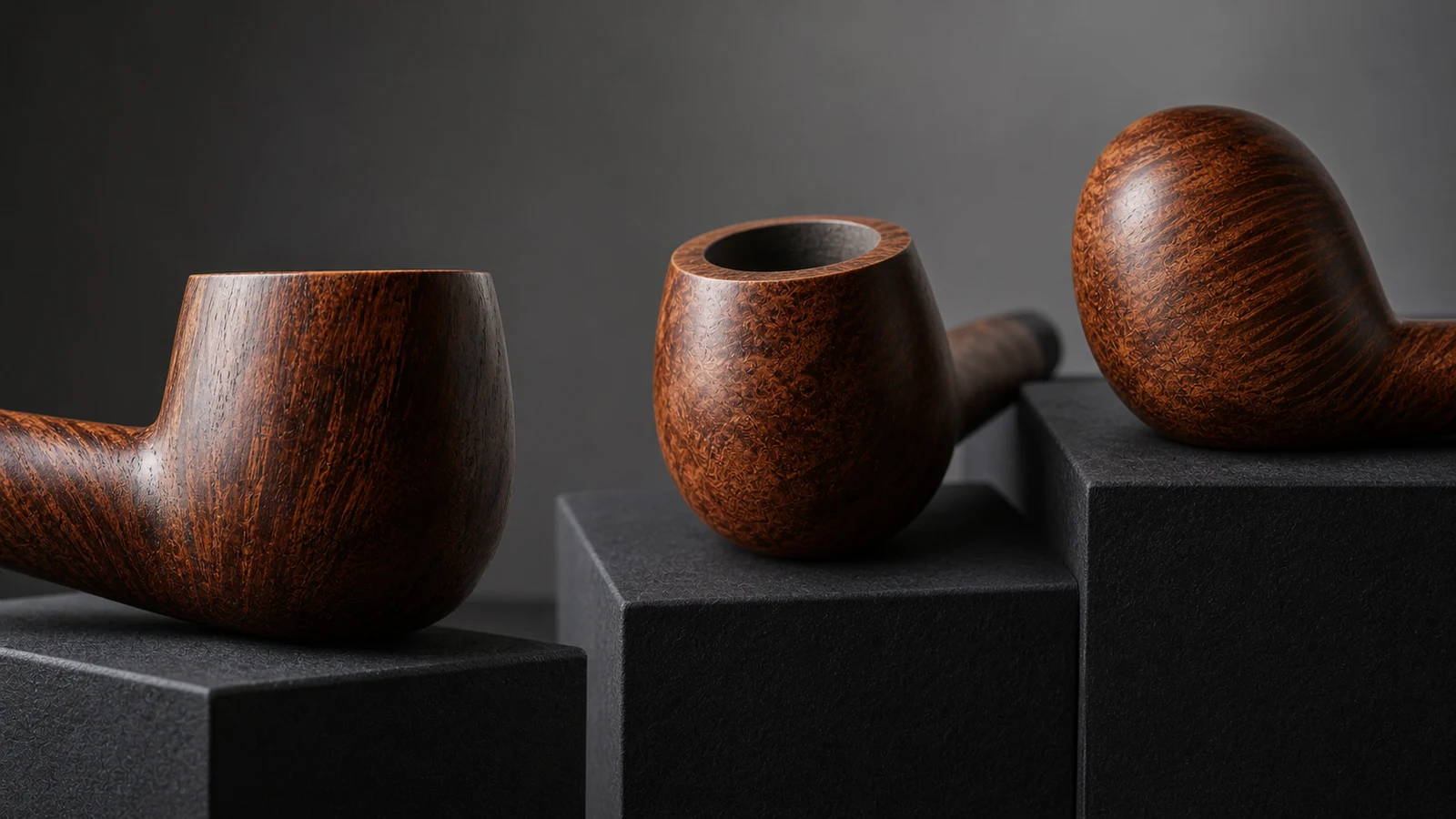
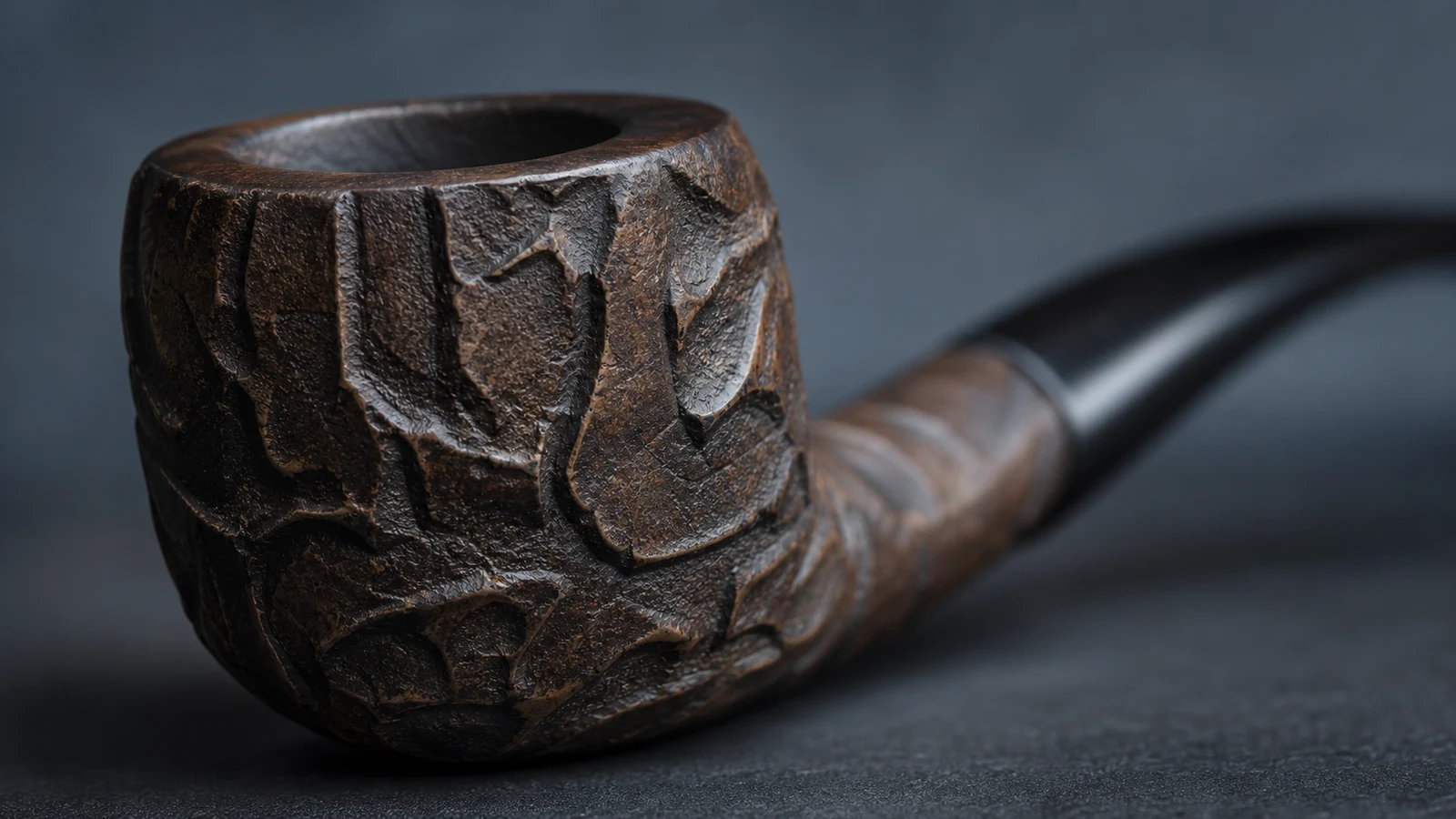
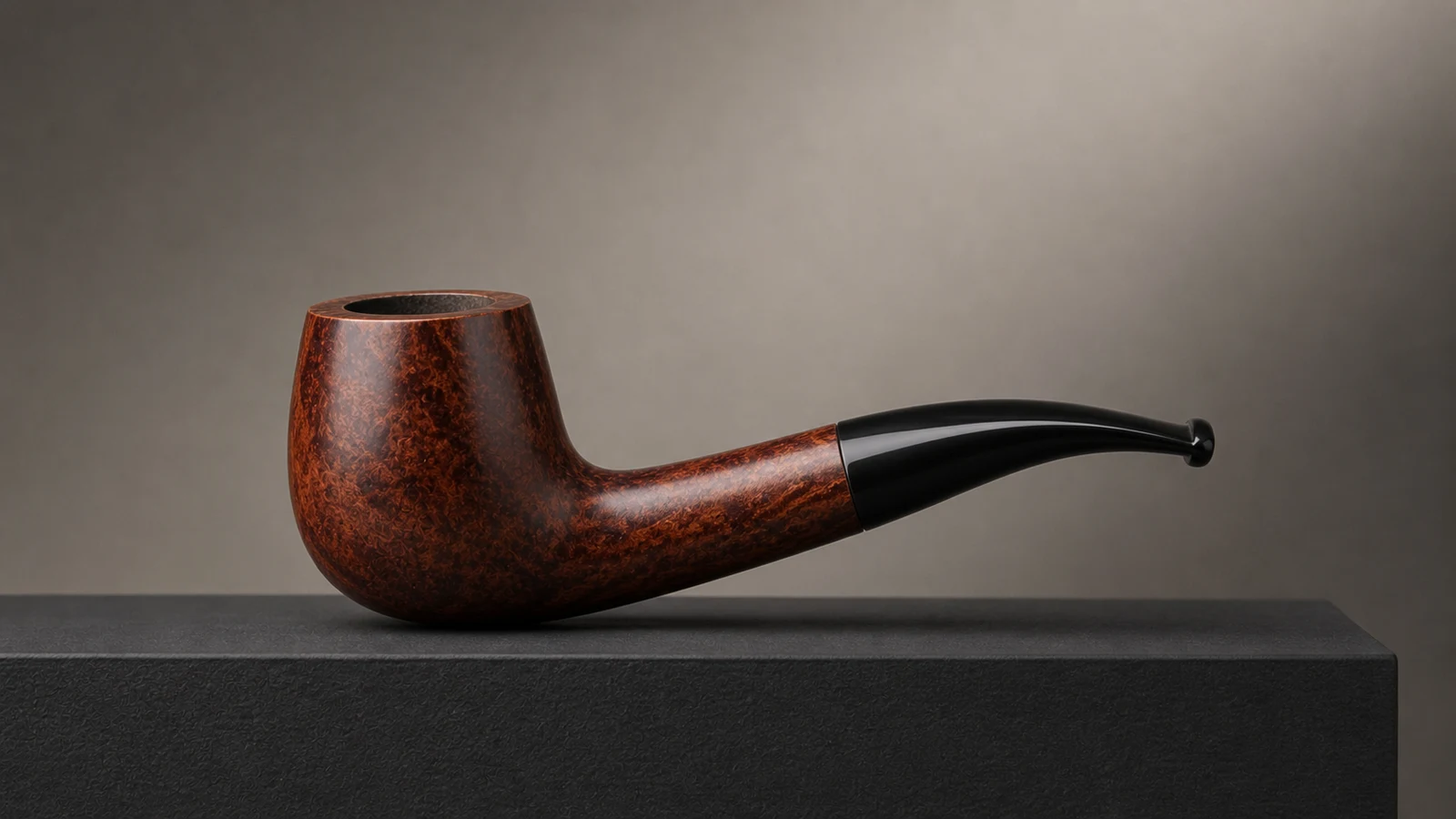
An editorial still life can illustrate finish categories but cannot confirm the finish of a product listing. Only use images attached to the exact record as item evidence.
A specialist restorer's documented workflow can also show why process records matter. Briarville lists re-dyeing, sandblasting, and rustication as separate optional operations. That does not identify the history of another pipe, but it is a concrete reason to ask what work was performed instead of diagnosing it from texture alone.
Finish labels in the current catalog
The catalog's verified context includes source-labeled features such as Rusticated and Sandblasted on particular products, alongside Carved and other surface descriptions. These are record-level facts. They do not mean that every textured-looking pipe has the same treatment, and they should not be transferred between similar shapes.
Use the current pipe shop to inspect the listing label and supplied media for each example. If a pipe has no explicit finish term, describe only the visible surface and leave the process unknown. The product guide offers a wider checklist for separating shape, photos, source text, dimensions, condition, and checkout facts.
Choosing among finishes without unsupported claims
Start with visual preference and the evidence available for the exact product. Ask whether you prefer continuous visible grain, pronounced texture, subtle relief, dark or light color, or a mixed surface. Then check whether the product photos cover enough of the pipe to support that preference.
Do not rank finishes as automatically beginner-oriented, premium, durable, comfortable, cool, lightweight, or easy to maintain. Those labels may depend on construction, dimensions, condition, coating, use, and individual preference. If care differs for a particular surface, rely on product-specific maker or seller instructions rather than a broad finish category.
A conservative comparison worksheet includes:
- exact listing finish label;
- visible texture on each supplied side;
- color under more than one lighting angle;
- smooth-to-textured transition areas;
- close-ups of rim, shank, and underside;
- material and condition statements;
- any explicit care information;
- unanswered questions for the seller.
Frequently asked questions
What should I verify when researching briar pipe finishes?
Verify the exact material and finish wording, whether photos show the exact item, which surfaces the finish covers, the stated condition, and any product-specific care details. Ask when the listing and photographs do not align.
What finish evidence should I look for across product photos?
Photos can support observations about visible texture, color, grain contrast, finish coverage, and transitions between smooth and textured areas. They cannot reliably confirm the manufacturing process, material grade, coating, hidden condition, or performance.
Can I tell rusticated from sandblasted by sight alone?
Not reliably in every listing. The textures can overlap visually, especially under strong shadows or low resolution. Use the seller's exact label and describe only the visible relief when the process is not stated.
Is a smooth briar pipe higher quality than a rusticated one?
The finish alone does not establish quality. Smooth, rusticated, and sandblasted surfaces can be compared aesthetically, but material grade, engineering, condition, maker, and performance require separate evidence.
How should I compare smooth, rusticated, and sandblasted listings in the shop?
Browse the shop and review each product's own finish label and images. Use the product guide to keep visible observations separate from confirmed specifications and unknown facts.
Finish labels help describe what a pipe looks like; they do not finish the investigation. Pair the seller's exact wording with multiple product-specific photographs, resist inferring the workshop process or performance from texture, and choose only after the visible surface and the remaining unknowns are both clear.
Related posts
Product notes, store updates, and purchase guidance for the storefront.