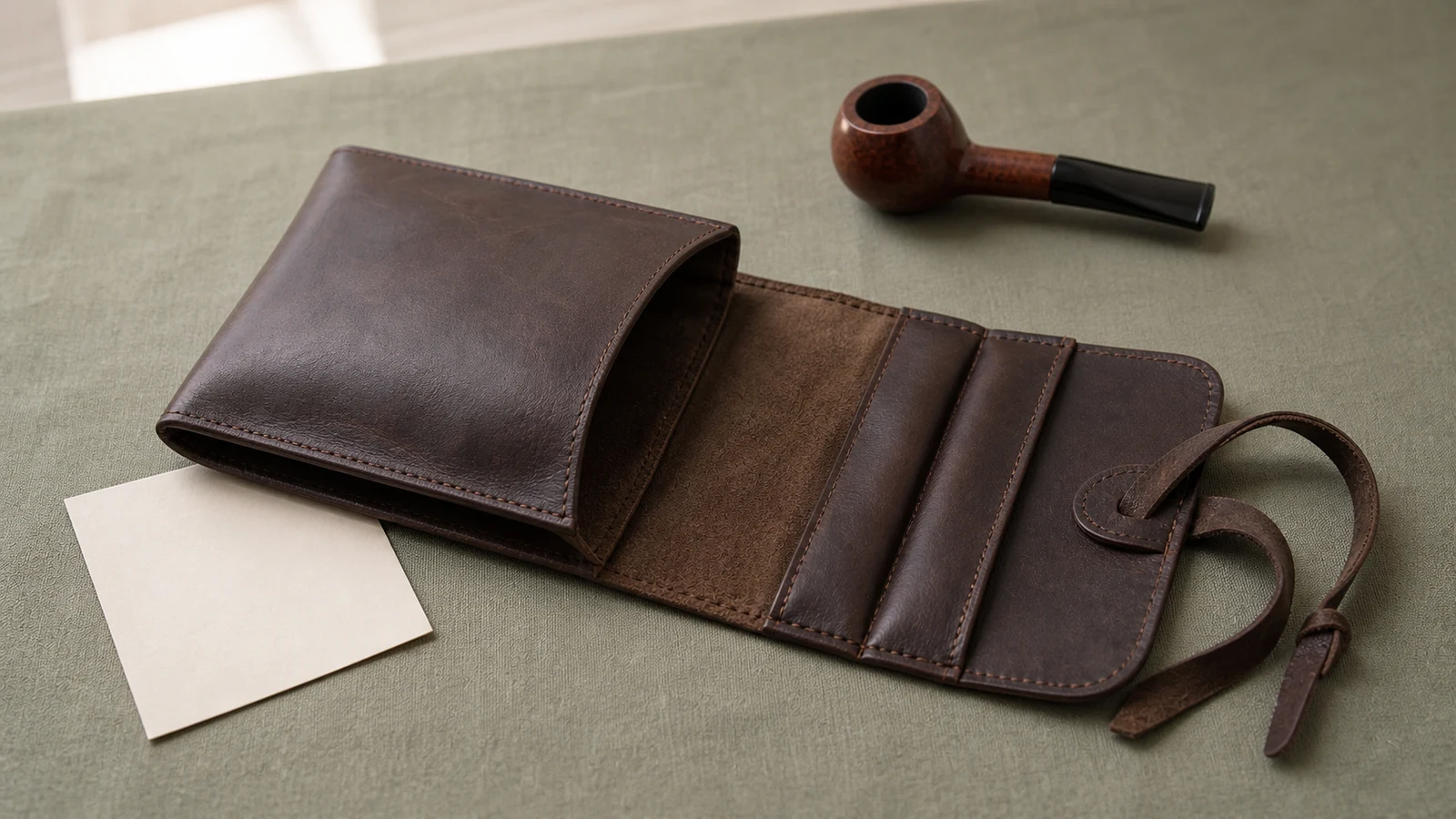
Tobacco Pipe Starter Kit: What Should Be Included
Evaluate a tobacco pipe starter kit by its exact contents, cleaner and tool fit, storage, replacement needs, and clearly excluded items.
Written by
The Tobacco Pipe Editorial Team
The store editorial team reviews product facts, care boundaries, and buying guidance against the current catalog and source evidence.
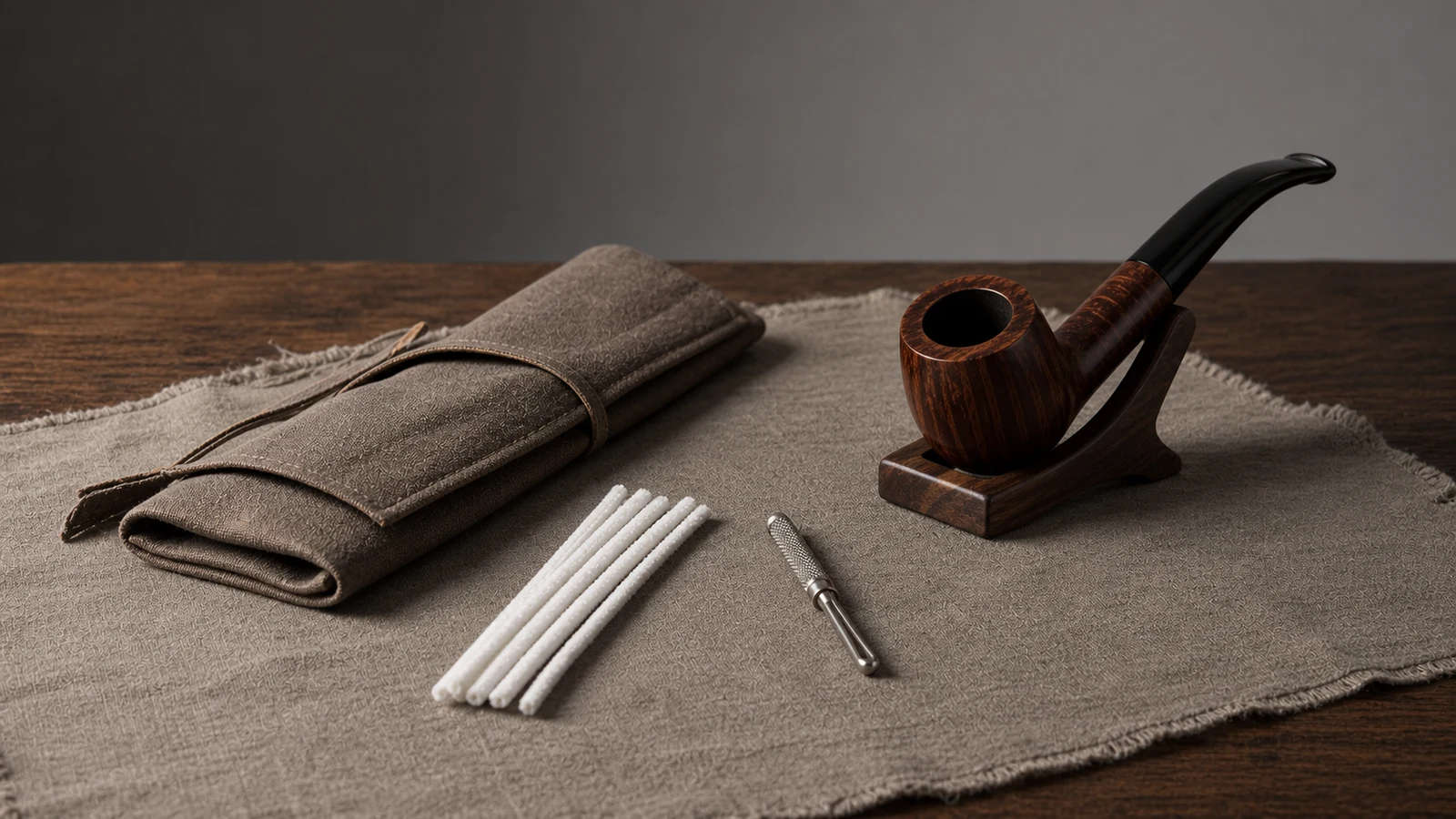
A useful tobacco pipe starter kit has three layers: a documented minimum, system-dependent parts that match the exact pipe, and optional storage or extras selected for a real need. There is no universal piece count. A smaller bundle with an identified pipe, suitable cleaners, a defined basic tool, and clear care information can be more coherent than a larger assortment of unverified parts.
The Tobacco Pipe sells individual pipes, not starter kits or the accessories discussed here. Use this builder to audit a bundle offered by another seller or to make a shopping list whose components can be verified separately.
Build the kit in three layers
| Layer | What belongs here | Evidence required before counting it | Why it is in this layer |
|---|---|---|---|
| Documented minimum | Exact pipe or selectable variant; cleaners intended for that pipe; a simple tool with named functions; maker or seller care information | Written identity, dimensions or fit statement where relevant, quantity, and instructions | These establish what the bundle is and provide a basic maintenance path |
| System-dependent | Filters, adapters, reducers, replacement parts, or fit-dependent tools | The pipe and component must name the same system, size, or approved relationship | These may be necessary for one configuration and irrelevant or wrong for another |
| Optional | Stand, pouch or case, extra tools, cloth, additional cleaner types, samples, or other convenience items | Dimensions, purpose, package quantity, and current seller terms | Value depends on storage, travel, replacement, or personal preferences rather than the word “starter” |
This is a verification framework, not a claim that every first purchase must contain the same objects. If the pipe maker does not require a filter, no filter becomes mandatory merely because a competing kit includes one. If a simple tool has no named functions or instructions, it is not improved by being counted as three or four pieces.
What two real starter kits show
Current seller pages demonstrate how widely bundle contents can differ.
| External kit | Written contents reviewed July 18, 2026 | Configuration questions | Lesson for the builder |
|---|---|---|---|
| Missouri Meerschaum Starter Pipe Kit | A Legend pipe, filters that may vary, BJ Long regular cleaners, a Pipe Nail, and a QR code leading to care material | The page identifies a filtered Legend and says the filters may vary; the selected configuration still controls the exact match | A compact kit can cover the minimum layer, but variant wording must be resolved before a system-dependent component is counted as confirmed |
| Boswell Beginner Starter Kit | A Missouri Meerschaum County Gentleman with a bent-or-straight choice, a cleaner bundle, nail, filter box, matches, and three named one-ounce consumable selections | The buyer must select the stem option and confirm that the filter box matches that selected pipe | A larger bundle adds optional consumables and a variant choice; those additions do not redefine the universal minimum |
These examples are evidence of two seller-described bundles, not rankings or recommendations. One includes a care-resource link and says filters may vary; the other adds a choice of stem plus more consumables. The difference is why “complete starter kit” must be expanded into a written inventory.
Layer 1: establish the documented minimum
Identify the exact pipe
Start with the pipe because every fit-dependent component follows it. Record:
- exact model and selected variant;
- whether the photographs show the shipped item or a representative example;
- source-stated material, dimensions, condition, bend, and included parts;
- filter or adapter system only when the exact listing states it;
- the maker or seller instructions supplied with that configuration.
“Beginner,” “starter,” or a familiar shape name cannot replace those fields. If a bundle offers bent and straight variants, keep the selection open until the seller confirms which other components change with it.
The site's product guide shows how to separate visible shape labels from product-specific facts. It is not a kit offer and cannot validate an outside accessory.
Match the cleaners to a stated task
A minimum cleaner entry should state type and quantity, and provide enough fit information for the seller or maker to connect it to the included pipe. Length, thickness, flexibility, and construction can matter; a photograph of a bundle does not supply those values.
For the Missouri Meerschaum example, the kit page names BJ Long regular cleaners, while the linked cleaner product documentation supplies additional seller-specific construction and use information. That component-level trail is stronger than the words “cleaners included.” Apply the same check to any other kit rather than transferring one seller's cleaner specification to it.
Require a named tool, not an object count
A basic tool should have a name, functions, and instructions. Missouri Meerschaum's Pipe Nail page describes two functions for its tool; Boswell's contents list also names a nail. That supports recording one defined tool in each inventory. It does not make every unlabelled metal item equivalent or prove that more implements are automatically better.
Use the pipe-tools guide when a bundle includes a tamper, pick, scoop, reamer, or multi-tool. Keep a reamer or any other geometry-dependent tool out of the confirmed minimum until its range and intended relationship to the selected pipe are documented.
Layer 2: resolve system-dependent parts
Filters, adapters, reducers, and replacement pieces require a two-sided match. The pipe record must identify a system or size, and the component record must name the same supported relationship. A similar-looking opening, shared brand, or filter shown in a hero image is not enough.
Give each system-dependent item one status:
- Matched: both records state the same system and selected configuration.
- Variant unresolved: the bundle says a component may vary or the pipe choice has not been made.
- Named, not matched: the component is listed but the pipe side lacks the corresponding specification.
- Pictured only: the object has no written inventory entry.
The first external kit above explicitly says filters may vary. The second pairs a pipe variant choice with a box of filters. Both are prompts to confirm the actual order configuration; neither supports a generic “filters included, therefore compatible” conclusion.
The filter compatibility guide provides the field-by-field matching method without turning a nominal diameter into a universal fit claim.
Layer 3: add optional items only when they solve a need
Optional does not mean unimportant. It means the item depends on the buyer's storage, transport, replacement, or comparison needs rather than on a generic starter label.
Stand
Add a stand only after its contact points, support height, recess size, and loaded footprint match the exact pipe. A one-pipe capacity claim is not a fit measurement. The stand worksheet keeps those dimensions separate from style.
Pouch or case
Add a pouch when its usable internal length, width, depth, opening, and closure fit the selected pipe and any tools carried with it. A soft-looking lining or a “one-pipe” label does not establish fit or protection. Use the pouch worksheet for that decision.
Extra tools and cleaner types
Add another tool only when it has a different named task and a documented working size or range. Add a second cleaner type only when the seller explains its purpose and relationship to the pipe. Duplicates can be useful as replacements, but they should be counted by exact quantity rather than by how full the photograph looks.
Samples and other consumables
Treat samples, matches, or other consumables as optional commercial contents. Record their exact identity and quantity, verify current age and shipping rules with the seller, and do not let them compensate for an unidentified pipe or unmatched care component.
Score every advertised component
Copy the seller's written contents into one row per item, then use this table:
| Item | Layer | Identity and quantity | Fit or system evidence | Instructions or replacement source | Status |
|---|---|---|---|---|---|
| Pipe and selected variant | Minimum | ___ | Dimensions and stated systems: ___ | ___ | Confirmed / unresolved |
| Cleaners | Minimum | ___ | Seller-stated relationship: ___ | ___ | Confirmed / unresolved |
| Basic tool | Minimum | ___ | Named functions: ___ | ___ | Confirmed / unresolved |
| Filter or adapter | System-dependent | ___ | Pipe-side + component-side match: ___ | ___ | Matched / unresolved |
| Stand | Optional | ___ | Contact geometry and dimensions: ___ | ___ | Fits / unresolved |
| Pouch or case | Optional | ___ | Usable interior and opening: ___ | ___ | Fits / unresolved |
| Other item | Optional | ___ | Purpose or specification: ___ | ___ | Confirmed / unresolved |
Do not count “pictured only” objects as contents. If a seller uses “filters may vary,” a choice box, or a checkout comment to determine a variant, save the selected result with the order rather than relying on the generic page later.
Compare value after the system is coherent
Price and piece count come last. First ask:
- Is the exact pipe and selected variant documented?
- Are the minimum-layer cleaner and tool entries identified and usable for their stated tasks?
- Is every filter or adapter matched on both sides?
- Does each optional item solve a real need and have enough dimensions or specifications to do so?
- Are quantities, exclusions, replacement sources, returns, and current shipping terms clear on the seller's page?
A bundle with unresolved system parts should not outrank a smaller documented one merely because the photo contains more objects. The practical definition of “complete” is that every included component has an identity, purpose, and verified relationship to the selected configuration—not that every possible accessory appears in the box.
Related posts
Product notes, store updates, and purchase guidance for the storefront.