How to Choose a Tobacco Pipe Pouch
Choose a tobacco pipe pouch by confirmed capacity, dimensions, closure, lining, and tool pockets rather than appearance or a generic fit claim.
Written by
The Tobacco Pipe Editorial Team
The store editorial team reviews product facts, care boundaries, and buying guidance against the current catalog and source evidence.
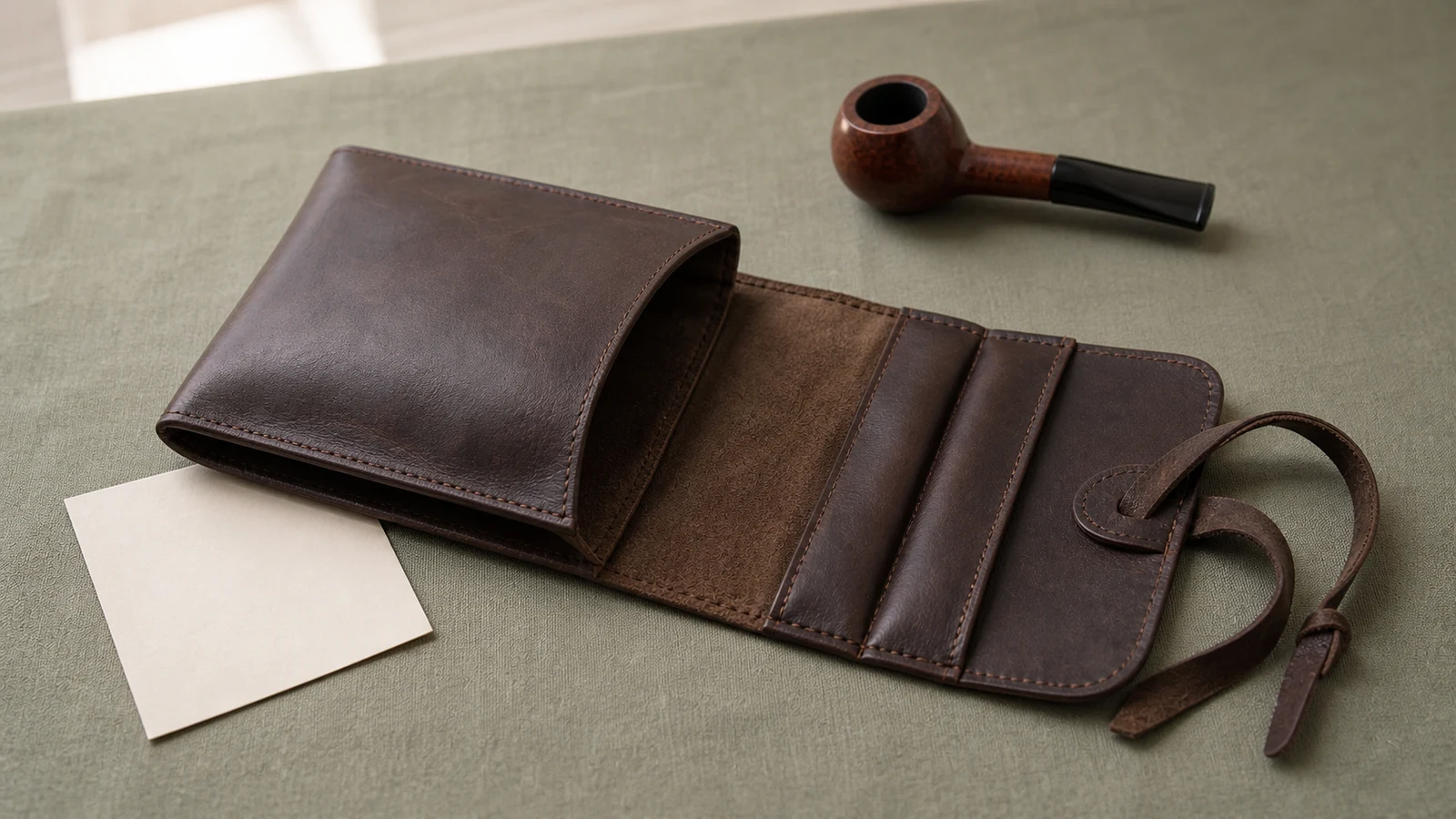
Choose a tobacco pipe pouch or case by matching its usable interior, opening, and closed shape to the exact pipe. “One-pipe,” “travel,” and “roll-up” describe layouts; they do not establish enough length for a Churchwarden, enough depth for a full bend, or enough opening width for a broad bowl.
The Tobacco Pipe does not currently sell pouches or cases. The catalog measurements below are real examples of the information a pouch seller would need before making a fit statement.
Three catalog dimensions, three different fit tests
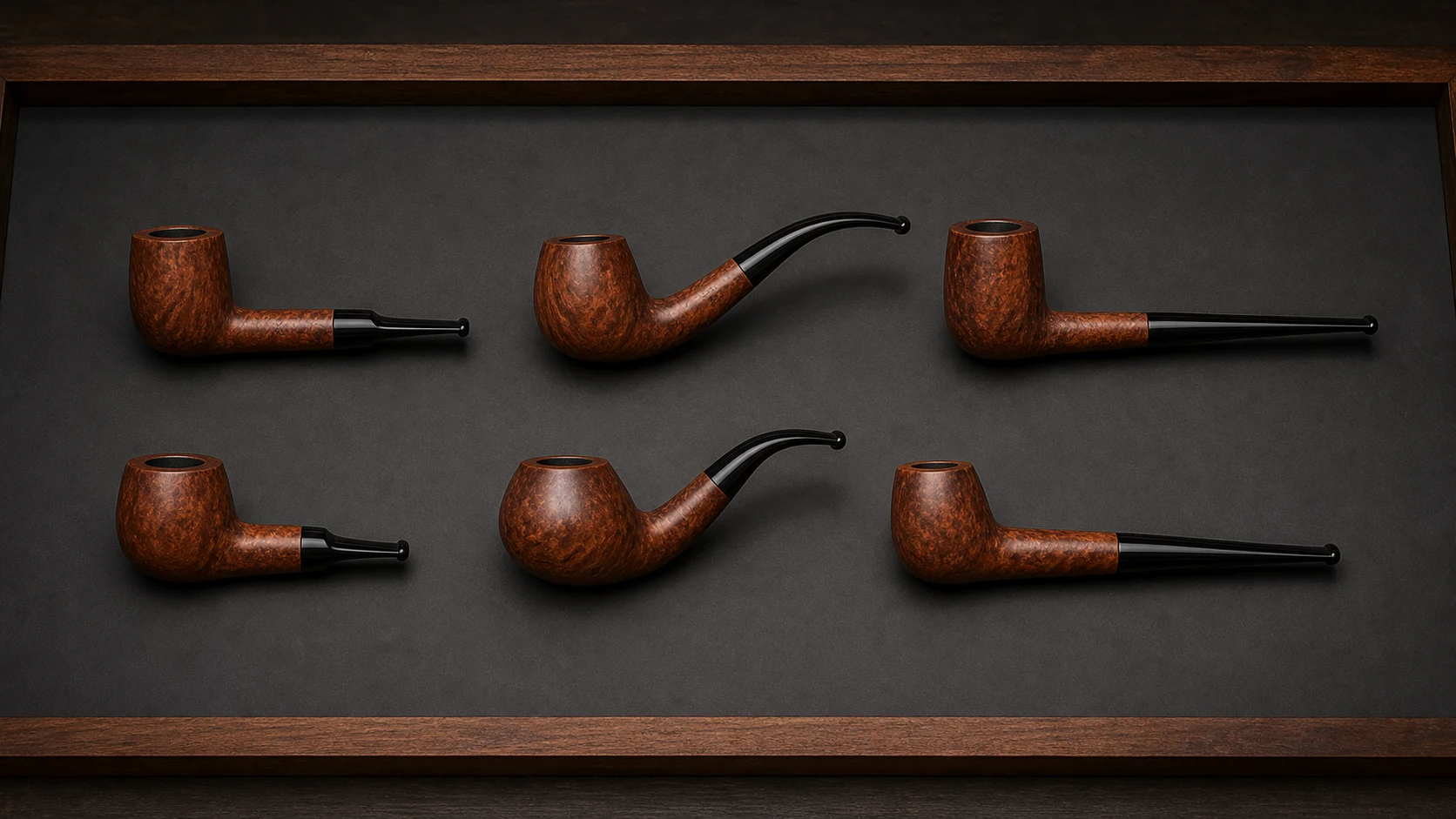
Pipe fit is a three-dimensional problem. Overall length can control one case, while the bowl width, bend envelope, or loading opening controls another. The following measurements are translated, source-reported approximations and have not been independently verified.
| Catalog example | Source-reported exterior dimensions | Pouch or case question created by the profile |
|---|---|---|
| Long Churchwarden | 340 mm overall length; 40.9 mm bowl outer diameter | Is the usable internal length at least long enough after seams and padding, and can the full profile pass through the opening without flexing the stem? |
| Devil Note Full Bent | 115.1 mm overall length; 40.5 mm bowl outer diameter; 50.6 mm bowl height | What are the internal depth and curved-profile clearance when the case is closed? A short overall length does not make a full bend flat. |
| Blowfish Bent Wide-Back | 125.3 mm overall length; 48.5 mm bowl outer diameter; 36.9 mm bowl height | Is the narrowest part of the opening wider than the bowl, and does the compartment remain wide enough after dividers and wall thickness? |
None of these records proves that a pouch fits. Overall length does not provide the full side-profile envelope, and an exterior bowl diameter does not describe the surrounding stem angle or the pressure created when a soft roll closes. Use the figures to reject clearly undersized options and to ask the seller for the missing internal measurements.
Convert the pipe record into case requirements
Before comparing products, write a small envelope for the exact pipe:
- Record overall length from the source rather than estimating from a photo.
- Record maximum bowl width and bowl height where supplied.
- Place the pipe beside a ruler in a true side view and note the maximum height of the complete bent profile. Do not infer a hidden dimension from a catalog angle.
- Identify the widest part that must pass through the pouch opening.
- Note projecting, carved, or irregular areas that should not sit against hardware or a short divider.
Then request the matching pouch fields:
| Pipe requirement | Pouch or case value to obtain | Common mismatch |
|---|---|---|
| Overall length | Usable internal length with the case closed | Exterior length includes seams, end panels, or padding |
| Maximum bowl width | Narrowest clear opening and compartment width | The cavity is wide enough but the zipper opening is not |
| Bowl height or full bend envelope | Internal depth after dividers and padding | A short, bent pipe is thicker than a flat product photo suggests |
| Contact-sensitive areas | Hardware location and divider height | Zipper teeth, snaps, or tools can share the same space |
| Number of pipes | Dimensions of each individual compartment | Total pouch width hides narrow or unequal sections |
A nominally equal internal and pipe measurement leaves no allowance for the actual shape, seams, or loading path. Do not invent a standard clearance; obtain the maker's fit guidance or choose a case with documented usable room.
Select the layout after the measurements
Common retail labels are useful only when paired with a drawing or detailed specification:
- A sleeve may have one long cavity but limited opening width or structure.
- A divided multi-pipe pouch needs the usable dimensions of each position, not only the total width.
- A roll changes shape when loaded, so flat width, pocket depth, and the closed circumference all matter.
- A zippered case needs cavity dimensions, opening geometry, and the location of its zipper path.
- A combination pouch needs separate pipe and tool compartments with enough divider height to prevent contact.
The distinction matters most at the extremes. A 340 mm Churchwarden record immediately tests internal length and loading access. A 50.6 mm-tall full-bent bowl shifts attention to depth. A 48.5 mm exterior bowl shifts attention to the narrowest opening and divider-adjusted width. “One pipe” answers none of those questions.
The pipe-shape guide helps describe these exterior profiles, but shape names are not substitutes for product-specific measurements.
Read roll dimensions carefully
Missouri Meerschaum's MMC Pipe Roll illustrates the difference between product dimensions and fit dimensions. Its page states four inside pockets, an approximate empty rolled size of 3.13 by 6.75 inches, and an approximate unrolled size of 6.75 by 13.25 inches. It also excludes the pipes, cleaners, tool, and other staged contents from the purchase.
Those facts describe that roll's construction and package boundary. They do not publish the usable length, width, and loaded closure envelope for every pocket, so they do not establish fit for any of the three catalog examples above. A roll can be large when laid flat while an individual pocket remains too short or narrow.
For any roll, ask for pocket depth and clear width, the placement of seams, and the closed measurement with the intended load. If the strap or tie has a fixed range, confirm whether it reaches its intended fastening point when the largest compartment is occupied.
Check the opening and closure while loaded
The opening is part of the fit specification. A long case with a short zipper can require the bowl or stem to enter at an angle that the pipe cannot clear. A snap can align when empty and fail to reach without compressing a broad profile. A roll tie can close around a demonstration pipe yet be too short for a deeper bend plus tools.
Look for a loaded, fully closed view and ask:
- What is the narrowest clear opening after zipper tape, seams, or a flap?
- Does the closure press against the bowl, stem, or mouthpiece?
- Are snaps, rivets, magnets, or zipper teeth exposed inside?
- Does the maker publish a maximum loaded depth or circumference?
- Can each pipe be removed without dragging it across another compartment?
Closure names do not establish water resistance, crush protection, or an airtight seal. Those need explicit specifications with stated test conditions.
Give tools a separate compartment test
Do not subtract tool space mentally from a single overall dimension. Record the length, width, and retention method of every tool pocket. A short divider may look separate when the case is open but allow a rigid tool to move against the pipe after the pouch folds.
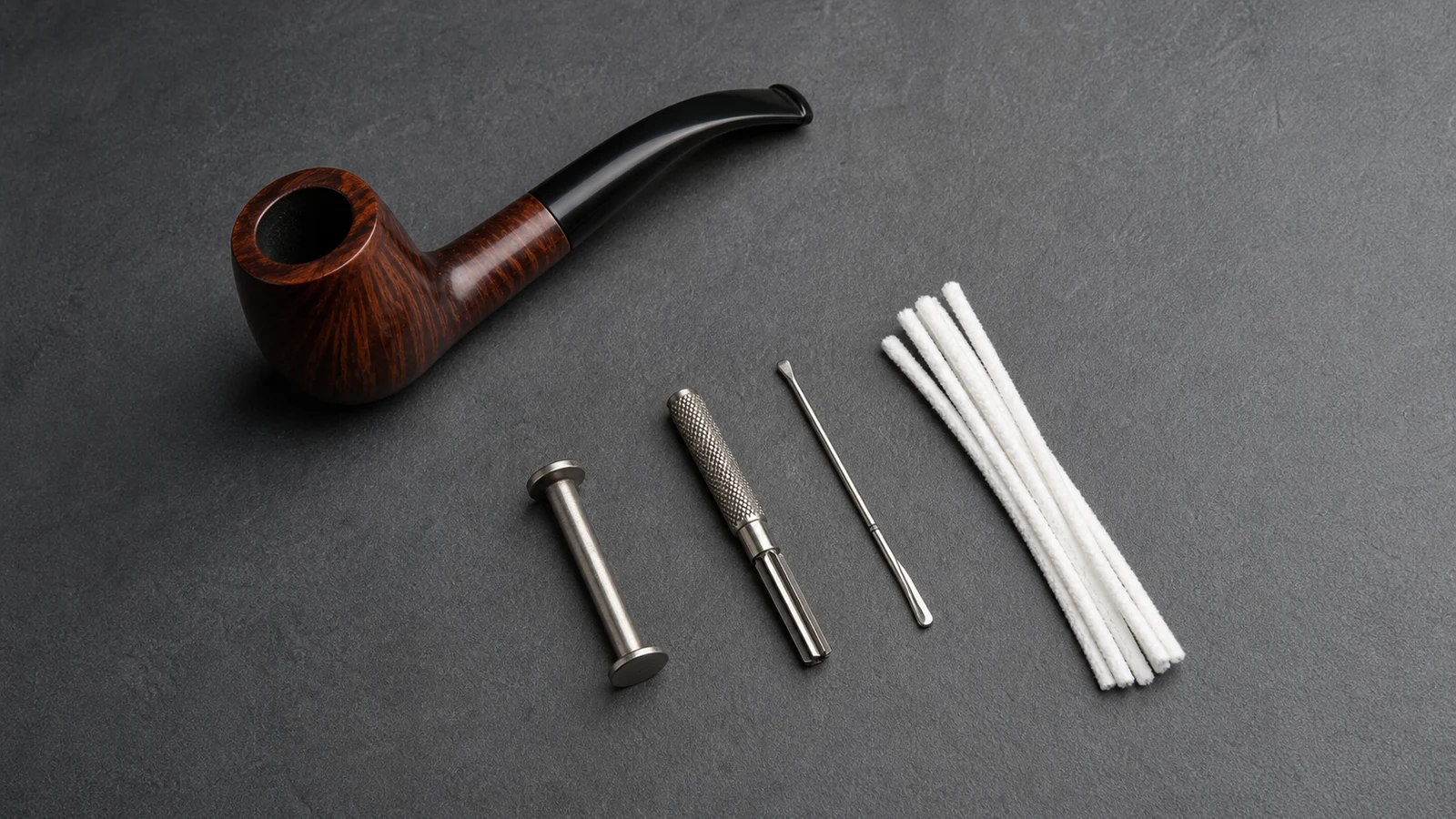
Use the pipe-tools guide to identify what an included or carried tool is for, then measure that item on its own. Confirm whether loops, sleeves, or zippered sections hold it in the loaded position. A pocket shown beside cleaners or filters is not proof that those items are included or compatible with the pipe.
Treat structure and material as separate decisions
Soft, semi-structured, and rigid-looking products behave differently, but those are not protection ratings. Ask which panels retain their shape, where padding is placed, how thick it is if the value is published, and whether dividers are fixed or removable. Check for exposed hardware at the opening and corners.
Material labels such as leather, waxed canvas, nylon, felt, or synthetic leather should come from the seller's written specification. A photograph can show color, texture, pocket placement, and broad construction. It cannot confirm fiber composition, lining behavior, loaded pressure, or long-term wear.
Copy this pouch-or-case worksheet
| Field | Pipe value | Pouch or case value | Evidence |
|---|---|---|---|
| Overall length | ___ | Usable closed interior length: ___ | Product specification / seller reply |
| Maximum width | ___ | Narrowest opening and compartment width: ___ | Dimension drawing / seller reply |
| Bowl or full-profile height | ___ | Internal depth after padding: ___ | Dimension drawing / seller reply |
| Number of pipes | ___ | Per-compartment dimensions: ___ | Open layout / seller reply |
| Tool dimensions | ___ | Pocket and retention dimensions: ___ | Written specification |
| Closure path | ___ | Hardware clearance when loaded: ___ | Loaded photos / seller reply |
| Included pieces | ___ | Written package list and exclusions: ___ | Product description |
Use the package-contents checklist to separate the item being sold from the props in a photo. Once the worksheet is complete, compare current price, stock, shipping, and returns on the pouch seller's own page. The right result is a documented fit for one measured pipe, not a generic promise based on capacity or appearance.
Related posts
Product notes, store updates, and purchase guidance for the storefront.