Tobacco Pipe Stems Explained: What Listings and Photos Can Confirm
Learn how to read tobacco pipe stem lines, mouthpieces, tenons, and saddle labels while keeping hidden fit and filter details unverified.
Written by
The Tobacco Pipe Editorial Team
The store editorial team reviews product facts, care boundaries, and buying guidance against the current catalog and source evidence.
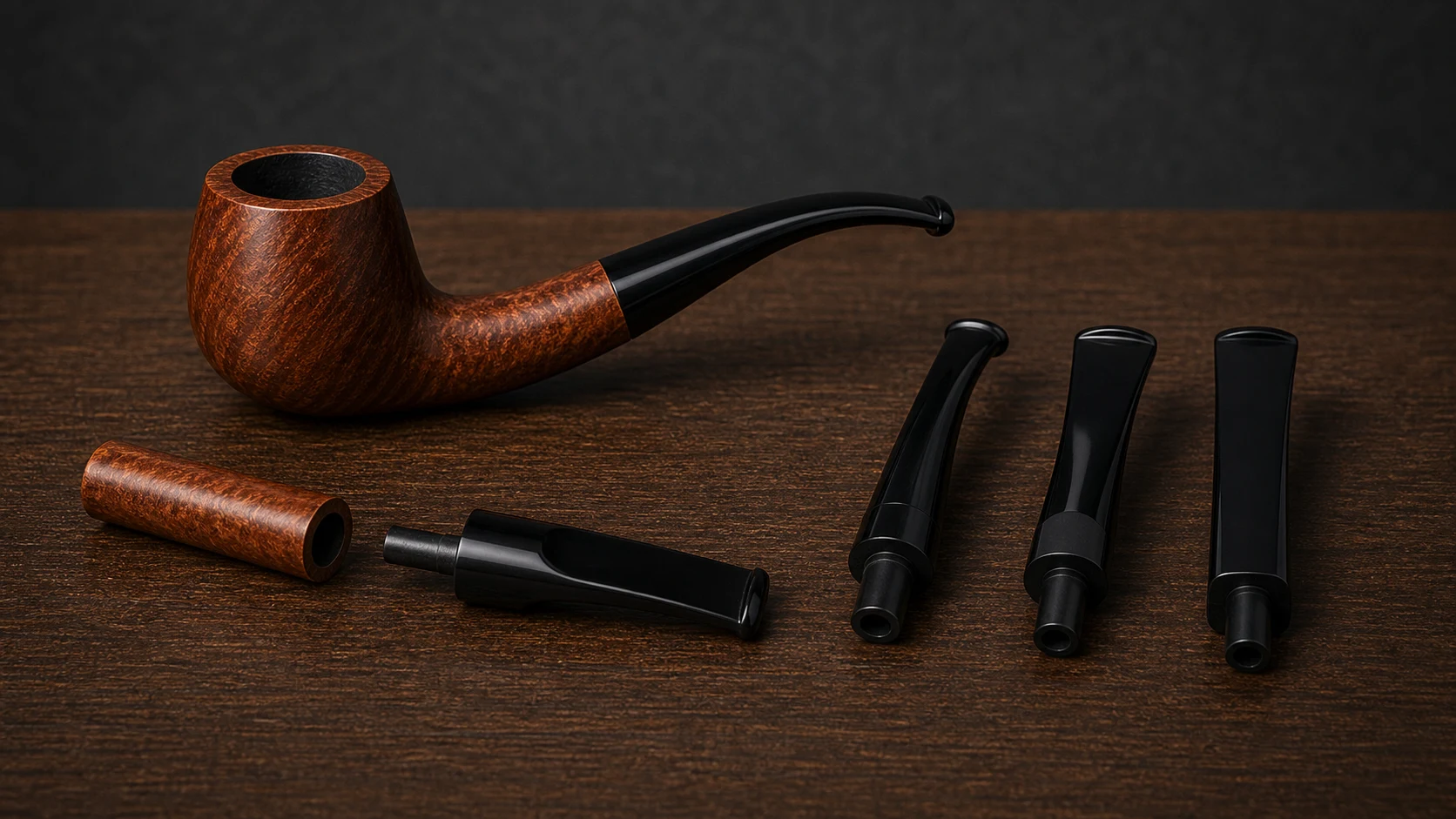
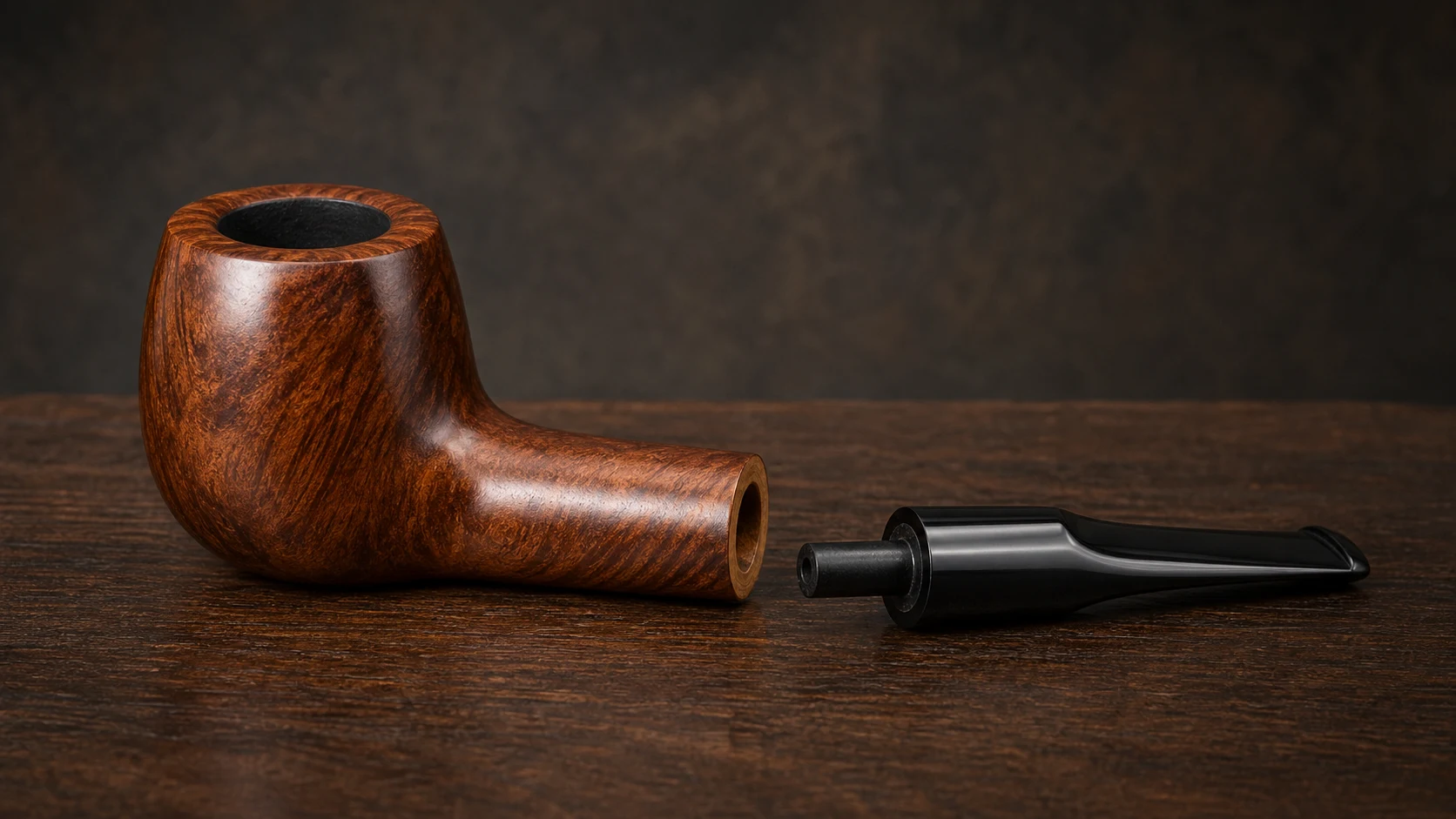
A tobacco pipe stem has two separate identities. Its visible profile includes the line, bend, taper, saddle-like step, mouthpiece, and button that photographs can show. Its documented construction and fit includes material, joint, filter system, dimensions, and replacement compatibility. A photograph can support the first identity; it rarely establishes the second by itself.
That two-axis distinction is the practical answer to most questions about tobacco pipe stems. Use images to compare form, then use the exact product record or a seller answer for hidden specifications. A similar color or outline is not proof that a replacement stem, filter, or accessory will fit.
A two-axis taxonomy for reading tobacco pipe stems
The first axis is visual: what can be described from a complete side image. The second is technical: what must be tied to the individual product record.
| Stem field | Axis | What can establish it | What it does not establish |
|---|---|---|---|
| Profile | Visible profile | Full side views can show straight, slightly bent, bent, full-bent, tapered, or saddle-like lines | A numeric angle, comfort, or internal airway |
| Material | Documented construction/fit | A product or maker statement naming vulcanite, Cumberland, acrylic, or another material | Material from black color, shine, or pattern alone |
| Joint | Documented construction/fit | A stated tenon, mount, or model-specific joint plus any required measurements | Internal fit from an exterior seam |
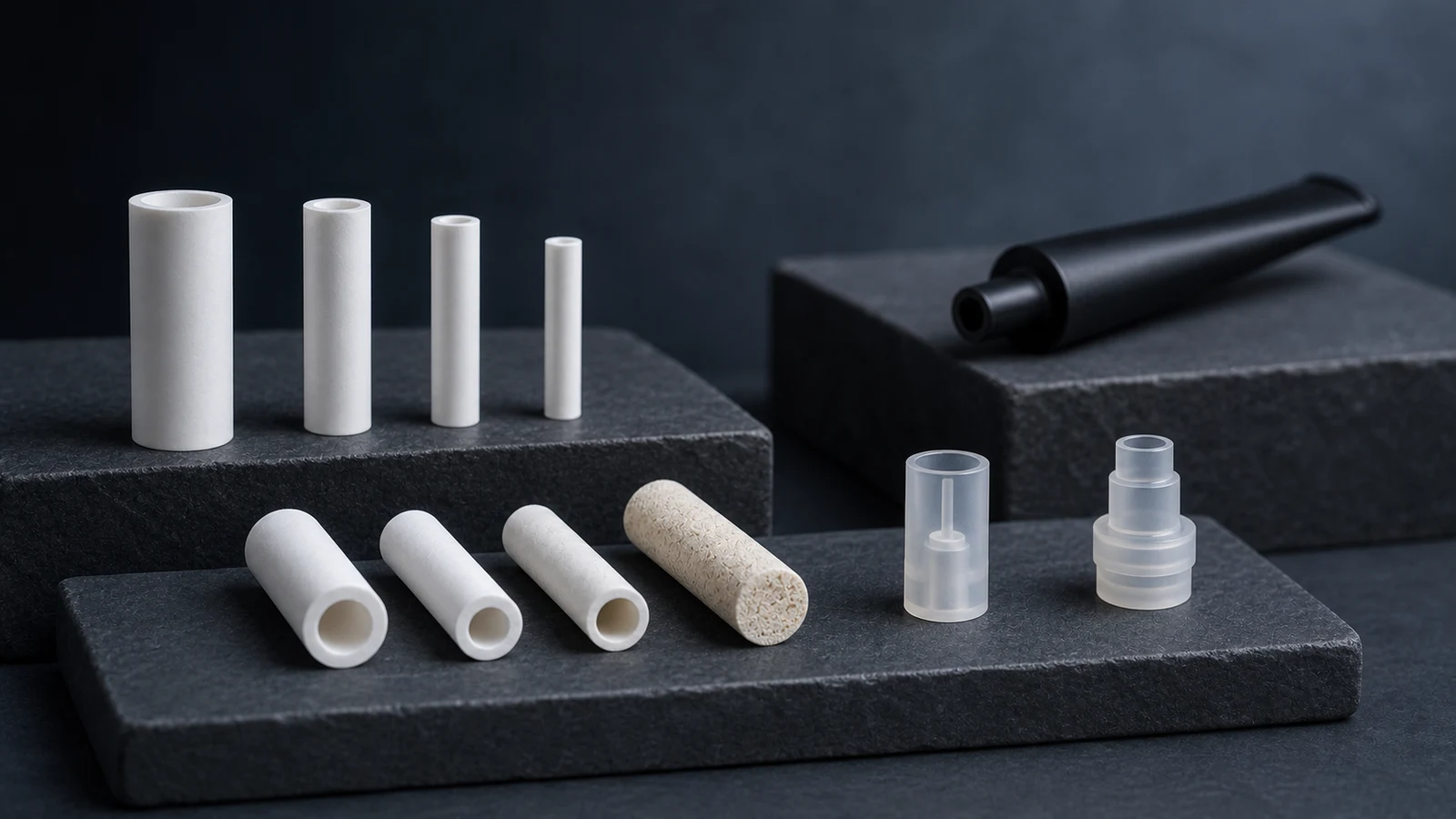
| Filter system | Documented construction/fit | An exact-item statement of the supported system or documented non-filter design | Filter fit from a dark opening, shape, or another pipe's label |
| Replacement fit | Documented construction/fit | The pipe and replacement supplier agree on model, joint type, measurements, airway, and any filter requirements | Interchangeability because two stems look alike |
This taxonomy prevents a visible term such as Saddle Stem from filling in
unrelated fields. The pipe-parts guide
provides the vocabulary for the shank, mortise, tenon, stem, mouthpiece, button,
and airway.
Profile: read the stem as part of the silhouette
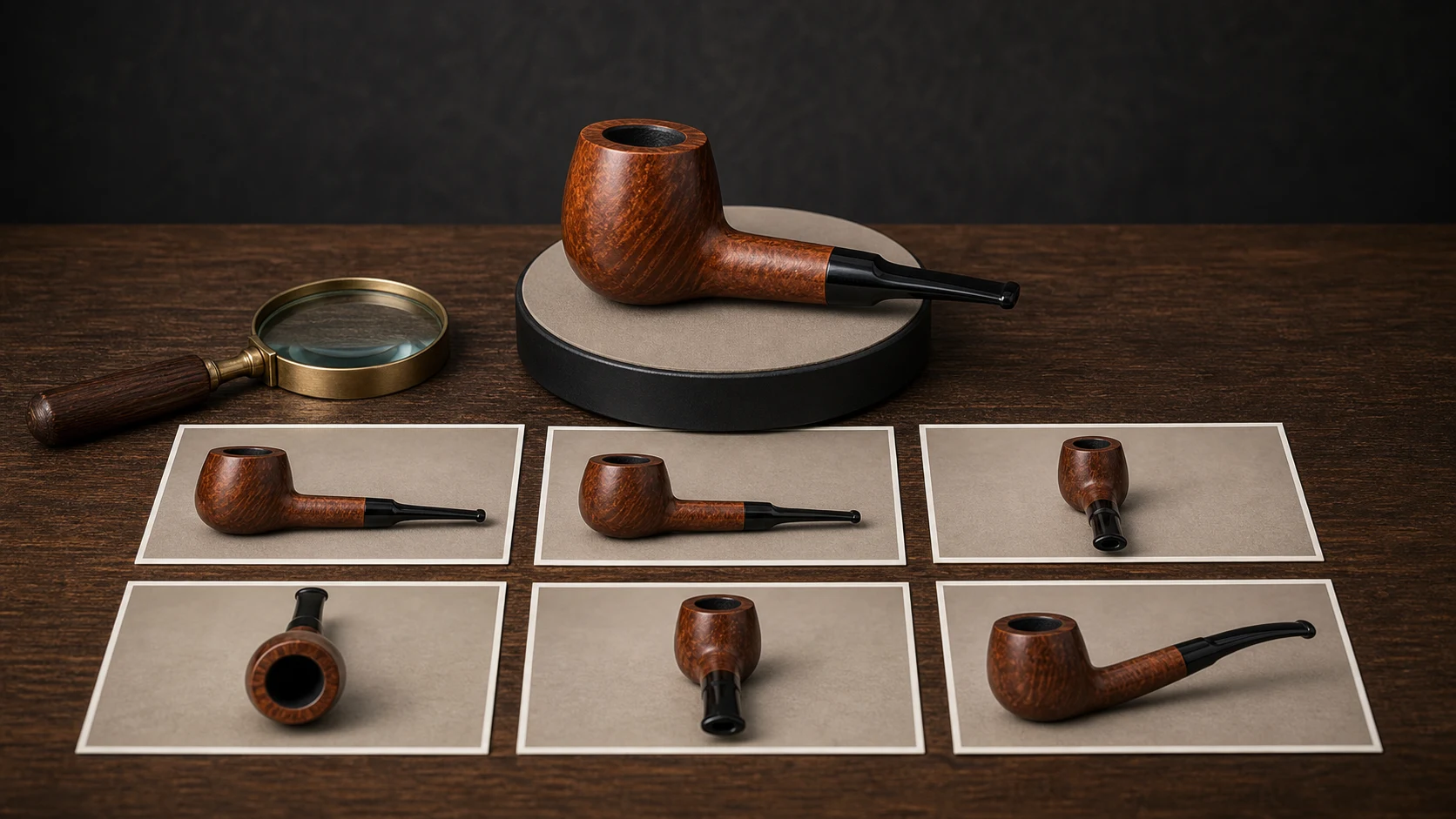
The stem continues the line that begins at the bowl and passes through the shank. Start with a full side view and note where the line changes: close to the shank, through the middle of the stem, or near the mouthpiece. Then check whether the outline narrows continuously or shows an abrupt shoulder followed by a slimmer section.
The committed 150-item catalog snapshot uses Straight, Slightly Bent,
Bent, and Full Bent as source-supplied bend labels. It also records
Saddle Stem as a separate feature. Those fields answer different questions:
bend describes the overall course, while saddle describes a visible change in
the stem profile.
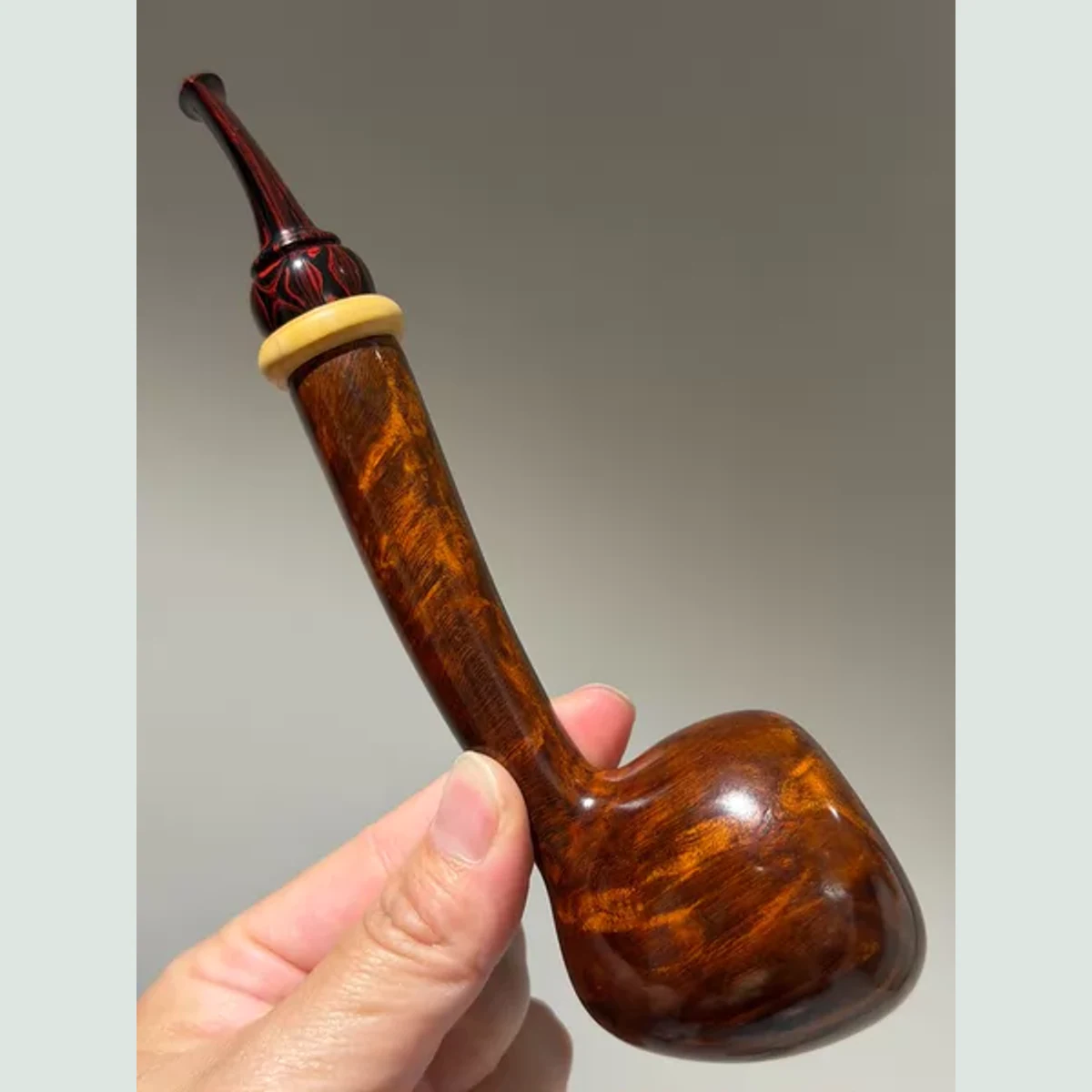
The source-supplied image below belongs to the
Acorn Long Stem Saddle Stem.
Its record uses Long Stem and Saddle Stem, and reports an approximate overall
length of 163 mm. The image helps show the exact item's visible profile; the
length and labels come from the source record and have not been independently
measured by this site.
Material: use the listing, not the color
Stem material affects which material-specific care information is relevant, but it cannot be authenticated from a dark or patterned surface alone. For example, the source record for the Classic 3mm catalog item names a vulcanite stem. The Prince Apple Slightly Bent record names a Cumberland stem. These are source-reported product facts, not laboratory identifications or claims that every similarly colored stem uses the same material.
Smokingpipes publishes a care guide specifically for vulcanite stems. The material specificity is the useful lesson: do not apply a material-specific treatment until the exact product record identifies the material.
Joint: name the connection before discussing fit
The tenon is the connecting part that enters the mortise in the shank. A catalog
may instead emphasize a broader joint or mount label. The local snapshot, for
example, records Army Mount on the
Apple Straight Army Mount Pocket Size.
Its source record also names a Cumberland stem and reports an approximate
overall length of 118.5 mm.
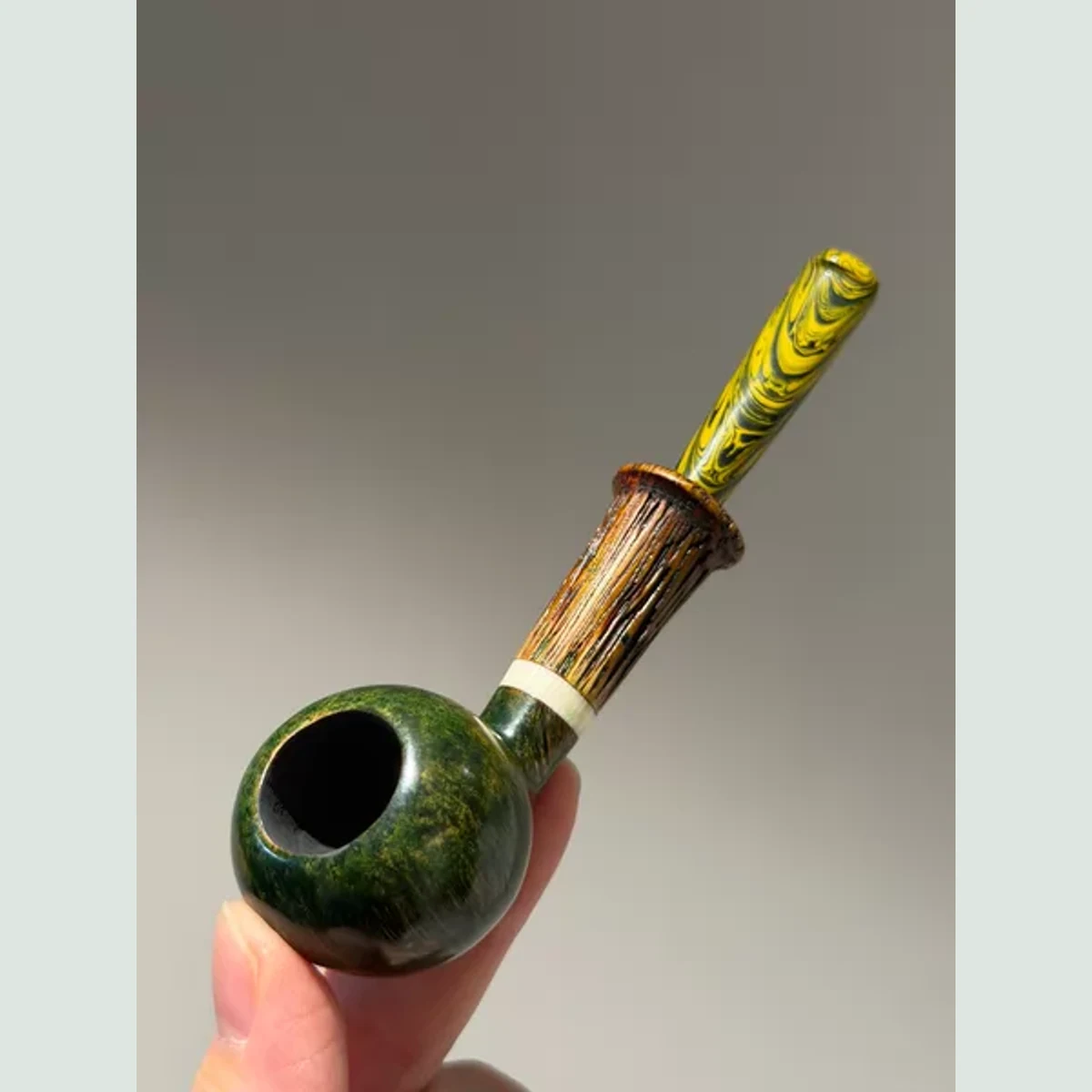
The photograph shows the supplied exterior view, but it does not provide the tenon diameter, mortise depth, service history, or proof that an unrelated army- mount-looking part will fit. Before a joint decision, verify whether the stem is intended to be removed by the owner and obtain the joint type and measurements required by the replacement supplier.
Filter system: keep the evidence product-specific
A 3mm or 9mm source label must first be read in the exact product's context.
It should not be transferred to another item, and a dark opening in a photo does
not establish a supported filter size. Use three evidence states:
- Documented: the exact product record states the supported system or a non-filter design.
- Partially shown: a supplied image shows a joint or opening, but the record does not state compatibility.
- Unknown: neither the product record nor seller supplies the system.
The separate filter compatibility guide explains how to compare exact pipe and filter statements without treating a millimeter label as universal proof.
Replacement fit is a conclusion, not a visual category
Replacement fit requires the most evidence because it connects two separate objects. At minimum, the pipe and proposed part need compatible documentation for the model or intended use, joint type, relevant diameters and lengths, airway alignment, and filter arrangement. Condition, repair history, and maker- specific fitting may add further limits.
None of the catalog examples above is evidence that this site sells a compatible replacement stem for that pipe. They demonstrate how labels coexist on real product records. If the required measurements or intended application are missing, the replacement result is unknown; do not force a visually similar part.
Two final questions
Can a product photo identify a saddle stem?
A clear side image may show the step commonly associated with a saddle profile.
Use Saddle Stem as a product fact only when the exact record uses that label;
otherwise describe the visible step without converting it into a specification.
What must be confirmed before buying a replacement stem?
Confirm the intended model or application, material when relevant, joint or tenon type, required measurements, airway, filter system, and any maker-specific fitting instructions. A matching silhouette is not enough.
Use the shape-first product guide to shortlist by visible form, then open the exact item in the shop for its current record. That keeps profile useful for discovery and reserves compatibility for documented facts.
Related posts
Product notes, store updates, and purchase guidance for the storefront.