Best Tobacco Pipe for Beginners: What “Best” Should Mean
Compare three in-stock beginner tobacco pipes by documented dimensions, shape, current price, and unanswered questions before choosing.
Written by
The Tobacco Pipe Editorial Team
The store editorial team reviews product facts, care boundaries, and buying guidance against the current catalog and source evidence.
For a beginner, the best tobacco pipe is one whose listing makes the decision easy to check. Start with documented material, condition, dimensions, shape, and current price. Treat comfort, performance, filter fit, and included items as unknown unless the exact product page confirms them.
Among the three in-stock candidates checked on August 26, 2026, the Prince Apple is the record-based first pick. Its source record supplies material, condition, several dimensions, and a source-labeled “beginner-friendly profile.” Its displayed price was $99 at the live check. This makes it the lowest-priced of the two measurement-rich, source-labeled beginner candidates in this sample. It is not a hands-on recommendation or a universal winner.
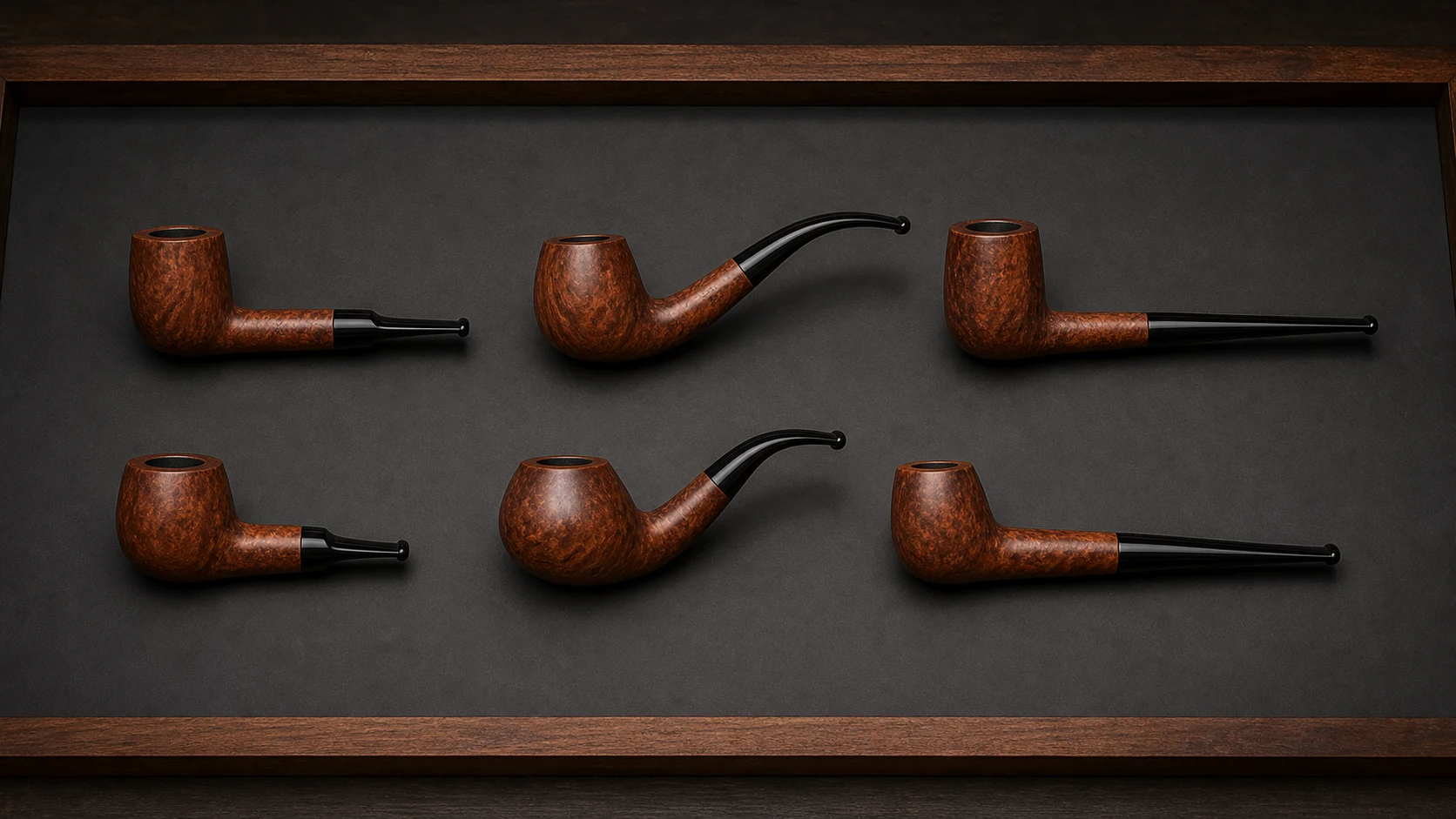
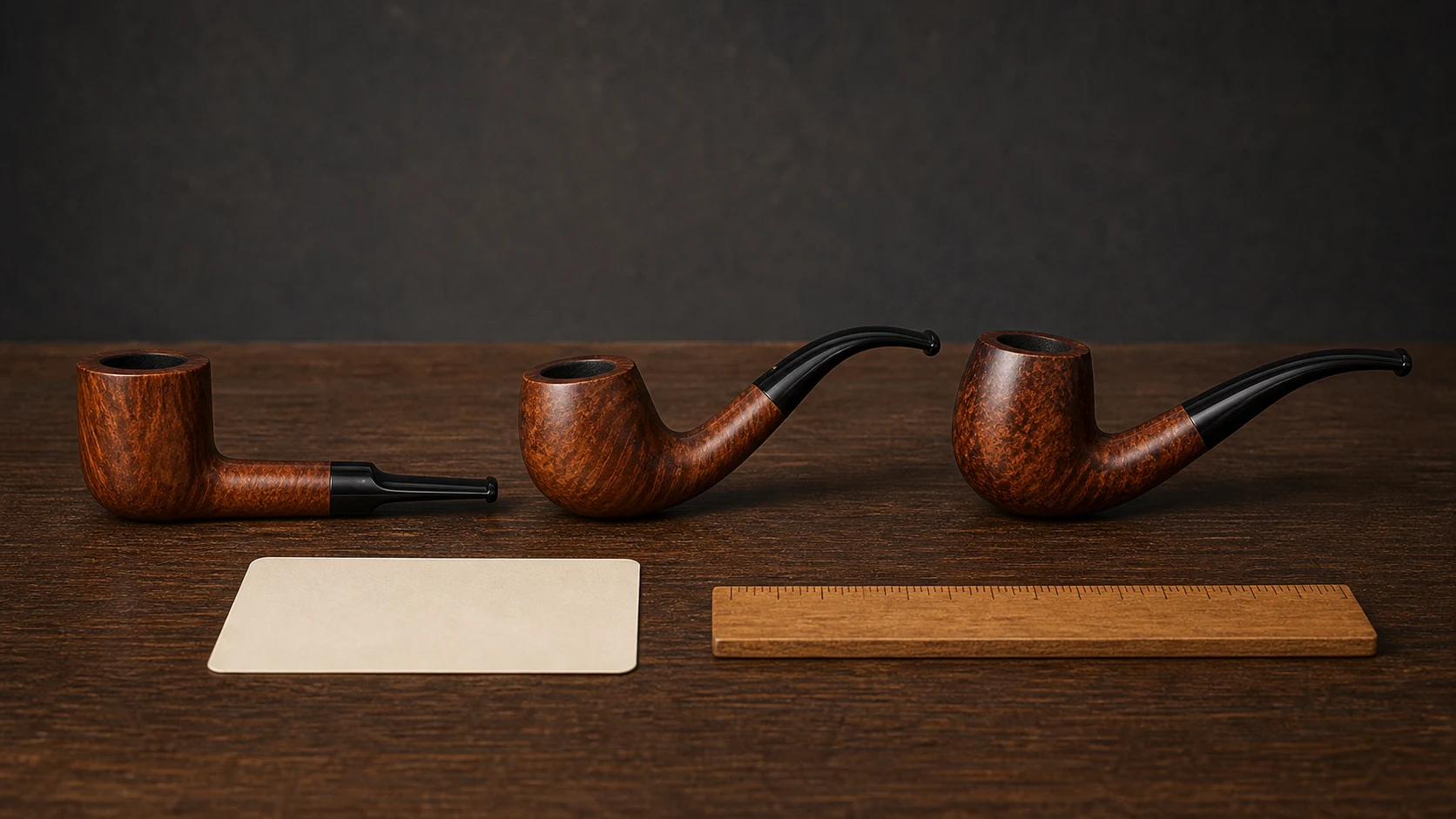
Two other records make the shortlist for comparison: the Faceted Volcano gives a documented straight, sculptural alternative, while the Large Billiard shows why a familiar shape name is not enough when important measurements are absent. The shortlist ranks record completeness for a first comparison, not comfort, smoking performance, durability, or personal fit.
A three-item beginner comparison shortlist
Prices and availability below were checked on August 26, 2026. They can change and do not replace the current product page or checkout. “Source-reported” means the original product record states the fact; this editorial team has not physically tested these pipes.
| Candidate | Why it is useful for a beginner comparison | Source-reported facts in the record | Pause before ordering when |
|---|---|---|---|
| Prince Apple, $99 on August 26 | Record-based first pick of these three; rounded Apple profile and a 133 mm stated length | Spanish-imported briar burl, new and unused, “beginner-friendly profile,” 20 mm chamber diameter, 26 mm chamber depth, 3 mm airway | Weight, stem material, filter compatibility, or included items matter and remain unstated |
| Faceted Volcano Straight Freehand, $161.67 on August 26 | A visibly different straight, sculptural profile with more stated measurements | Spanish-imported briar burl, Cumberland stem, new and unused, “beginner-friendly profile,” 131.7 mm length, 18.3 mm chamber diameter, 37.6 mm chamber depth, 3 mm airway | The Freehand/Volcano form, weight, compatibility, or package contents affect the decision |
| Large Billiard Straight, $124.58 on August 26 | A familiar straight Billiard comparison and a useful example of when to stop | Spanish-imported briar burl, new and unused, flame and birdseye grain labels | Exact dimensions, weight, compatibility, and included items are still needed; its “Large” title is not a measurement |
The Prince Apple leads only on the stated record-and-price rule in this small sample. The Faceted Volcano may suit a shopper who prefers its visible profile, and the Large Billiard should remain a question list until its missing fields are resolved.
Use the Apple collection, Billiard collection, and Freehand and Artisan collection to compare these shapes with other current listings. The product guide explains which listing facts to verify before forming a shortlist.
How the shortlist was screened
| Criterion | Evidence that moved a record forward | Reason to pause |
|---|---|---|
| Listing clarity | Material, condition, and a dated price are stated | Important fields are absent or contradicted |
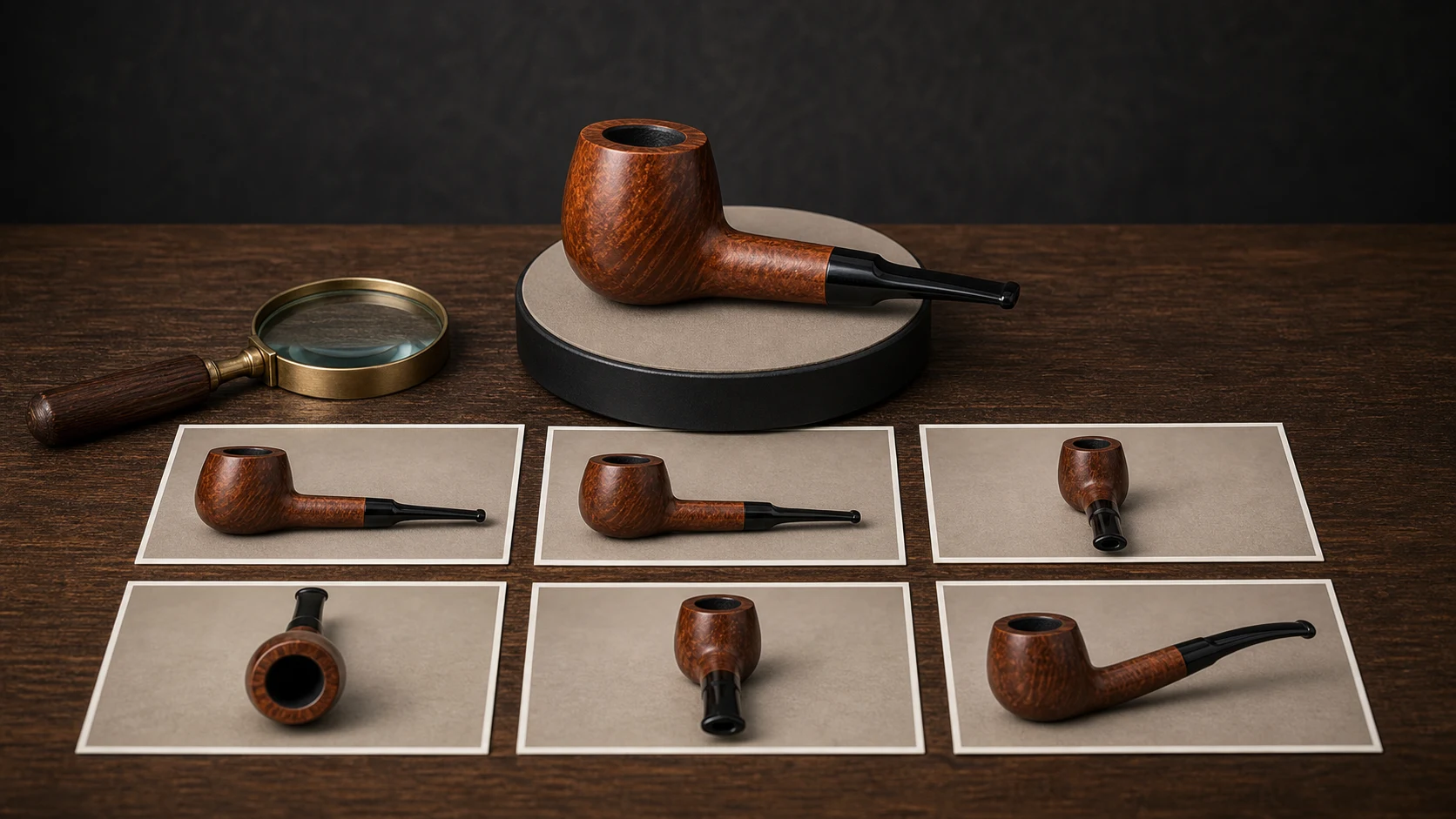
| Shape comparison | Multiple angles show the bowl, shank, and stem profile | Only an atmospheric or tightly cropped image is supplied |
| Dimensions | Measurements needed for the decision are listed | The title uses “large,” “compact,” or “long” without measurements |
| Care planning | Removable parts and relevant care notes are described | Construction or tool sizing is unclear |
| Compatibility | Filter size or non-filter design is explicitly stated | Compatibility is inferred from an airway number or appearance |
| Budget | Current price and currency are visible | Included items, shipping, tax, or final total are unclear |
First criterion: clear listing facts
A beginner should not need specialist knowledge to discover basic commercial facts. Before comparing aesthetics, look for the displayed price, currency, condition, stock state, and exact product photos. When material, dimensions, weight, maker, or country of origin matter, those details should be stated rather than inferred.
The Tobacco Pipe catalog is organized around briar pipes, but “briar” should still be supported on each individual product where the source record states it. The same conservative rule applies to terms such as handmade, restored, estate, 3mm, or 9mm. A keyword in a title is not permission to invent the rest of the specification.
A useful beginner test is: Can I explain what I know, what I only see, and what remains unknown? If those categories blur together, keep researching. The pipe-parts anatomy guide gives you the vocabulary for asking a precise question instead of relying on a general impression.
Second criterion: a manageable shape comparison
Shape preference is personal, so the purpose of a beginner comparison is not to declare straight better than bent, or Billiard better than Apple. It is to narrow a large catalog into a few visibly distinct options.
Begin with three observable questions:
- Do you prefer a straighter or more curved shank-and-stem line?
- Do you prefer a compact, standard-looking, or extended profile?
- Which bowl silhouettes remain appealing when viewed from several angles?
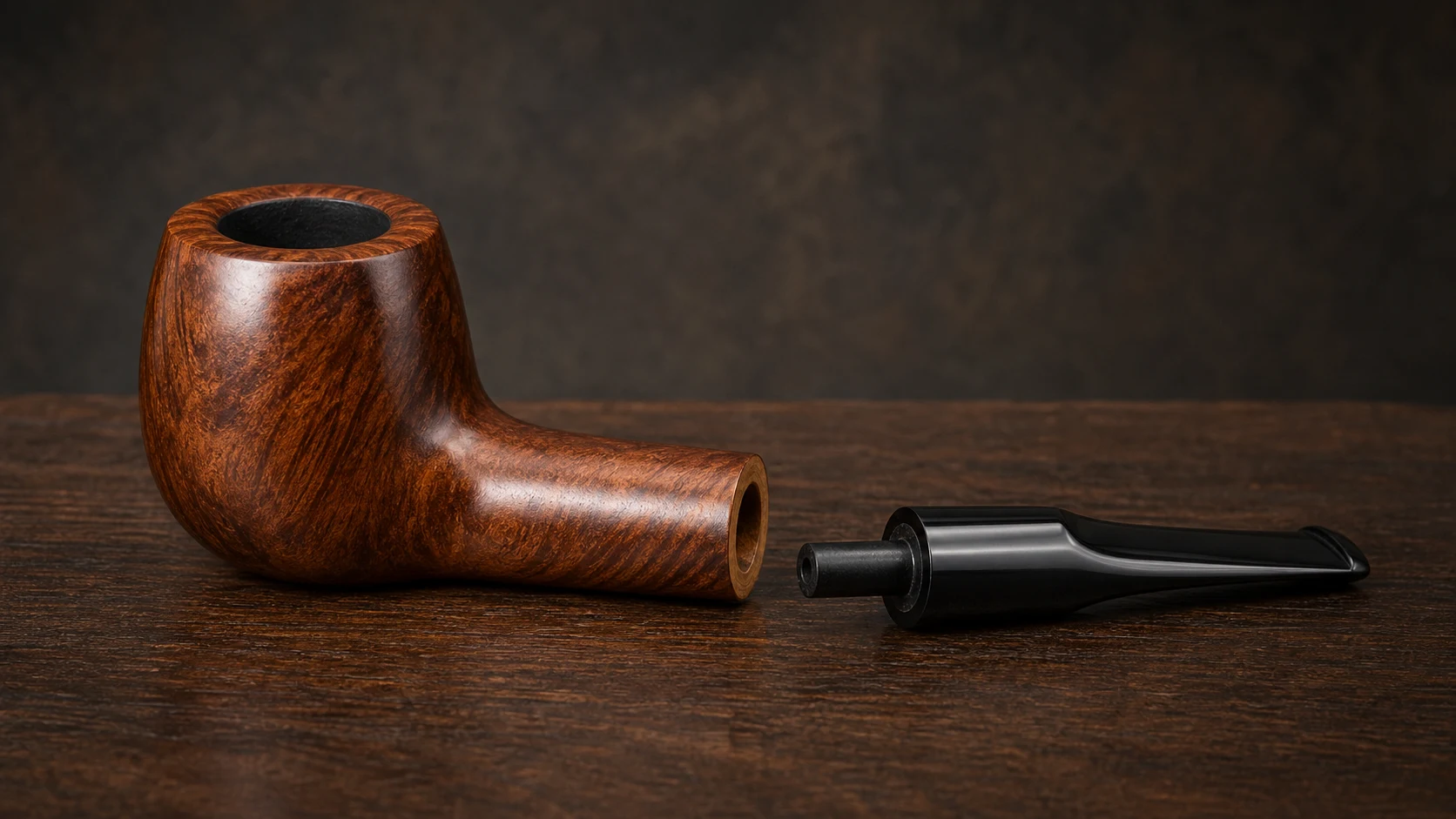
This produces a manageable shortlist without pretending that appearance proves comfort, weight, balance, or performance. A listing photo can show a profile; only stated measurements can confirm dimensions.
For a broader explanation of shape, bend, and source labels, use the tobacco pipe types guide. Then return to the exact photos on the individual product page.
The three-item shortlist above applies this process to an Apple, a straight Freehand/Volcano, and a straight Billiard. Return to the individual pages for the current photographs and fields rather than carrying a fact from one record to another.
Third criterion: care needs you can identify
“Easy for beginners” is sometimes used as a vague promise. A better question is whether the product page gives you enough information to plan ordinary ownership and care without buying mismatched items.
Look for clarity about:
- whether the stem is described as removable;
- whether filter compatibility is explicitly stated;
- any maker-provided care information;
- the exact contents of a starter set, if one is offered;
- whether accessories are separate or included;
- which measurements are needed before selecting a stand, pouch, cleaner, or tool.
This is a decision checklist, not a claim that one construction is easier or better. If the page does not establish compatibility, ask before adding an accessory.
Fourth criterion: a complete budget, not just a pipe price
The July 17, 2026 planning snapshot used for this guide covers 150 catalog records with displayed prices from $99 to $625 and a median of $99. That range shows why “best beginner pipe” should not automatically mean the cheapest or the most expensive. Prices and availability can change, so the live listing and checkout remain the final commercial references.
Build a budget around stated totals rather than category assumptions. A product labeled “starter kit” may include a stand, pouch, cleaners, or tools, but the name alone does not confirm any particular item. Read the contents line by line.
Before payment, recheck:
- the exact pipe and quantity;
- current price and currency;
- condition and stock;
- included items;
- shipping, tax, and delivery information;
- the return policy that applies to the item.
The current shop is the appropriate place to compare displayed prices and available product facts. For the reasoning behind the numbers, use the tobacco pipe price guide. The FTC's online-shopping checklist also recommends reading the full description, total cost, delivery terms, and return policy. Do not use an old article's price as a promise.
A simple elimination process
Instead of scoring every pipe from one to ten, use three passes.
Pass 1: remove unclear candidates
Set aside products that lack a fact essential to your decision. If exact length matters and no measurement is supplied, the pipe is not ready for your shortlist until the seller answers. If filter compatibility matters and the page is silent, treat it as unknown.
Pass 2: compare like with like
Compare straight profiles with other straight profiles, bent with bent, or two shape families that genuinely interest you. Keep the comparison fields consistent: silhouette, stated dimensions, stated material, condition, price, and included items.
Pass 3: choose based on your priorities
Decide which verified difference matters most to you. One shopper may prioritize a compact profile; another may prioritize a particular bowl shape or a more detailed listing. Neither preference creates a universal winner.
What about brand recommendations?
The July 17 US search sample surfaced brands such as Savinelli and Dr. Grabow, along with community recommendations and “top ten” pages. Those results can help you discover vocabulary, but a brand name does not replace inspection of the exact item being sold.
For any brand or unbranded listing, apply the same questions:
- Is the seller or maker identity clearly stated?
- Are the photos attached to the actual product or described as representative?
- Are material, condition, dimensions, and compatibility stated?
- Are price, stock, shipping, and returns current?
This keeps the decision focused on evidence rather than borrowed reputation.
What should a beginner starter kit include?
There is no universal contents list. Some kits may contain separate accessories, while others may simply use “starter” as a marketing label. Confirm the exact inventory and whether each item fits the selected pipe.
A useful offer should name each included component. If the photos show more objects than the description names, ask whether those objects are props or included items. Never assume a stand, pouch, cleaner, filter, or tool is part of the order.
The photo-inspection checklist turns that question into a repeatable image-by-image review.
Frequently asked questions
Which current candidate is the record-based first pick?
Among the three compared here, the Prince Apple is the lowest-priced candidate whose source record also carries a beginner-friendly label and supplies overall length, chamber measurements, and an airway entry. That is a record-and-price judgment, not a hands-on performance ranking.
Does “beginner-friendly profile” mean the pipe was tested by beginners?
No. The phrase appears in the source records for the Prince Apple and Faceted Volcano. This editorial team has not conducted a beginner-use study or physical test, so the phrase is reported as a source label rather than adopted as an independent recommendation.
Why is the Large Billiard a pause candidate?
Its source record supports the material, condition, straight Billiard label, and dated price, but does not supply the dimensions needed to interpret “Large.” That missing field makes it less decision-ready than the other two records.
Does a 3 mm airway entry prove 3 mm filter compatibility?
No. In these records, 3 mm is an airway value. Filter support requires its own explicit compatibility statement and should not be inferred from that number.
Start with the shortlist, open the live pipe catalog to recheck price and availability, and choose only after the missing fields that matter to you have been answered.
Related posts
Product notes, store updates, and purchase guidance for the storefront.