What Is a Briar Tobacco Pipe?
Understand what a briar tobacco pipe label means, what grain photos can show, and which material, origin, and construction details still need evidence.
Written by
The Tobacco Pipe Editorial Team
The store editorial team reviews product facts, care boundaries, and buying guidance against the current catalog and source evidence.
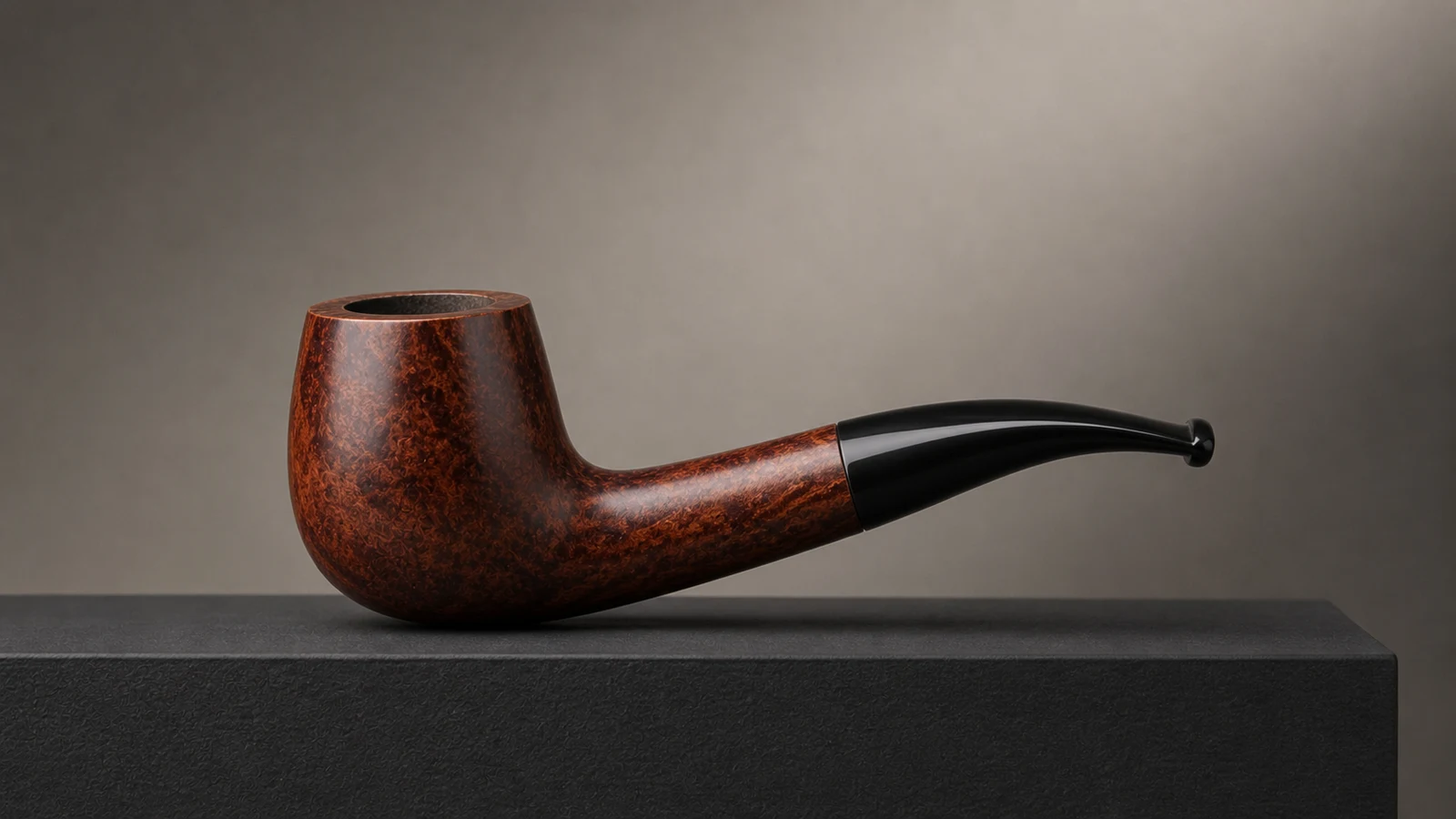
In pipe-making vocabulary, briar normally refers to burl wood from Erica arborea. GBIF records Erica arborea as an accepted species in the heath family, and The Wood Database's briar entry describes the commercial burl and block terms used for pipe blanks. A briar tobacco pipe listing should connect that material claim to the exact bowl; brown color, visible grain, carving, or a familiar shape cannot authenticate an unlabelled item.
“Briar” is therefore a material claim, not a complete quality statement. It does not by itself confirm origin, grade, age, maker, condition, dimensions, construction, filter compatibility, or performance. Use photographs to study visible form and grain, then use the individual listing to verify which facts actually belong to the pipe.
Briar is the bowl material, not the shape
Pipe catalogs often place material, shape, bend, finish, and feature terms in the same title. They describe different parts of the product record:
| Listing term | What it is intended to describe | What it does not establish |
|---|---|---|
| Briar or briar wood | The stated bowl material | Origin, grade, age, condition, or performance |
| Apple, Billiard, Dublin, Freehand, or another shape | A visible bowl-and-profile family | Material or exact chamber dimensions |
| Straight, Bent, or Full Bent | The visible shank-and-stem line | Weight, balance, airway geometry, or fit |
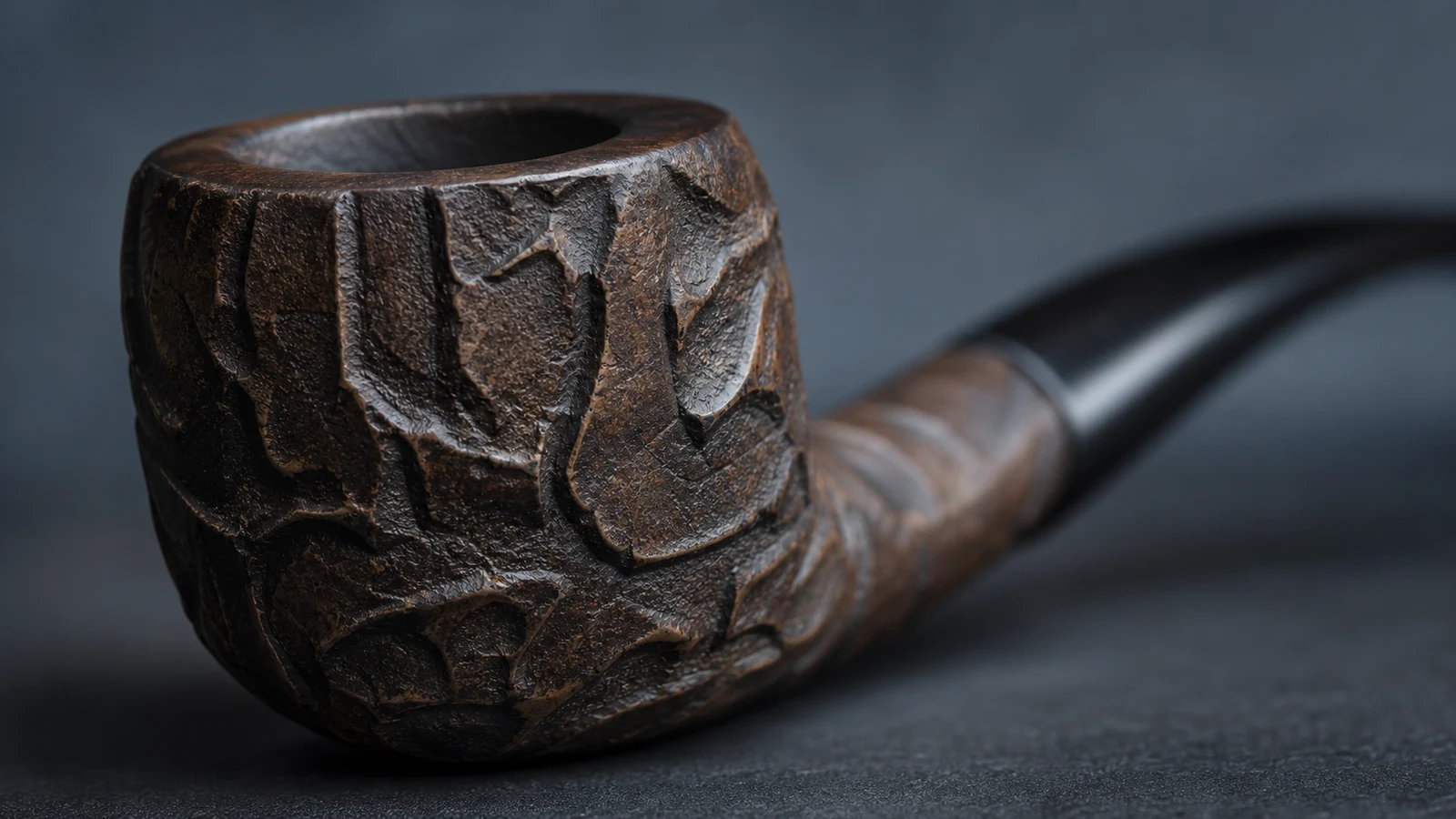
| Smooth, Rusticated, Sandblasted, or Carved | A stated surface treatment or visual finish | Material authenticity or manufacturing quality |
| Birdseye, flame, or cross grain | A grain description used for visible pattern | Species, grade, cut quality, or performance by itself |
A Billiard can be made from briar or another material. A briar pipe can be shaped as an Apple, Acorn, Sherlock, Volcano, or many other forms. Keep material and shape in separate columns while comparing products so that a familiar silhouette does not become accidental evidence for the wood.
What the briar definition does and does not tell you
The briar label is a source claim, not a chain of custody. It does not allow a shopper to reconstruct the tree, source region, curing history, or manufacturing process from the finished surface.
The word also does not guarantee that every visible part is briar. A listing may describe a briar bowl while the stem, accent, mount, or decorative element uses another material. Read the description component by component. When the page says only “briar pipe,” ask whether that label applies to the bowl, the complete wooden body, or another defined part.
Material wording may vary among sellers: “solid briar wood,” “briar burl,” or simply “briar.” Preserve the wording attached to the exact product rather than silently upgrading it. For example, a source label that says “briar wood” should not be rewritten as a particular national origin, grade, or maker-selected block unless the same source confirms that detail.
If the decision involves alternatives such as fruitwood or morta, use the wood-label comparison rather than stretching this briar definition into a ranking of materials.
Why source labeling matters more than appearance
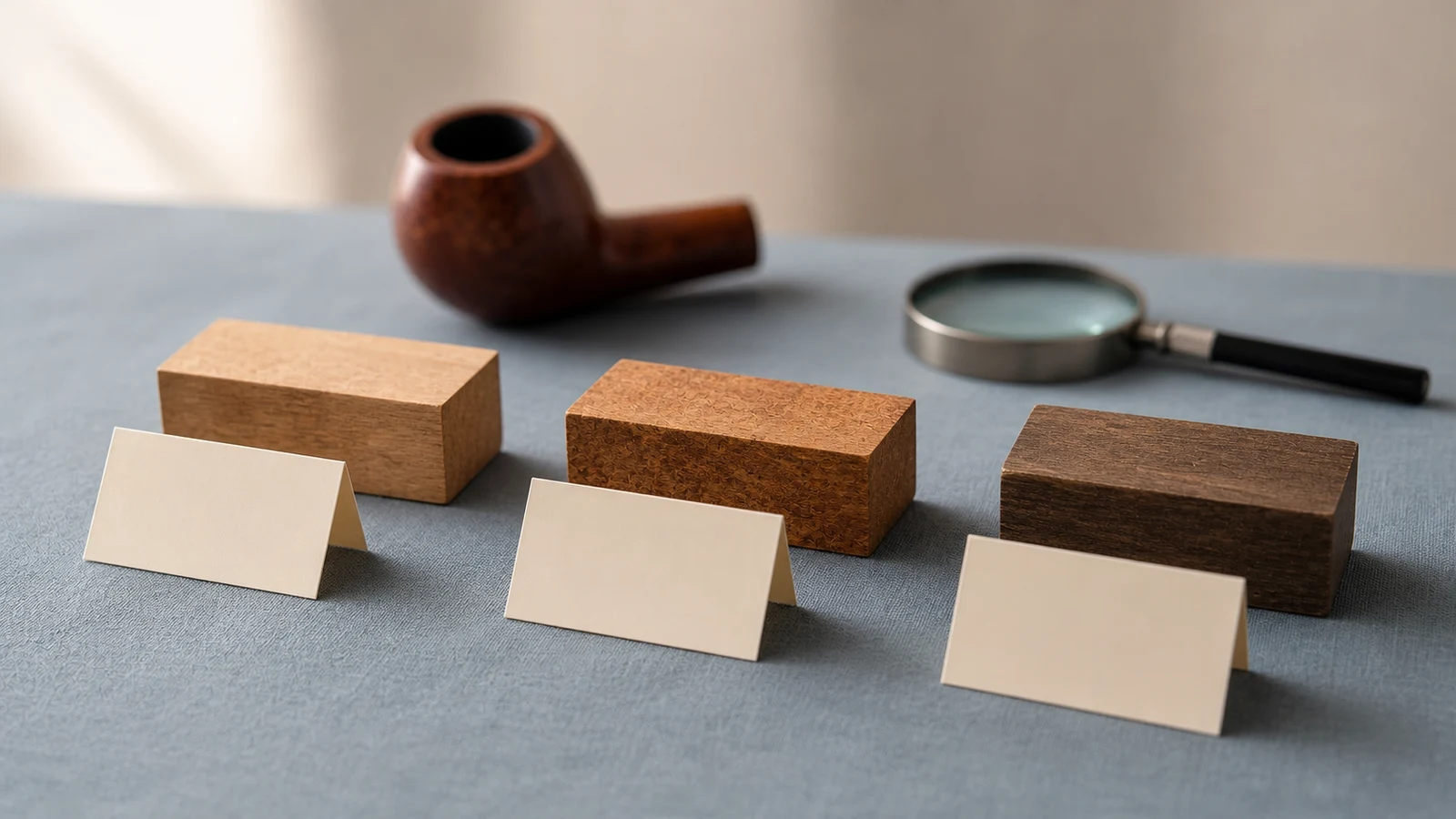
Many materials can look brown, polished, stained, carved, or grainy in a photograph. Lighting, white balance, compression, and surface treatment can change how color and contrast appear. Even a convincing grain pattern is visual evidence only; it is not a material test.
Use a simple evidence hierarchy:
- Exact product description: Does it explicitly identify the bowl material as briar?
- Source or supplier record: Is the material label traceable to the item rather than copied from a category page?
- Consistent product photos: Do the images belong to the listing and show the same item across angles?
- Seller clarification: Can the seller answer any conflict or omission in writing?
- Unknown: If no product-specific source supports the claim, leave the material unresolved.
The current catalog follows this conservative boundary. Source records identify briar wood where that label was supplied, while individual photos support observations about shape, grain, and finish. Those records do not turn appearance into proof of origin, grade, age, or condition.
What visible grain can show
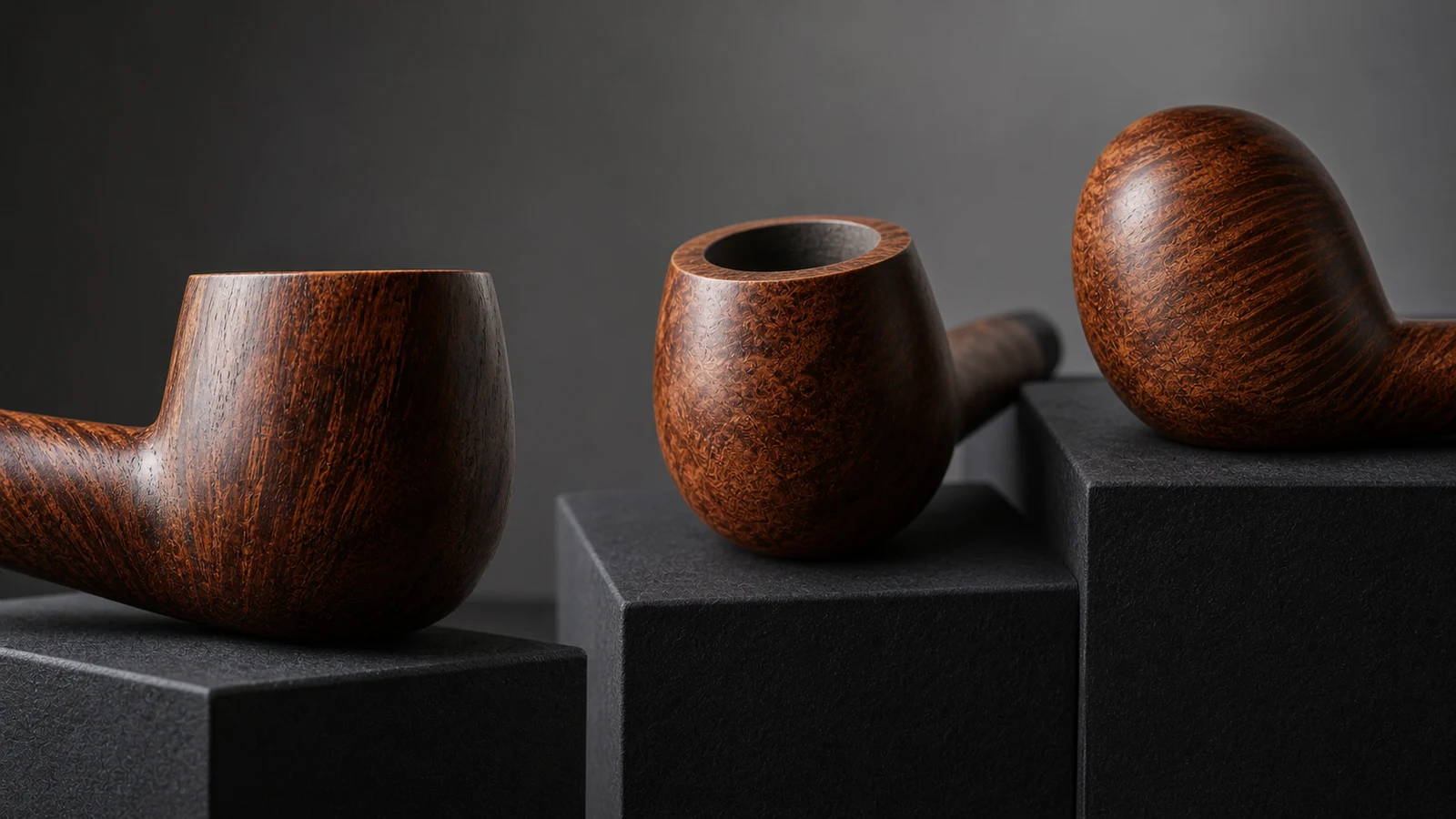
Photos can show lines, small circular or eye-like figures, contrast, changes in direction, and how a pattern wraps around the visible surface. Multiple views may help you distinguish a repeating surface feature from a highlight, shadow, reflection, or compression artifact.
Grain terms are useful as visual descriptions. “Birdseye,” for example, is commonly used for small eye-like figures visible on portions of a surface. “Cross grain” and “flame grain” describe other directional appearances. A source listing may use one of these labels, but the photograph should still be read as a view of the visible surface—not proof of the wood's origin or a performance benefit.
Keep these limits in mind:
- A single side view does not reveal the pattern around the whole bowl.
- Dark stain or high contrast may emphasize some lines and hide others.
- Direct light can create bright streaks that resemble grain.
- A textured finish can interrupt or obscure continuous grain.
- Image sharpening can make edges appear more pronounced.
- A generic editorial image is not evidence for a catalog item.
If grain matters to your choice, ask for left, right, front, rear, rim, and underside views of the exact pipe. Describe what is visible without converting it into a grade or manufacturing conclusion.
The briar grain photo guide provides a separate angle-by-angle method. That separation keeps botanical identity and surface description from becoming the same claim.
Briar does not settle quality or performance
Material categories are useful for navigation, but they are too broad to rank unseen products. Two pipes labeled briar may differ in shape, dimensions, condition, finish, stem construction, source detail, and many other documented or undocumented facts. The word alone cannot establish how either item was drilled, cured, finished, stored, repaired, or previously used.
Avoid claims that straight grain, birdseye, tight grain, a smooth surface, or a darker color guarantees a better pipe. Those visual features may influence aesthetic preference and price presentation, but the photo does not prove engineering, durability, or use performance. Likewise, a rusticated or sandblasted surface should not be treated as evidence of lower-grade or higher-grade briar.
The most responsible comparison keeps three columns:
- Confirmed: material and other facts explicitly stated for the item.
- Visible: form, pattern, finish, and marks supported by the supplied photos.
- Unknown: origin, grade, internal condition, hidden construction, and any unstated specification.
Facts to verify on an individual briar pipe
Before treating a product as fully described, look for:
- the exact material wording and which component it covers;
- whether the photographed pipe is the exact item or a representative example;
- condition, including whether the seller classifies it as new, used, restored, or estate;
- overall dimensions, bowl and chamber measurements, and weight when important;
- maker and country of origin only when explicitly confirmed;
- finish label and any product-specific care information;
- stem and connection details that the seller actually supplies;
- filter compatibility and supported size, if stated;
- package contents and whether pictured accessories are included;
- current stock, price, shipping, returns, and checkout total.
Do not transfer these facts between two similar-looking listings. Even two examples with the same public title or shape family can have different measurements, condition, images, or source notes.
How to compare catalog examples responsibly
The current pipe catalog provides source-labeled briar examples across many visible shapes and bend profiles. Use the shop to compare silhouettes and supplied photographs, then open the individual product record for its own material wording and confirmed details. A late catalog link is a place to practice the evidence method, not proof that one pipe is universally best.
The briar pipe product guide adds a decision framework for shape, dimensions, photos, and order facts. It is especially useful when a broad term such as “briar” appears certain but several product-specific details remain unconfirmed.
Frequently asked questions
What should I verify when researching a briar tobacco pipe?
Verify that the exact listing identifies the bowl material as briar. Then separately check condition, dimensions, maker, origin, finish, stem details, filter compatibility, package contents, and current commercial terms rather than treating “briar” as proof of those facts.
Can product photos prove that a pipe is briar?
No. Photos can show visible color, grain, texture, shape, and finish, but similar appearances can occur in other materials or image conditions. Use product-specific source labeling to verify material.
Does visible grain indicate briar quality?
Not by itself. Grain can be described as a visible pattern, but a photograph does not establish grade, source, curing, engineering, condition, or performance. Treat grain preference as visual unless the seller supplies a narrower, verifiable claim.
How should I use the shop and product guide to check a briar claim?
Browse the shop for current pipe listings, then use the product guide to separate source labels, visible evidence, and unknown specifications. Confirm every important fact on the individual product page before relying on it.
A briar pipe begins with a material label, not a visual guess. Let source text establish what the bowl is said to be, let photographs show the surfaces they actually capture, and leave origin, grade, condition, construction, and performance unresolved unless the exact listing provides evidence for them.
Related posts
Product notes, store updates, and purchase guidance for the storefront.