Briar Pipe Grain Patterns: What Product Photos Can Show
Learn what product photos can show about briar grain direction, contrast, and lighting, and what they cannot prove about quality or performance.
Written by
The Tobacco Pipe Editorial Team
The store editorial team reviews product facts, care boundaries, and buying guidance against the current catalog and source evidence.
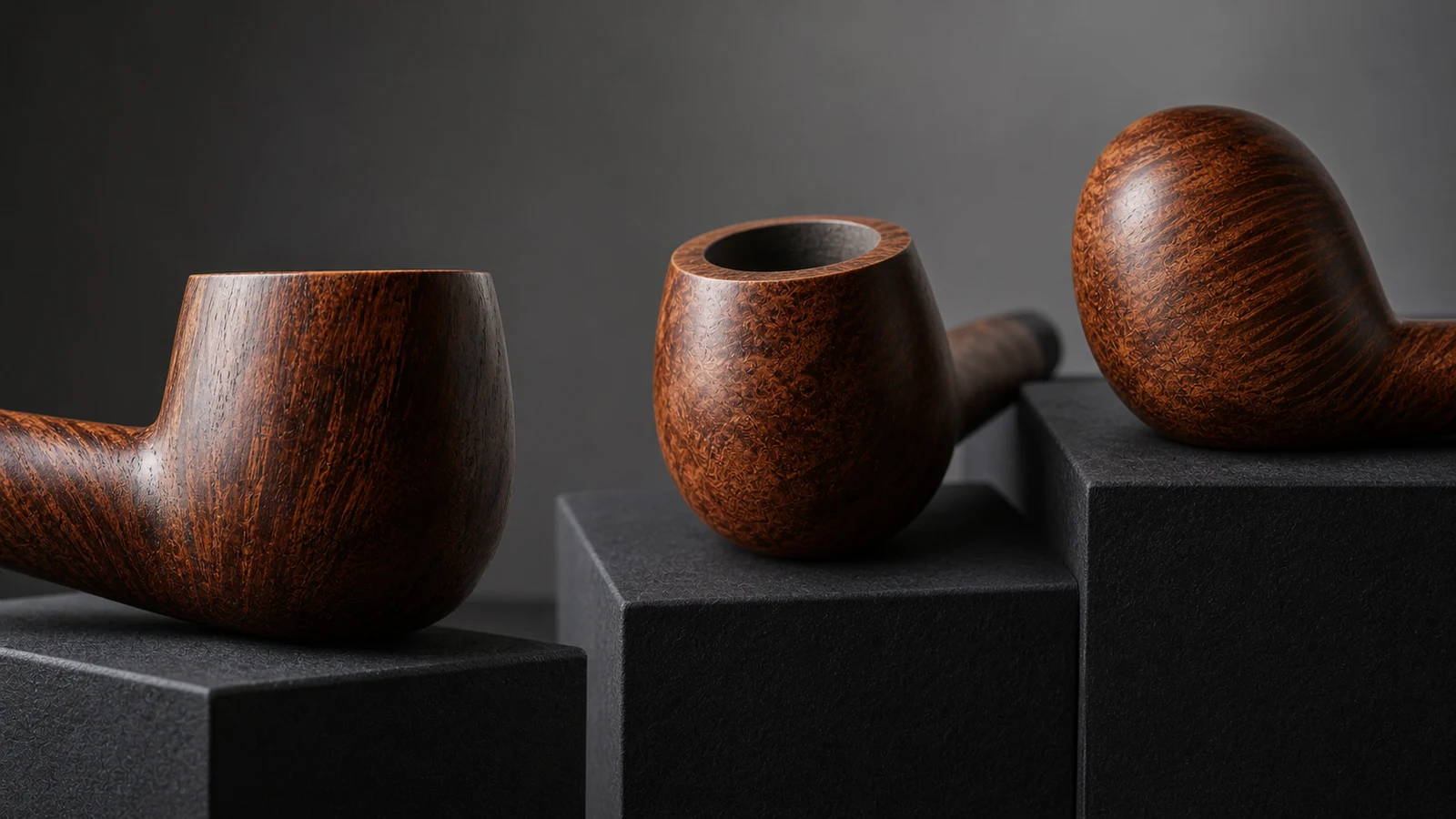
Briar pipe photographs can show visible grain direction, eye-like figures, contrast, and how a pattern changes across the supplied views. They cannot, by appearance alone, confirm that the material is briar, identify origin or grade, reconstruct how the block was cut, or guarantee craftsmanship or performance. Treat grain as a visual observation first and a listing claim only when the exact product description uses that label.
The best photo review compares several angles under consistent lighting. One dramatic close-up may be useful for appearance, but it is not enough to describe the whole bowl. Keep a separate list of source labels, visible observations, and unknown facts so that an attractive pattern does not become evidence for claims the page never made.
A visual grain vocabulary with boundaries
Grain terms are not always used identically by every seller. The descriptions below are practical ways to read photographs, not a grading system.
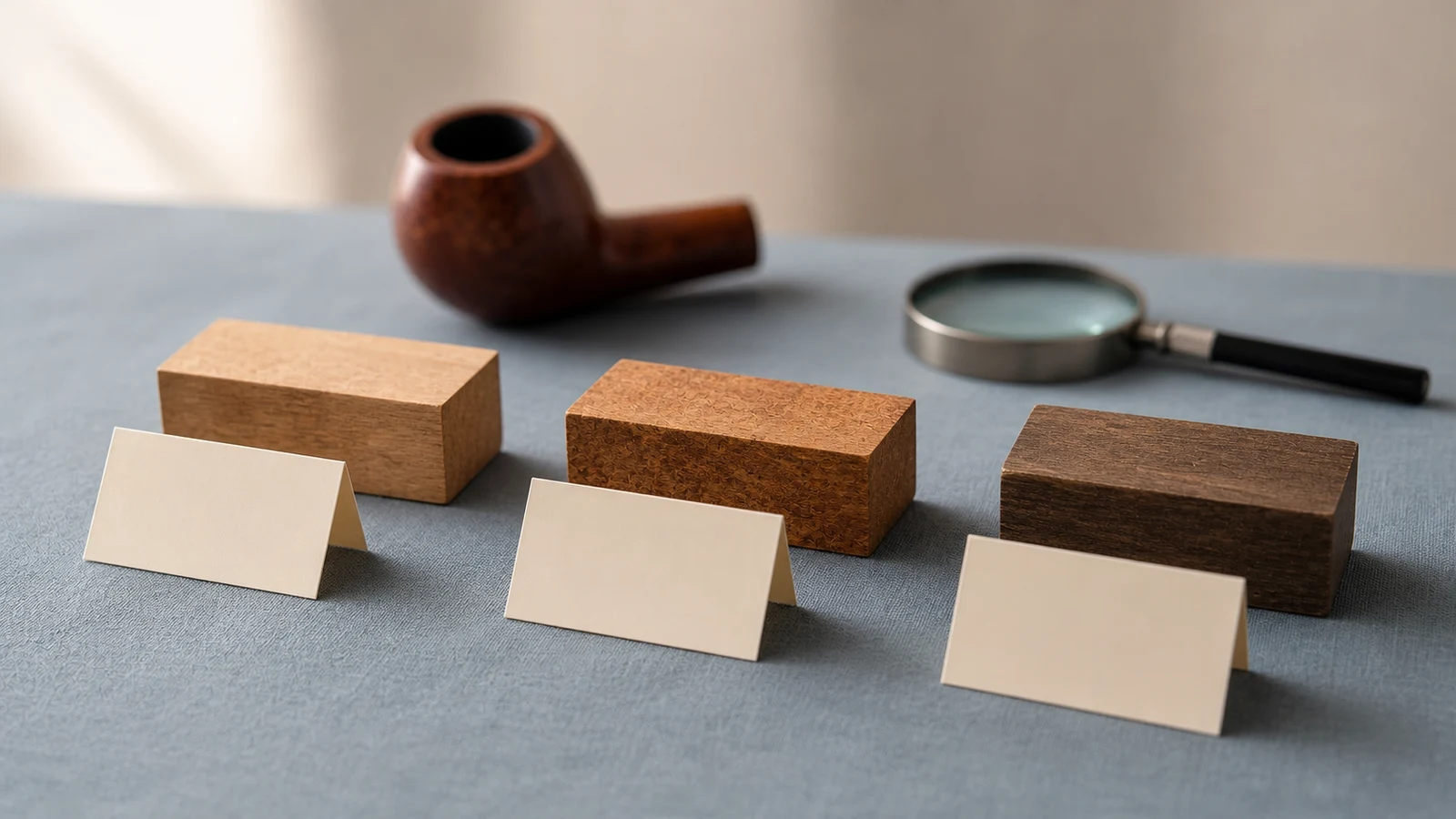
The Wood Database's briar entry shows plateaux and ebauchon block examples, but it does not provide a finished-pipe grade that can be assigned from a listing photo. Start with the briar material definition, then keep the grain assessment limited to the surfaces the item gallery actually shows.
If a listing uses a different or mixed material label, the tobacco pipe wood-types guide explains what that wording can establish. A visible grain pattern alone does not identify the wood.
| Visual term | What you may be able to observe | What the photo does not prove |
|---|---|---|
| Cross grain | Lines or bands moving broadly across part of a surface | Exact block orientation, grade, or engineering |
| Flame grain | Elongated, rising, or flame-like lines on a visible face | That the pattern continues around the whole bowl |
| Birdseye | Small circular, oval, or eye-like figures in a visible area | Material species, source, rarity, or quality level |
| Mixed or changing grain | More than one directional appearance across different faces | Poor or superior selection of the wood |
| Obscured grain | Pattern partly hidden by dark color, texture, reflection, or low detail | Absence of grain or a particular material |
Use phrases such as “the supplied left-side view shows eye-like figures” or “directional lines appear on the front face.” Avoid turning those observations into “premium birdseye,” “perfect flame grain,” or “high-grade briar” unless the exact listing provides a defined and supportable grade.
Grain direction is three-dimensional
A pipe bowl curves through several planes. A line that looks vertical on one face may bend, disappear, or change character around the side. The camera converts that three-dimensional surface into a flat image, so perspective influences the apparent direction and spacing.
For a more complete reading, look for:
- a full left-side view;
- a full right-side view;
- front and rear or three-quarter views;
- the underside and bowl-to-shank transition;
- a rim view when supplied;
- close-ups that can be located within the full-pipe views.
The goal is not to draw a perfect map of the wood. It is to verify that the pattern you care about appears on the exact item and to identify which surfaces remain unseen. If a listing offers only one side, describe only that side.
Shape also changes presentation. A rounded Apple, cylindrical Billiard, paneled form, or sculptural Freehand can expose different surface areas to the camera. That does not make one shape's grain inherently better; it changes how much of each face can be seen in a particular photograph.
Lighting can strengthen or hide a pattern
Grain contrast depends heavily on illumination and image processing. Side lighting can emphasize shallow surface changes. Direct frontal light may flatten them. Reflections on a polished surface can cover lines with bright highlights, while dark exposure can merge several tones.
Compare these signals across the image set:
- Highlight movement: If a bright band moves when the camera angle changes, it may be reflection rather than grain.
- Pattern persistence: A wood pattern should remain attached to the same physical area across views, even when contrast changes.
- Color consistency: Large color shifts may come from white balance or editing rather than the pipe itself.
- Edge halos: Strong sharpening can create artificial outlines around grain or texture.
- Shadow coverage: A dark area should be treated as unobserved, not automatically flawless or defective.
Neutral, diffuse light is easier to compare, but no online photograph reproduces every display or real-world viewing condition. Ask the seller about color only if it materially affects your decision, and keep the answer tied to the exact item.
Finish changes what the camera can reveal
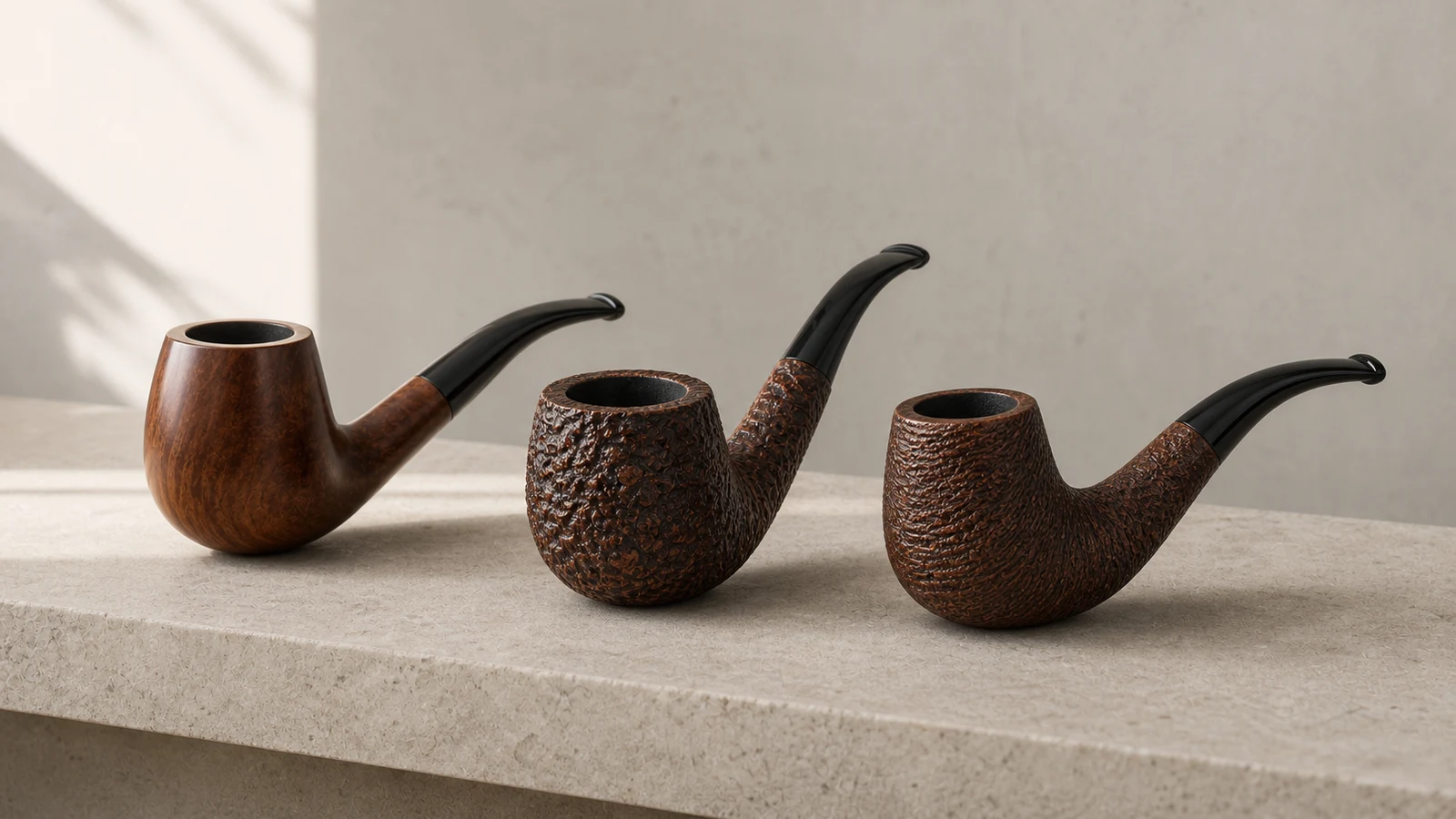
A smooth surface can display continuous lines and color transitions, but stain, polish, or reflection may alter their apparent contrast. Rusticated, sandblasted, or carved surfaces introduce relief that breaks up or redirects visible lines. A dark textured finish may make the underlying visual grain difficult to assess from ordinary product images.
Do not use the amount of visible grain to rank finishes. A surface with less continuous grain in a photograph is not thereby lower quality, and a prominent smooth pattern does not prove better material or construction. Finish and grain are related visual features, not interchangeable quality grades.
The listing should state the finish label. If an image looks textured but the text does not say rusticated, sandblasted, or carved, describe the visible texture and ask for the finish rather than choosing a process from appearance. Different techniques can create similar-looking shadows at web resolution.
Peterson, for example, publishes separate first-party pages for its smooth, rusticated, and sandblasted System Standard lines. Those pages support Peterson's labels for those lines; they do not let a viewer assign the same process to an unrelated pipe by appearance. Use the finish comparison guide when the question is the surface treatment rather than the grain pattern.
Product photos need an evidence audit
Before reading grain, verify that the photographs belong to the product. Some pages use a representative photo for a group, an editorial image for atmosphere, or a combination of exact-item and generic media. Look for explicit wording and consistency across visible marks.
A reliable grain-photo audit asks:
- Does the image set show the same bowl and stem in every frame?
- Can a distinctive line or eye-like figure be located in more than one view?
- Are close-ups sharp enough to support the description?
- Do lighting and background change so much that color comparison becomes weak?
- Are both sides and the underside supplied?
- Does the listing identify the exact finish and material?
- Is the grain term in the product description, or is it only your observation?
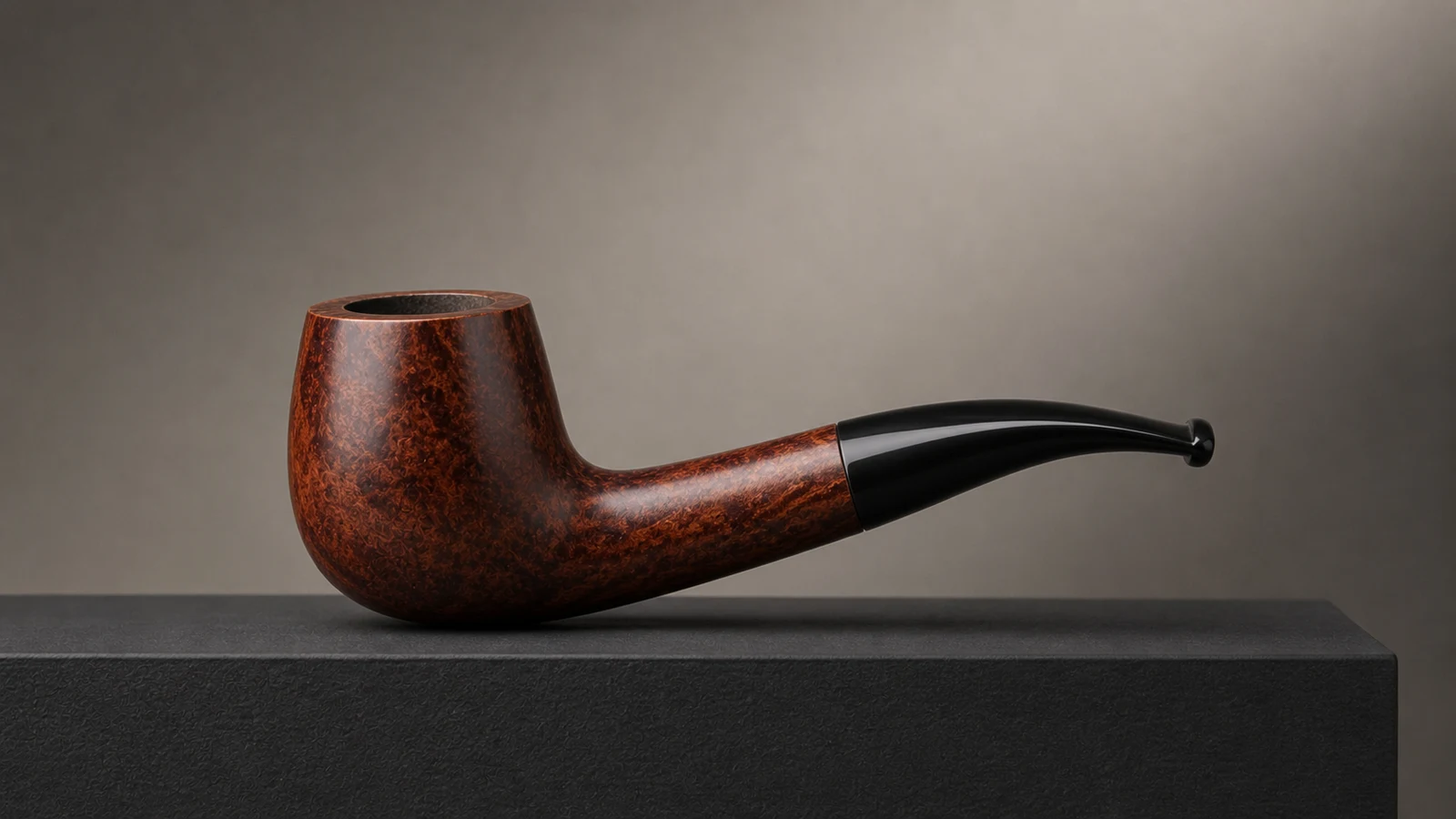
An editorial banner showing an attractive pipe is never evidence for a shop listing. Use only the media associated with the individual record when evaluating that item.
How catalog source labels should be used
The current catalog context includes source-labeled features such as Birdseye Grain, Rusticated, and Sandblasted on particular records. Those labels are useful for discovery, but they do not transfer to visually similar products. A source label attached to one pipe is not a general claim about a shape family, price range, or every item on the site.
The pipe shop can be used to compare the supplied images and listing terms of current examples. Open each product separately, note its own wording, and keep missing origin, grade, condition, dimensions, and other specifications unknown. The product guide provides the broader method for comparing visible shape with confirmed facts.
A grain-photo inspection checklist
- Confirm that the photos show the exact item or clearly identify representative media.
- Read the material and finish labels before naming the grain.
- Begin with full-pipe views, then locate every close-up on the complete form.
- Compare left, right, front, rear, underside, and rim views when supplied.
- Track whether visible lines remain fixed while highlights move.
- Separate grain, finish texture, stain contrast, reflection, and compression artifacts.
- Describe only the surfaces the image actually shows.
- Do not infer origin, grade, age, condition, cut, maker, or performance.
- Ask for a missing angle if it affects the choice.
- Recheck the exact listing rather than transferring labels from another pipe.
Frequently asked questions
What should I verify when researching briar pipe grain patterns?
Verify that the exact listing identifies the material and finish, then compare grain across several product-specific views. Keep source labels separate from your visual description and leave origin, grade, cut, and performance unknown unless explicitly supported.
How much grain evidence can one product photo provide?
Photos can support observations about visible line direction, eye-like figures, contrast, pattern continuity, texture, and the surfaces shown. Lighting, perspective, and processing limit how confidently color and proportion can be described.
Can a photo prove birdseye or flame grain?
It can show a pattern that resembles those visual descriptions, and the listing may use the label. The image alone does not prove material, grade, source, rarity, or a performance benefit. Use qualified visual language when the seller has not named the pattern.
Does stronger grain contrast mean better briar?
No. Contrast can be affected by stain, lighting, finish, exposure, and editing. It may be an aesthetic preference, but it does not by itself establish quality, engineering, condition, or use performance.
How should I compare grain examples without treating photos as proof of grade?
Browse the shop and compare product-specific image sets rather than generic editorial scenes. Use the product guide to record which facts are confirmed, visible, or still unknown before choosing an item.
Good grain inspection stays descriptive. Follow the pattern across real product views, account for lighting and finish, and resist using an attractive surface as evidence for the tree, workshop, grade, or performance hidden behind the photograph.
Related posts
Product notes, store updates, and purchase guidance for the storefront.