Tobacco Pipe Wood Types: What the Material Name Proves
Compare tobacco pipe wood labels by source evidence, visible features, and seller confirmation without inferring species, quality, or performance.
Written by
The Tobacco Pipe Editorial Team
The store editorial team reviews product facts, care boundaries, and buying guidance against the current catalog and source evidence.
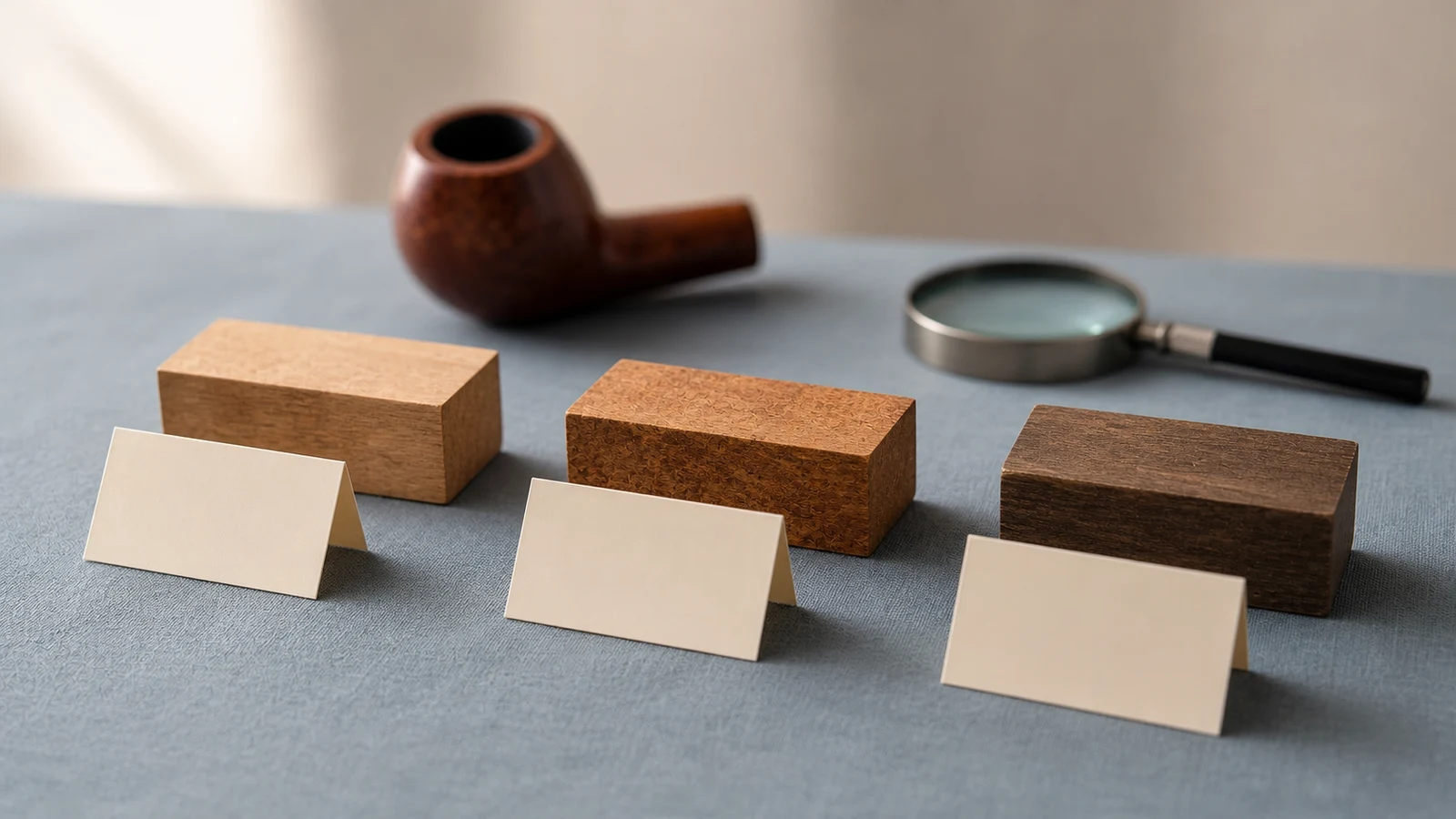
A tobacco pipe wood type should be treated as a material claim, not a promise of origin, grade, condition, craftsmanship, or performance. A listing that says “briar wood” supports the conclusion that the seller identifies the pipe as briar. The grain visible in a photograph may be consistent with wood, but it cannot independently prove the species or where it grew.
Use three evidence layers when comparing materials: the listing claim, the visible exterior, and facts that still require seller confirmation. Keeping those layers separate produces a more reliable comparison than ranking pipes by material name alone.
For reference, GBIF records Erica arborea as an accepted botanical species, while The Wood Database's briar entry discusses the commercial burl and block vocabulary used in pipe making. Those references define useful terms; they do not authenticate the wood in an individual finished pipe.
A careful comparison of common material labels
| Listing label | What the label claims | What photos may show | What still needs confirmation |
|---|---|---|---|
| Briar or briar wood | The seller identifies briar as the material for a stated part | Grain, color variation, finish, carving, and exterior form | Species basis, source region, grade, age, curing, defects, and internal condition |
| Morta or bog wood | The seller uses a morta or bog-wood material term | Dark coloration, grain, and finish | Exact material identity, age, recovery location, treatment, and provenance |
| Pear, cherry, or other fruitwood | The seller identifies a named fruitwood | Exterior color and grain under the applied finish | Species, origin, seasoning, construction, and whether all wooden parts use it |
| Olive, maple, oak, or another named wood | The seller identifies that named material | Visible texture, color, carving, and finish | Species and source, treatment, grade, and hidden construction |
| Bamboo shank or accent | The seller identifies bamboo on a specific section | Segmented exterior detail and its placement | Whether it is structural or decorative, exact species, and connection method |
| “Wood pipe” with no species | Only a broad wooden-material claim | A wood-like exterior may be visible | Species, finish, origin, construction, and every product-specific property |
These rows describe how to read labels, not how to predict the result of using a pipe. Material terminology varies, and the individual product record remains the authority for what the seller claims.
What a briar label proves
Briar is the central material direction of this site's catalog, but even a clear briar label has limits. When a source listing describes a product as solid briar wood or briar burl, the catalog can accurately repeat that source claim. It should also disclose when the claim has not been independently verified.
For the narrower botanical and commercial definition, see what a briar pipe is. This page instead compares the evidence standard across multiple wood labels.
The label does not automatically establish:
- a particular country or region of origin;
- the age or grade of the wood;
- how the block was cut, cured, or stored;
- the absence of fills, repairs, or hidden flaws;
- handmade, artisan, or factory production;
- a guaranteed result associated with the material.
Those points require documentation, a maker statement, detailed condition information, or direct inspection. The word “briar” should not be stretched to cover facts it does not contain.
Grain and finish are visible evidence, not species tests
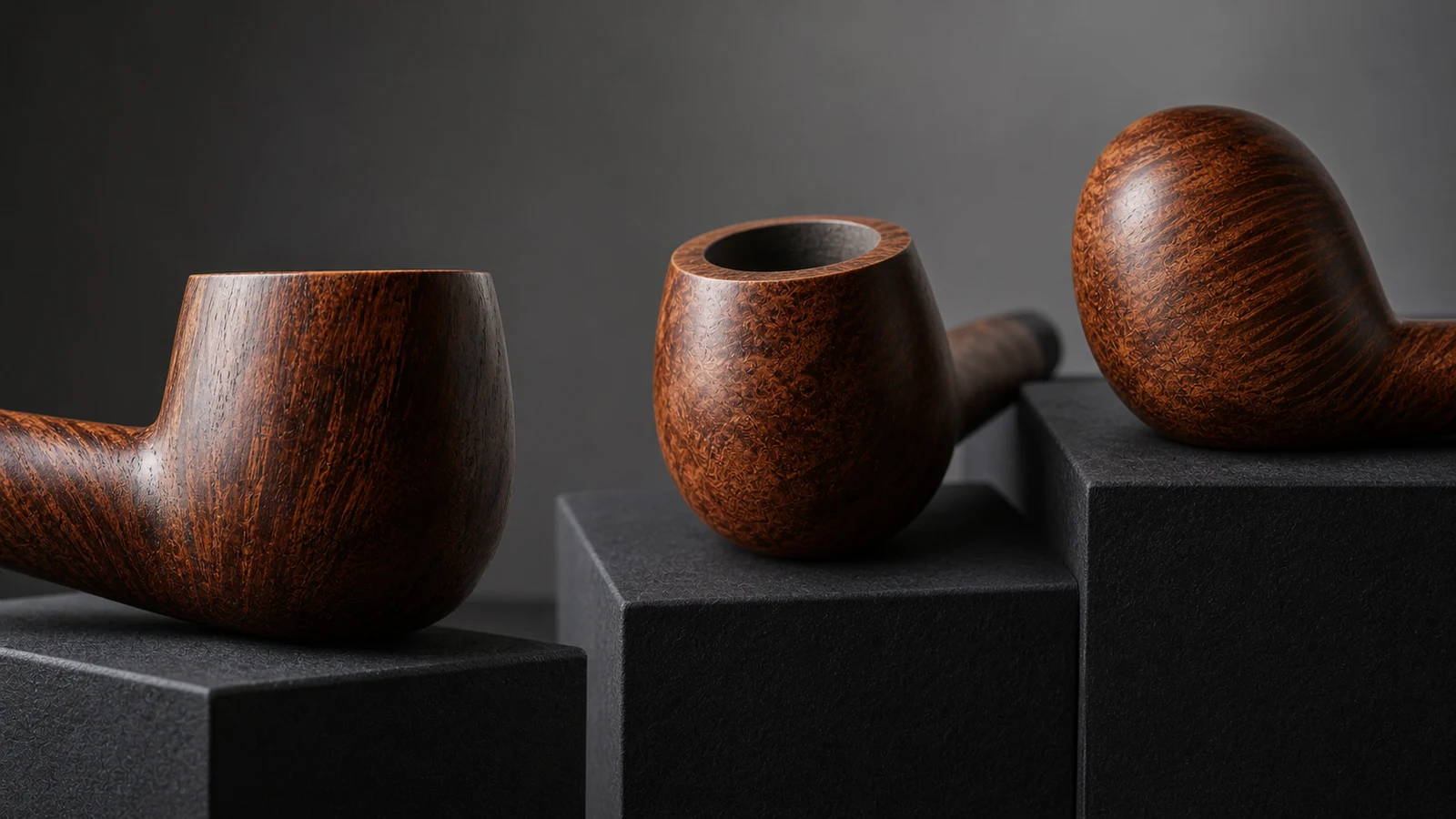
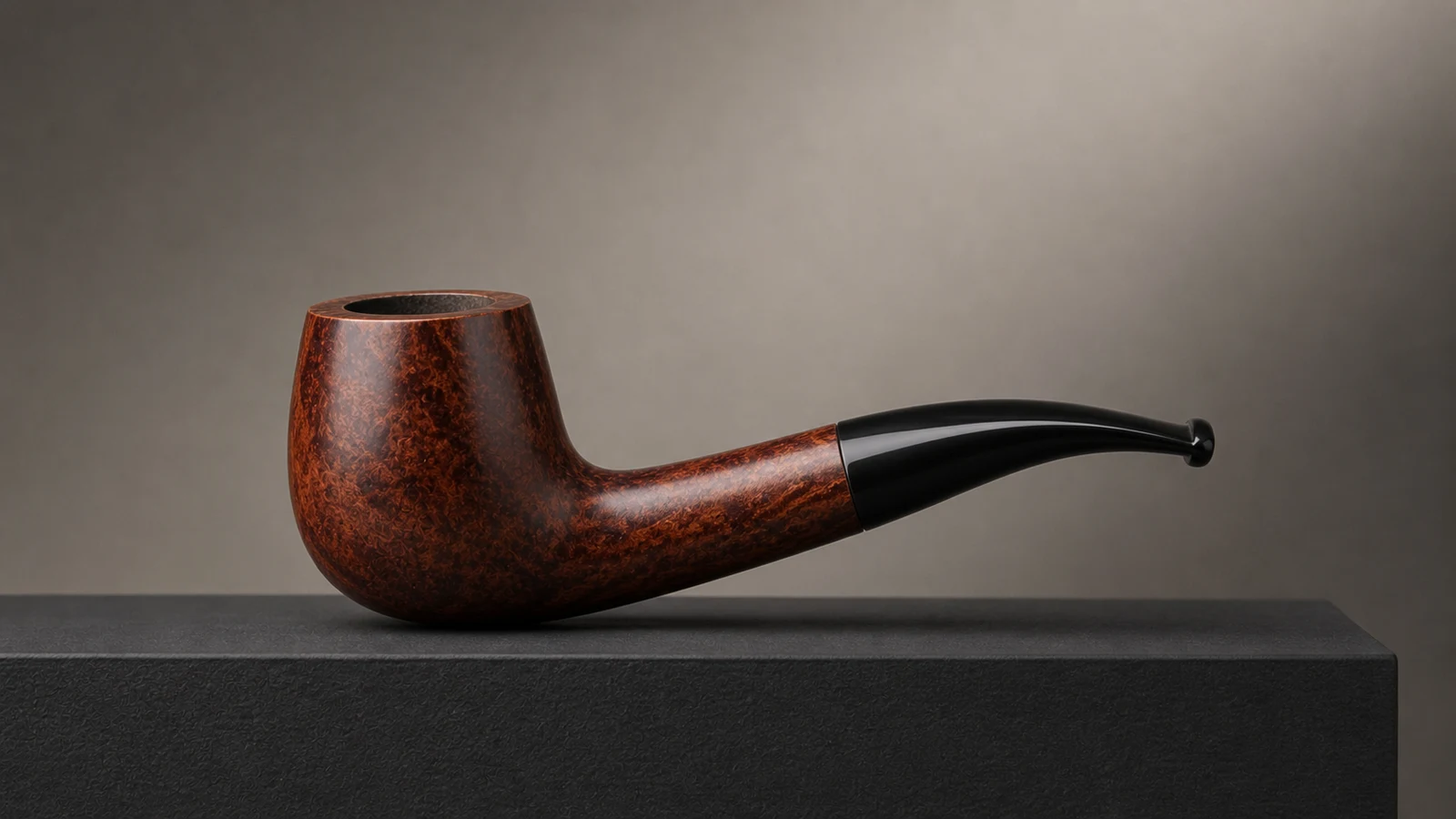
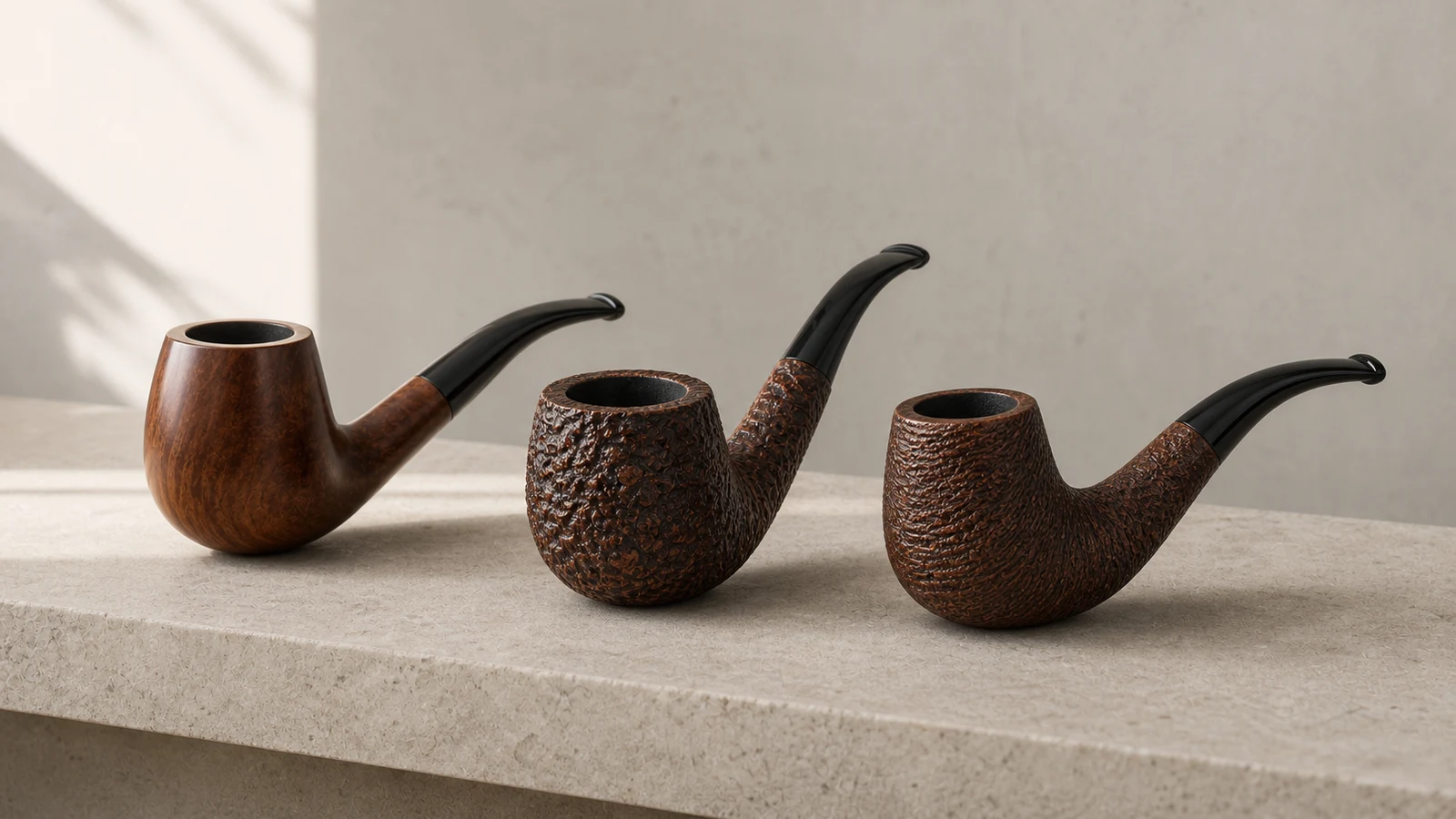
A high-resolution photo can reveal straight grain, flame-like lines, birdseye patterns, mixed grain, carved areas, rustication, or a sandblasted surface. It may also show stains, color transitions, smooth panels, and contrast between the bowl and stem.
Use the dedicated briar grain photo guide for direction and lighting, and the smooth, rusticated, and sandblasted finish guide for surface labels. Neither visual framework is a species test.
Those observations are useful for comparing appearance. They do not provide a laboratory identification of the wood. Stain, lighting, editing, angle, and surface treatment can change how grain appears. Rustication and carving may remove or obscure the visual cues a buyer hoped to inspect.
Keep the wording precise:
- “The listing identifies briar” is a source claim.
- “The photo shows visible grain on a smooth panel” is an observation.
- “The wood came from a particular region” needs seller evidence.
- “This grain ensures a particular performance result” is unsupported without appropriate product-specific proof.
This vocabulary allows readers to compare what is genuinely visible without turning appearance into an origin or quality certificate.
Origin words need their own evidence
Listings sometimes combine a material name with phrases such as “Spanish-imported,” “Italian-imported,” Mediterranean, aged, plateau, or burl. Each phrase is a separate claim. A briar label does not confirm the origin phrase, and a grain photograph does not independently verify either one.
Ask what the origin statement refers to. It may describe the raw block, the supplier, the place of manufacture, or a translation of the original seller's wording. Those are different facts. If the answer is unavailable, preserve the source language with a clear qualification rather than simplifying it into a confirmed provenance claim.
The same principle applies to age and grade. “Old,” “aged,” “premium,” “selected,” and similar descriptors require a defined basis. They should not be inferred from dark color, dense-looking grain, price, or the presence of a maker-style stamp.
Not every pipe material is a wood
Search results for tobacco pipe wood types may include meerschaum, clay, corn cob, or synthetic materials. These are relevant alternatives in a broad pipe material discussion, but they should not be mislabeled as wood species.
- Meerschaum is a mineral material, not wood.
- Clay and ceramic materials are not wood.
- Corn cob is a plant-derived pipe material, but it is not a wood species.
- Acrylic, resin, and ebonite terms commonly describe non-wood components or accents rather than a wooden bowl.
A listing may combine materials. For example, a seller might identify a briar bowl, bamboo shank section, and a separately named stem material. Verify which material applies to which part instead of assigning one label to the entire object.
How to inspect a wooden pipe listing
Review the listing in a fixed order so appearance does not outrun evidence:
- Read the title and specification table. Record the exact material term and the part it describes.
- Check the full description. Look for qualifications, translated source wording, origin statements, finish labels, and condition notes.
- Inspect every image. Compare grain continuity, finish, rim, underside, shank, stem connection, and any carved or rusticated areas.
- Separate observation from claim. Write down what is visible without using it to prove species, origin, grade, or hidden condition.
- Ask focused questions. Request documentation or clarification for any material fact that changes the decision.
- Recheck commercial facts. Price, stock, shipping, package contents, and returns can change independently of the material description.
You can apply this method while browsing the current briar pipe catalog. The catalog uses source labels and product photos as evidence while keeping unverified claims qualified. The broader product guide explains how to compare shape, dimensions, condition, and checkout details in the same way.
Questions to ask the seller
When the material name matters, ask questions that can be answered specifically:
- Which part of this exact pipe is made from the named wood?
- Is the material statement from the maker, supplier, or original listing?
- Is there documentation for the claimed origin or grade?
- Does the finish conceal repairs, fills, or other condition details the seller can disclose?
- Are the displayed images of the exact item or a representative example?
- Are material accents and the stem identified separately?
Avoid asking whether one wood is simply “best.” That invites an unsupported ranking. A better question is whether the listing evidence is complete enough for the material claim and the buyer's priorities.
A material-verification checklist
- The exact wood name appears in the listing, not only in a search snippet.
- The named material is assigned to a specific part of the pipe.
- Origin, grade, age, and handmade status are recorded as separate claims.
- Photos are used for visible grain and finish observations only.
- Hidden condition and construction are not inferred from the exterior.
- Translated or source-derived claims are clearly qualified.
- Product price is not treated as proof of species or grade.
- Missing documentation is labeled unknown.
This checklist is deliberately conservative. It does not prevent a buyer from having a visual preference; it prevents that preference from being described as verified material performance.
Frequently Asked Questions
Can I identify briar wood from a product photo?
A photo can show grain, color, and finish that may be consistent with the listing, but it cannot independently prove the species. Use the written material statement and request supporting information if identity is critical.
Does “solid briar wood” prove where the briar came from?
No. Material and origin are separate claims. A listing needs an additional source statement or documentation for a region, supplier, or import claim.
Are pear, cherry, olive, maple, and oak interchangeable labels?
No. They are different named materials, and each should be confirmed from the individual listing. Similar color or grain in photos does not make the names interchangeable.
What can exterior wood grain and finish photos establish?
They can support observations about exterior grain, finish, carving, rustication, visible color, and overall form. They cannot fully confirm species, origin, internal condition, grade, curing, or construction history.
Which material facts should I ask a seller to verify?
Ask which part uses the named material, where the claim came from, whether origin or grade is documented, and whether repairs, fills, or mixed materials are disclosed. Keep unanswered points marked unknown.
The material name is a useful starting label, not a final verdict. Compare the seller's exact claim with visible features, then verify origin, grade, condition, and construction separately whenever those facts affect the choice.
Related posts
Product notes, store updates, and purchase guidance for the storefront.