How to Store a Tobacco Pipe Between Uses
Store a tobacco pipe only after it is cool and dry, with attention to airflow, support points, pouch conditions, and periodic inspection.
Written by
The Tobacco Pipe Editorial Team
The store editorial team reviews product facts, care boundaries, and buying guidance against the current catalog and source evidence.

Store a tobacco pipe only after it is completely cool, accessible surfaces are dry, loose residue has been removed without scraping, and no cleaner remains in the airway. Place it on a stable, clean support with ordinary airflow, away from direct sunlight, heaters, damp rooms, hard edges, and pressure on the stem.
A stand can provide open support; a pouch can protect against dust and contact during transport. Neither is automatically right for every pipe. The fit, material, finish, ventilation, and intended storage time must be considered. Do not seal a warm or damp pipe in a pouch or case, and do not assume that a generic holder supports every shape without stress.
Storage is the final handoff, not another cleaning method. Complete the after-use routine first; if resistance, hard deposit, or damage is found, return to the cleaning Hub instead of enclosing the unresolved condition.
Storage choices compared
| Storage option | Useful when | Verify first | Avoid |
|---|---|---|---|
| Open stand | The pipe is cool, dry, and kept in a stable indoor location | Bowl support, stem clearance, balance, and surface contact | Unstable fit, direct sun, heater airflow, or a damp room |
| Individual pouch | The pipe is dry and needs protection from dust or contact | Interior cleanliness, lining, fit, closure, and ventilation | Storing warm, damp, or tightly compressed |
| Fitted case | The exact pipe and components fit without pressure | Compartments, hardware contact, lining condition, and dryness | Forcing a larger bowl or bent stem into the case |
| Drawer or cabinet | The space is clean, moderate, and not airtight or damp | Airflow, odor, nearby chemicals, and objects that may shift | Loose storage beside keys, tools, liquids, or abrasive items |
| Display rack | Several pipes need separate stable positions | Spacing, balance, dust exposure, and support points | Crowding pipes so stems or finishes touch |
The right option is the one that holds the specific pipe securely without trapping moisture, rubbing the finish, or loading a delicate component.
Cool and dry come before closed storage
Storage begins with waiting. Set the pipe on a stable surface and allow every accessible part to reach room temperature. Remove only loose residue and, if appropriate for the known design, make a gentle pass with a soft correctly fitting cleaner. Withdraw the cleaner afterward and leave accessible moisture to dry in ordinary air.
Do not accelerate the process with a hair dryer, heater, direct fan into the airway, oven, refrigeration, or compressed air. These methods introduce heat, pressure, or rapid temperature change rather than confirming that the pipe is ready for storage.
There is no universal number of minutes or hours that applies to every material, climate, and cleaning state. Use observable conditions: the pipe is at room temperature, exposed surfaces feel dry, no damp cleaner is inside, and the planned container will not trap moisture.
That cool-and-dry handoff is consistent with the maintenance context in Peterson's manufacturer guide and the specialist Smokingpipes cleaning guide. Neither source proves that a particular pouch lining, rack geometry, or storage interval suits an unknown pipe.
If moisture remains in an inaccessible area, do not pry out an unknown insert or add heat. Leave the pipe supported and obtain construction-specific guidance if the condition persists.
Choose a stable support for the actual shape
A stand should support the pipe at broad, appropriate contact points and keep it from rolling or tipping. Check how the bowl sits, whether the stem is suspended under pressure, and whether a bent or unusually long profile changes the center of balance. A stand described for “pipes” is not proof that every bowl, shank, or stem geometry fits it.
Place the stand where it cannot be knocked by a door, cable, pet, sleeve, or other object. Keep it away from a shelf edge and from locations that receive strong sunlight or concentrated heating. Avoid bare metal or rough surfaces that contact a finish unless the stand's protective material and fit are known.
If the pipe naturally sits on its own, confirm that the resting surfaces are stable and clean. A “sitter” label describes a visible profile; it does not guarantee stability on every table or under every condition.
Use a pouch for protection, not for damp storage
A clean individual pouch can reduce contact with dust, tools, keys, and other hard objects. It is most useful after the pipe is fully cool and dry. Check that the interior is free of grit, loose dye, torn lining, and protruding hardware. The pipe should enter without bending the stem or forcing the bowl against the closure.
Do not use a tight pouch to reshape, compress, or immobilize a pipe that does not fit. Do not place a damp cleaner, liquid bottle, or abrasive tool in the same compartment. If a pouch has a strong odor, transfers color, or feels damp, do not assume its lining is compatible with the pipe's finish.
For longer storage, periodically inspect the pouch and pipe rather than treating a closed container as maintenance-free. Changes in odor, surface feel, color, or lining condition are reasons to remove the pipe and investigate before continuing.
Protect the finish without applying an unknown product
Finish protection is primarily about clean contact, moderate conditions, and avoiding abrasion. Dust a stable exterior lightly with a clean, soft, dry cloth. Do not apply household polish, oil, alcohol, strong solvent, adhesive padding, or an unknown coating as a universal storage treatment.
Separate pipes so bowls, stems, bands, and decorative elements do not rub. Keep them away from keys, tools, loose accessories, and liquids. If a rack or case has foam, rubber, dyed fabric, or adhesive surfaces, confirm that the material is clean and suitable for prolonged contact. Stop using it if it becomes tacky, crumbles, transfers color, or leaves an imprint.
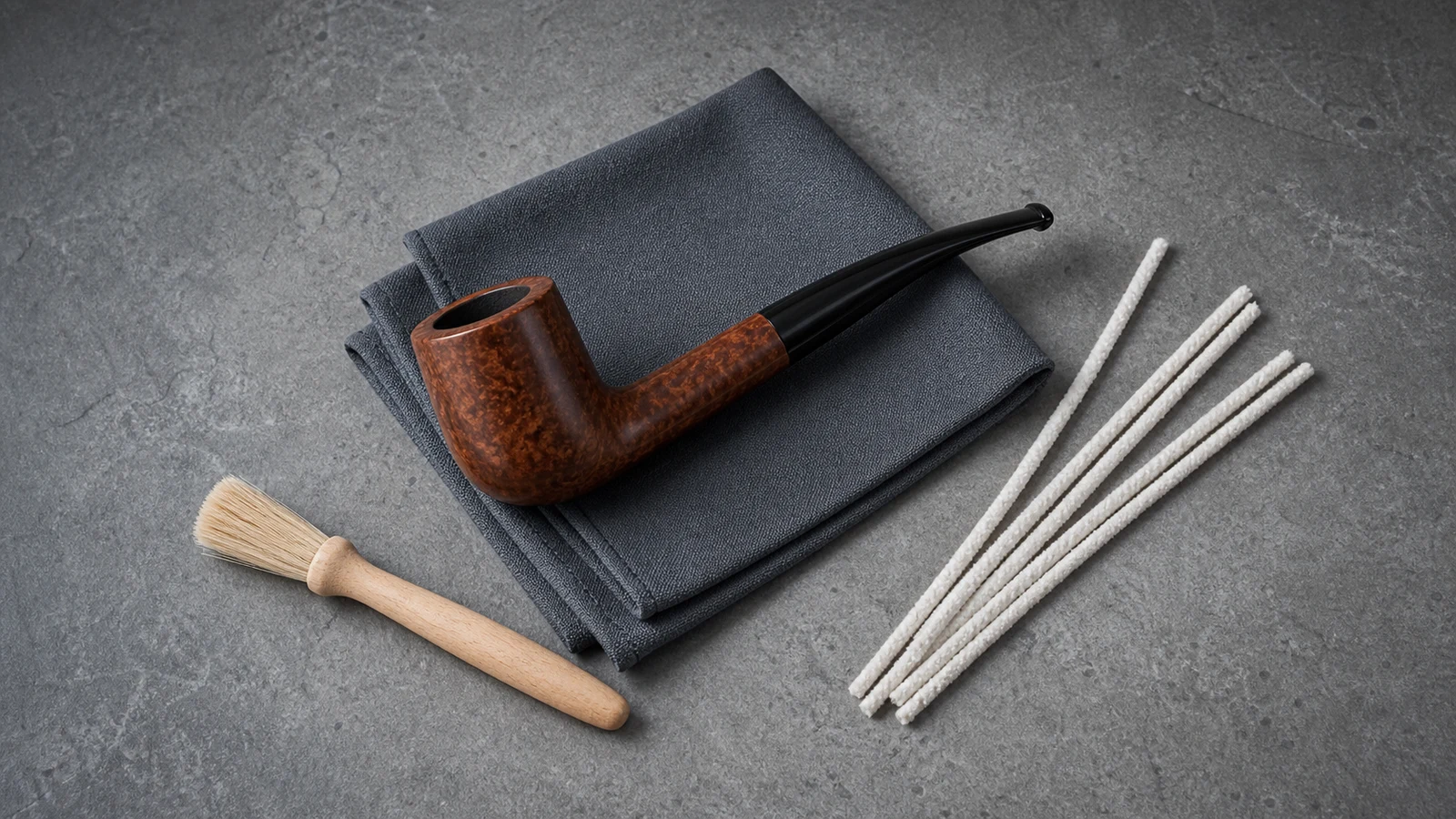
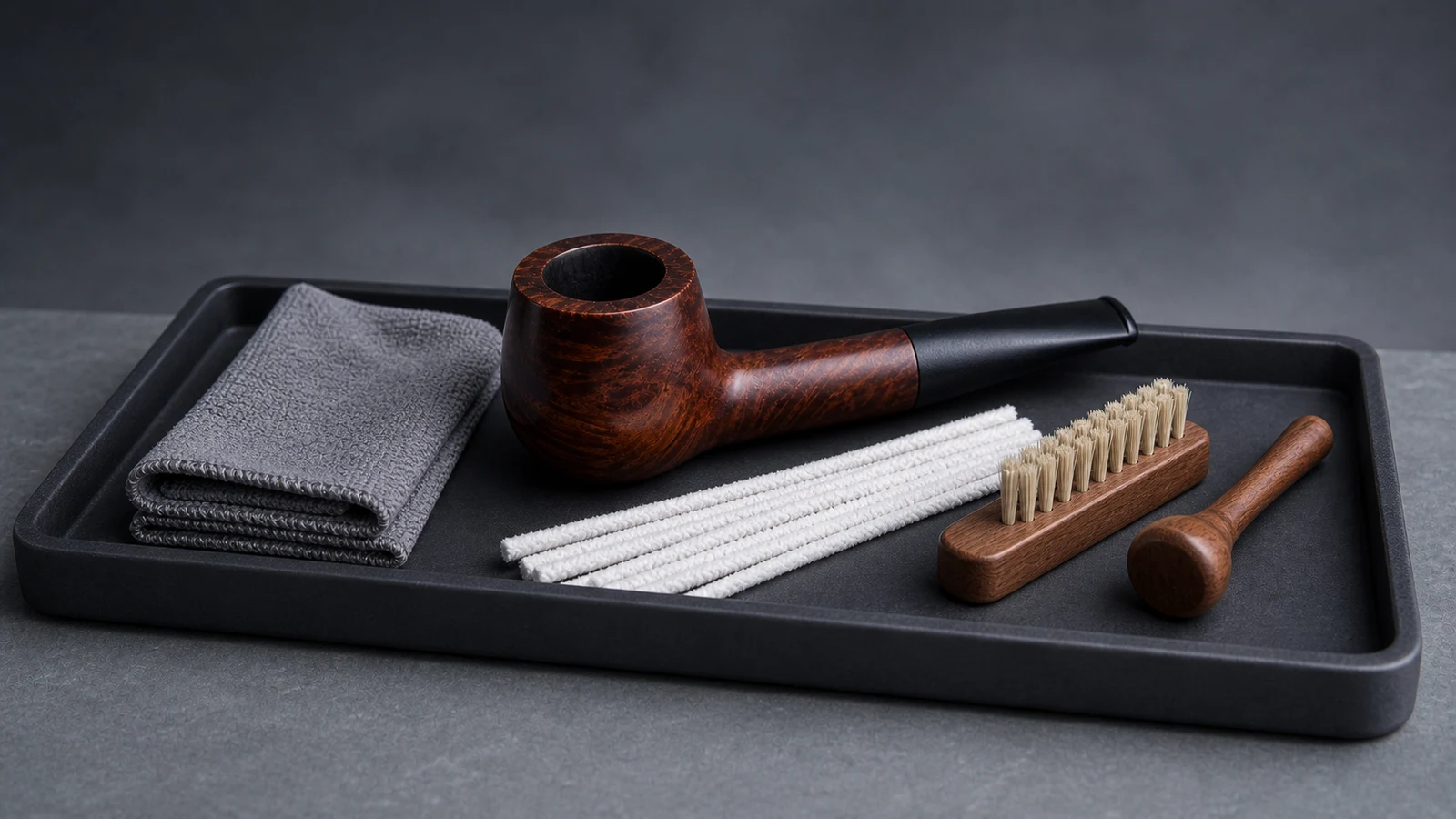
Product photos can help document visible finish, shape, and decorative details, but they cannot confirm how a storage lining will react over time. The product guide explains which visible catalog facts can guide a choice and which specifications still need confirmation.
Keep the storage environment moderate
Choose an indoor location away from direct sunlight, heaters, radiators, hot appliances, water sources, and persistently damp air. Avoid garages, windowsills, bathrooms, or vehicles where temperature and humidity may change sharply. Do not store the pipe beside strong chemicals or scented products that could transfer residue or odor.
Ordinary airflow is useful; a blast of forced air is not required. An enclosed cabinet should be clean and free of trapped dampness. If the space smells musty, shows condensation, or contains moisture-damaged materials, move the pipe and correct the environment before using it again.
For a collection, leave enough space to lift one pipe without striking another. Label cases or positions if similar components could be mixed. Filters, adapters, and removable parts should stay associated with the exact documented pipe; visual similarity does not prove interchangeability.
A five-point storage check
Before leaving the pipe between uses, confirm:
- Temperature: every accessible part is at room temperature.
- Dryness: surfaces are dry and no cleaner or damp accessory remains inside.
- Support: the bowl and stem sit without tipping, compression, or leverage.
- Contact: the pipe is separated from grit, hard objects, liquids, and questionable lining materials.
- Environment: the location is clean, moderate, out of direct sunlight, and not trapping moisture.
If any point is uncertain, use temporary open support in a stable indoor place rather than closing the pipe into a pouch or case.
Keep tools and liquids in a separate, labeled place. The cleaning-kit checklist explains why a damp cleaner, unlabeled liquid, or abrasive accessory should not share a storage compartment with the pipe.
When storage needs a different plan
Stop and seek specific advice if you notice a crack, loose fitting, shifted band, previous repair, tacky or flaking finish, color transfer, persistent moisture, unidentified residue, or a stem under obvious pressure in its holder. A used, older, or unfamiliar pipe may need documentation and inspection before being placed into long-term storage.
For a current catalog item, review the stated material, dimensions, shape, and included components before choosing support. The shop provides current listing photographs and source-described facts; it does not make a particular stand or pouch universally compatible.
Frequently Asked Questions
Should a tobacco pipe be stored in a pouch?
A pouch can protect a completely cool, dry pipe from dust and contact, provided the interior is clean and the fit does not compress the bowl or stem. Do not close a warm or damp pipe in a pouch.
Is a pipe stand necessary?
Not in every situation, but the pipe does need stable support. A suitable stand can reduce rolling and separate the pipe from hard surfaces. Verify balance and contact points for the specific shape rather than relying on a generic label.
Can product photos confirm which stand fits?
Photos can show shape and approximate proportions, but perspective and missing measurements limit them. Ask for relevant dimensions and compare them with the stand's stated support geometry before assuming fit.
Where should I store a pipe for a long period?
Use a clean, moderate indoor location away from direct sun, heat, dampness, chemicals, and abrasion. Make sure the pipe is cool and dry, the case or rack is clean, and the arrangement can be inspected periodically.
What should I do if the finish changes in storage?
Remove the pipe from contact with the holder or lining, do not add polish or solvent, and document the change. Color transfer, tackiness, clouding, swelling, or flaking requires material-specific assessment.
Good storage is deliberately uneventful: cool, dry, supported, ventilated, and free from avoidable contact. Match the stand, pouch, or case to verified facts about the individual pipe, and choose inspection over assumptions.
Related posts
Product notes, store updates, and purchase guidance for the storefront.