New, Used, Restored, or Unknown: Tobacco Pipe Condition Labels
Compare new, used, restored, and unknown tobacco pipe condition labels, including photo limits, repair records, hygiene questions, and seller evidence.
Written by
The Tobacco Pipe Editorial Team
The store editorial team reviews product facts, care boundaries, and buying guidance against the current catalog and source evidence.
New, used, restored, and unknown are different tobacco pipe condition labels, but none should be assigned from appearance alone. The exact product page should state the condition, explain any restoration or known prior use, and connect the description to the item pictured. When it does not, “unknown” is the accurate working status—even when the pipe looks clean or unused in photos.
Condition is also separate from material, age, maker, finish, and quality. A new listing can still have storage marks or incomplete specifications. A used or restored listing can be carefully documented. The site's product guide therefore tells readers to treat condition as unknown unless the product page confirms it.
What the current catalog says—and does not say
The July 2026 local product fixture contains 150 records. In 96 descriptions, the preserved source wording explicitly says the item is “listed as new and unused.” The other 54 descriptions do not contain that statement. The fixture has no separate normalized condition column, so the source sentence in an individual description is the only catalog-level condition evidence counted here.
This is a coverage audit, not an independent condition inspection. The 96 statements should be attributed to their source listings; they do not prove condition beyond that source claim. The remaining 54 records must not be called used, restored, estate, or previously owned. They have a condition-field gap: their prior-use status is not established by the fixture.
No record in this audit explicitly classifies current inventory as used or restored. Those labels remain useful general buying concepts, but they must not be presented as descriptions of this site's stock. When a current product description does not state condition, follow the buying-online guide, ask for an item-specific statement, and review the current returns policy before ordering.
What the four labels should communicate
A useful condition label narrows the item's history and current state. It does not replace a detailed description.
| Condition label | Minimum useful meaning | Questions still requiring answers |
|---|---|---|
| New | Seller states the item has not been previously used | Storage, handling, display, exact-item photos, marks, completeness |
| Used | Seller states prior use | Duration or extent when known, cleaning history, wear, repairs, odor, included parts |
| Restored | Seller states work was performed to return or improve condition | Starting condition, work performed, parts replaced, materials used, who performed it |
| Unknown | Seller cannot or does not confirm prior-use history | All condition-dependent facts, inspection limits, return implications |
This table describes information to request, not a universal grading system. Different sellers may use additional grades such as excellent, good, estate, refurbished, unsmoked, display, or as-is. Each modifier needs its own definition on the listing.
That seller-and-category dependency is not unique to pipe shops. eBay's official item-condition guidance explains that available condition options and their definitions vary by category. A marketplace field is still only a seller classification; it does not prove the history of a pipe shown in photos.
New does not mean visually flawless or fully verified
“New” should answer the prior-use question, but buyers should still inspect the gallery and written record. Storage, transport, handling, display, and packaging can affect visible condition without changing a seller's new classification. Likewise, an apparently pristine surface does not prove that an item is new.
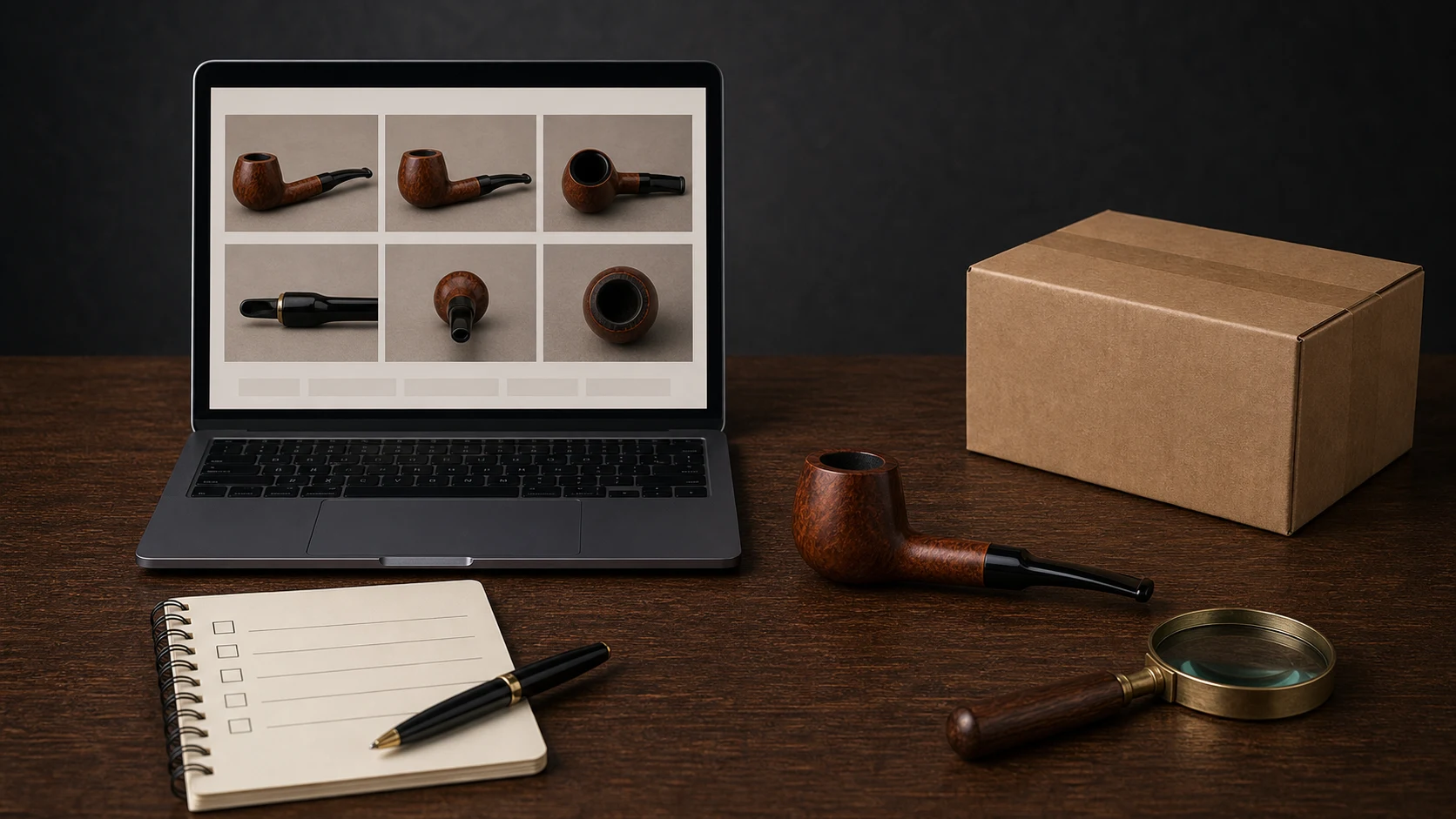
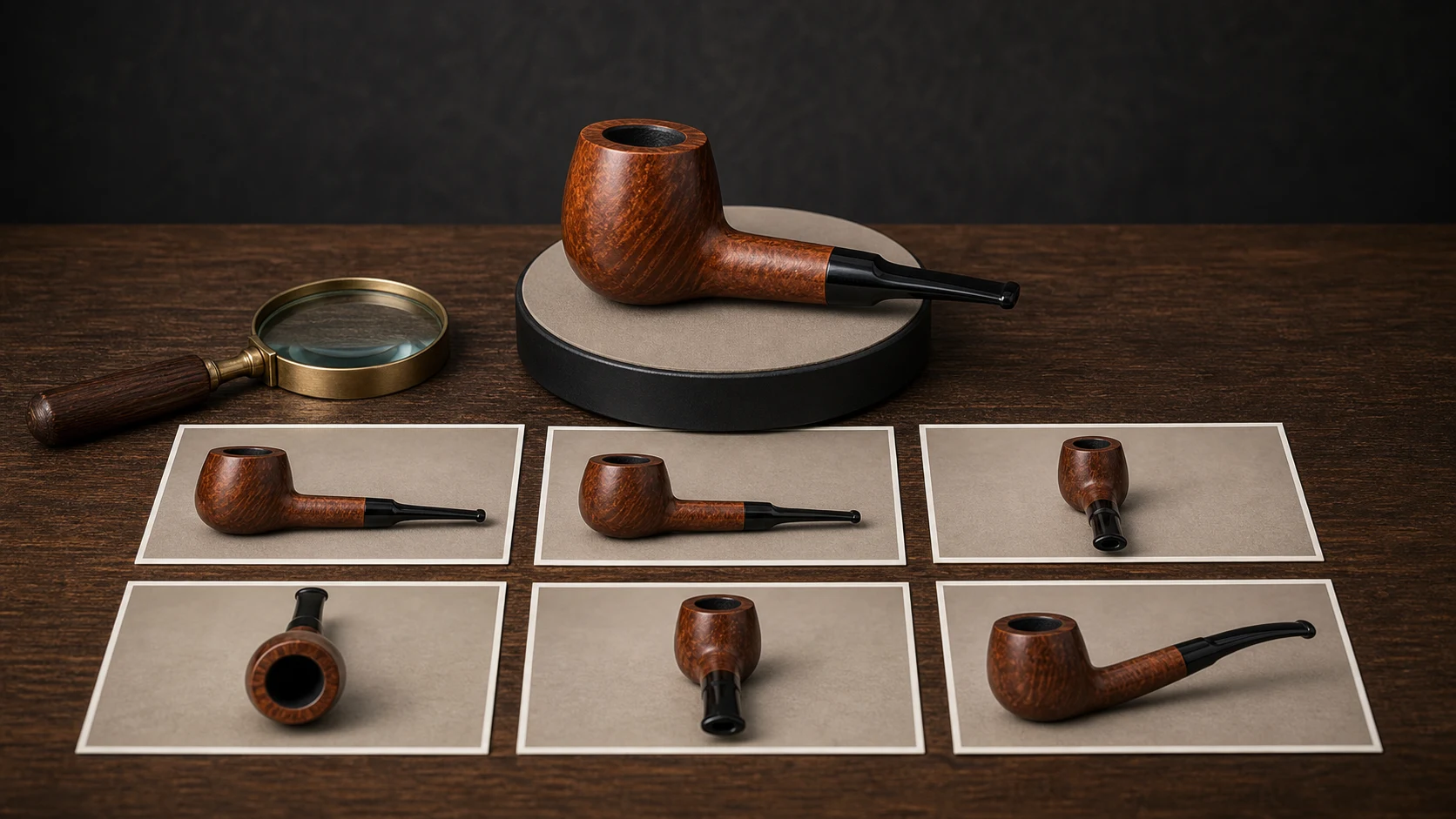
Check for a complete image set, clear views of the bowl, rim, shank, stem, and connection points, and a written note about any marks or variation. Confirm whether the photographs show the exact item or a representative example. Also verify package contents: new condition does not imply that a pouch, stand, filter, insert, paperwork, or original packaging is included.
Used requires disclosure, not guesswork
A used tobacco pipe listing should clearly say that prior use occurred. It should show the exact item and describe visible wear, known damage, repairs, missing parts, and cleaning history when that information is available. The seller should distinguish confirmed history from what remains unknown.
Photos can support observations about surface marks, discoloration, rim detail, stem appearance, stamps, and visible repairs. They cannot reliably establish odor, residue in hidden areas, airway condition, material stability, internal damage, previous cleaning substances, or the full extent of use. A bright background or polished surface can also make wear harder to assess.
The online pipe-photo inspection guide supplies a separate angle checklist. It can improve the visible record, but it cannot turn that record into proof of prior use or sanitation.
If prior history matters to the decision, ask directly rather than inferring it from color or shine. Unknown history should remain unknown in your notes.
Restored should include a work record
Restored is a process-and-condition label. It should prompt a list of what was done, not just a before-and-after impression. Useful documentation may identify cleaning, finish work, stem work, replacement components, crack or surface repair, polishing, or other interventions. The listing should state whether the work was performed by the seller, a named specialist, or an unknown party when that information is available.
Ask for these details:
- the condition before restoration;
- each material part cleaned, repaired, refinished, or replaced;
- the products or materials used when relevant to care or compatibility;
- whether dimensions or markings changed;
- any remaining flaw, limitation, or unknown;
- photographs of the exact item after the stated work.
Restored does not automatically mean “like new,” safer, unused, or superior to a clearly documented used item. It also does not prove that every issue was resolved. Treat the seller's work description as a source claim and compare it with the visible post-restoration record.
For a concrete example of why an itemized record matters, Briarville publishes a multi-step estate-pipe restoration workflow covering separate bowl, airway, stem, finish, and optional surface operations. That source documents Briarville's process only; it must not be used to fill in missing work on another seller's “restored” pipe.
Unknown is a valid condition, not a visual diagnosis
An unknown label can be the most honest choice when provenance or prior use cannot be confirmed. It tells the buyer not to rely on assumptions. Unknown should not be silently upgraded to new because the bowl looks clean, or changed to used because a surface looks dark. Lighting, finish, angle, dust, grain, and image processing can all mislead.
If a listing lacks a condition field entirely, ask the seller to classify it and explain the basis. If no reliable answer is available, decide using the unknown status and the seller's return terms—not a guessed history.
For this catalog specifically, the absence of the “new and unused” source
sentence on 54 records is a missing statement, not an Unknown, Used, or
Restored inventory classification. Keep the database gap separate from any
seller answer later supplied for an exact item.
Photo limits: visible condition is only one layer
A strong photo set helps, especially when it includes neutral light, close-ups, both sides, the rim, bowl opening, stem, joint, base, and any disclosed flaw. However, even detailed images are a time-stamped external record. They cannot confirm what happened before the photograph or what is hidden internally.
Use three labels in your own notes:
- Visible: a mark, repair line, color variation, or missing part can be located in the supplied image.
- Seller stated: condition, prior use, restoration, cleaning history, or exact-item relationship appears in the written record.
- Needs confirmation: anything not visible and not stated, including odor, hidden residue, internal damage, repair materials, or missing history.
Do not use the word “excellent” as a substitute for this breakdown. A broad grade is meaningful only when the seller defines it and discloses exceptions.
Hygiene and care questions to ask before ordering
Condition questions can overlap with hygiene and care, but the label itself does not prove cleanliness. Ask whether the item has been used, what cleaning or restoration was performed, which parts were treated or replaced, whether any odor or residue is reported, and whether the seller recommends further inspection or professional service.
Do not assume that a polished exterior establishes internal cleanliness. Do not apply unverified cleaning methods or substances merely because a listing is used or restored. Product-specific materials, finishes, adhesives, and repairs may require different handling. If the seller cannot identify the construction or previous work, preserve that uncertainty.
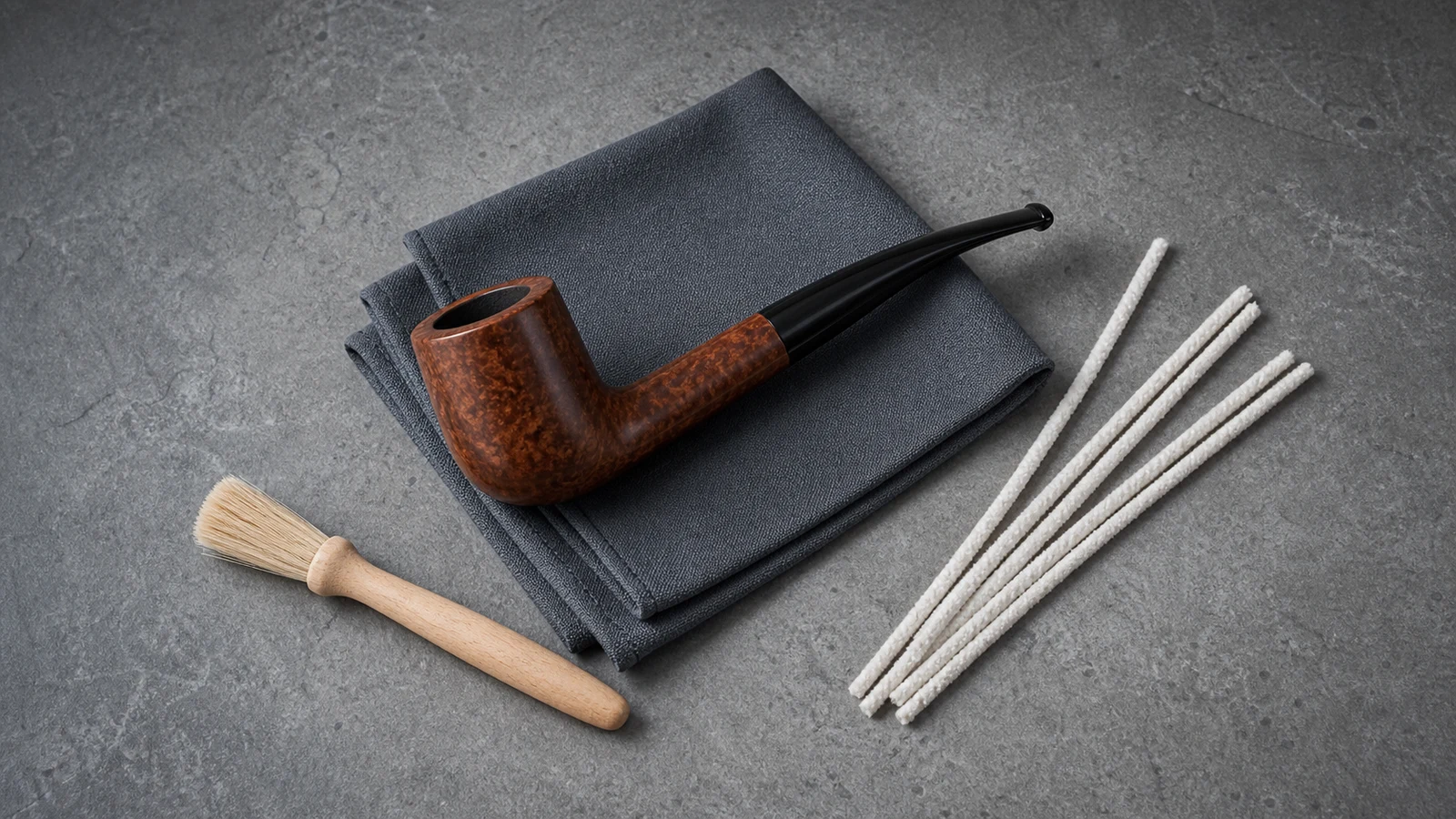
If care is needed after purchase, start with the conservative damage-avoidance cleaning guide and the maker's instructions. A condition label is not permission to apply an unknown restoration method.
Read the return policy before condition becomes a dispute
The site's current Returns & Refunds policy says returned items should be complete, clean, and include included accessories, inserts, and original packaging when possible. It also says a pipe that has been smoked, altered, or cleaned after delivery may require additional review and may not be returnable except where applicable law requires otherwise. The product page and approved return instructions control a specific order.
That makes pre-order condition documentation especially important. Save the listing, condition description, photos, order confirmation, and the written contents list. On delivery, compare the item and package before altering, cleaning, or using anything. If the item appears damaged, incomplete, or different from the order, follow the current support and return instructions.
Condition-verification checklist
- The exact condition label appears on the product page.
- Seller-defined grades and modifiers are explained.
- The gallery shows the exact item or clearly says it is representative.
- Known wear, damage, repairs, and missing parts are disclosed.
- Restoration work and replacement parts are itemized.
- Cleaning and prior-use history are stated or marked unknown.
- Material, dimensions, filter status, and contents are verified separately.
- Current price, stock, shipping, and tax are rechecked.
- The return policy is read before any post-delivery alteration.
- Screenshots or records of the listing are saved with the order.
The shop provides exact product records, but the local fixture does not have a dedicated condition field. Read the individual description for a source condition statement. If it is absent, use the buying-online guide and current returns policy rather than transferring a condition statement from a category page, similar image, or neighboring product.
Frequently Asked Questions
What should I verify when comparing new vs used tobacco pipe condition?
Verify the exact condition label, prior-use statement, exact-item photographs, visible flaws, repairs, cleaning or restoration history, missing parts, package contents, and current return terms. Keep unstated history classified as unknown.
Can photos prove that a tobacco pipe is new?
No. Photos can show external appearance at the time photographed, but they cannot reliably prove the absence of prior use. New condition should be an explicit seller statement connected to the exact item.
What should a restored pipe listing disclose?
It should identify the starting condition when known, work performed, parts replaced, materials or treatments relevant to future care, remaining flaws, who performed the work when known, and post-restoration photos of the exact item.
Is unknown condition the same as used?
No. Unknown means the seller cannot or does not confirm the history. The item may or may not have been used, but the evidence does not support a more precise label. A missing condition sentence in this site's fixture is an evidence gap, not proof that the product is used. Do not guess from appearance or field absence.
Why should I read the return policy before ordering?
Condition disagreements are easier to resolve when the pre-order record is clear and the item has not been altered. Current policy may require approval and additional review, especially after use or cleaning. Read the exact product and return terms before payment.
A useful condition label reduces uncertainty; it does not erase the need for item-specific evidence. Start with the seller's classification, compare it with the complete gallery, request restoration and history details, and keep every unsupported fact explicitly unknown.
Related posts
Product notes, store updates, and purchase guidance for the storefront.